


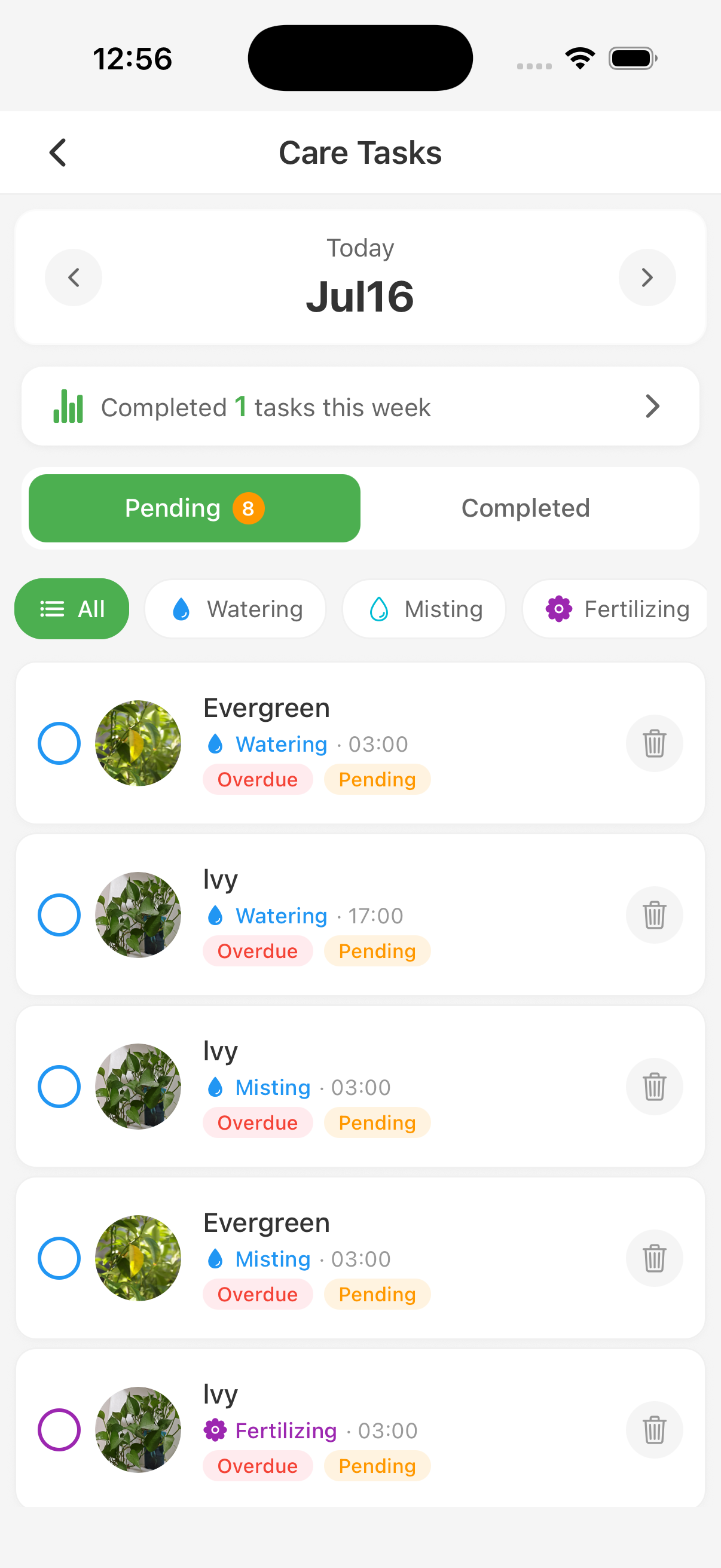
Why fixed watering schedules fail
A plant does not use water at a fixed calendar rate. Light, temperature, humidity, airflow, plant size, roots, pot material, and potting mix all change how quickly the root zone dries.
- A seven-day interval can be too soon in one room and too late in another.
- After moving or repotting, treat the old interval as a starting hypothesis.
Fixed schedule versus context-aware care
A fixed schedule treats the due date as an instruction to water. Context-aware care treats it as a prompt to inspect, then uses current evidence to complete, postpone, or skip the task.
- Fixed schedule — same action on the same interval, even when conditions change.
- Context-aware reminder — inspect moisture, pot weight, plant condition, and recent changes first.
- Useful record — save what you observed so the next interval can improve.
What to check when the reminder appears
Use more than the dry appearance of the surface. Check the depth appropriate for that plant, lift the pot when practical, look for standing water, and compare leaf posture with the plant’s normal state.
Complete, postpone, or skip
Water when the plant and root-zone evidence support it, then record the action. Postpone when the mix still holds adequate moisture. Skip and revise the routine when the same reminder repeatedly arrives too early.
Reset the interval when conditions change
Review the reminder after seasonal light shifts, heating or air conditioning, relocation, repotting, a change of pot or mix, rapid growth, pruning, or root problems. Change one variable at a time when possible.
Use plant-specific guidance as context
Species guides provide a starting pattern, but the current pot remains the final source of evidence.