Overview
Ditch the Fixed Schedule: Use Pot Weight, Soil Feel, and Drying Speed to Water Plants Perfectly
This article introduces a scientific approach to determining when to water by sensing pot weight, feeling the soil medium, and observing drying speed—helping beginners avoid both overwatering and underwatering for precise plant care.
Why Calendar-Based Watering Is Unreliable
Many beginners follow a fixed schedule like "water every three days" or "water once a week," but this approach often leads to poor plant health. Plants' water needs are influenced by multiple factors: ambient temperature, humidity, light intensity, pot material and size, soil mix composition, and even seasonal changes. The same plant might need daily watering in summer but only once every two weeks in winter. Watering by calendar follows your schedule, not the plant's actual needs.
Learning the Basics of Pot Weight Sensing
The core principle is simple: establish "wet" and "dry" weight references. After thoroughly watering until drainage appears, lift the pot from the bottom and memorize this weight—this represents the "wet weight." Then stop watering and let the soil dry naturally. Every day or two, lift the pot again. You'll clearly feel the weight decreasing as moisture evaporates. When weight drops to approximately 60% to 70% of the wet weight, it's the ideal watering time for most plants. Different species may have slightly different thresholds, but the underlying principle remains the same: a noticeably lighter pot signals the plant is asking for water.
Practical Tips for Recording Wet and Dry Weights
If manual lifting feels imprecise, a kitchen scale provides accurate measurements. Weigh the pot (with saucer) right after watering until drainage, and record this as the wet weight. Let the soil dry naturally, and water when the weight reaches about 65% of the wet weight. Attach a small note to the pot or keep records in your phone's notes app to build a weight profile for each plant. After several measurements, you won't need the scale at all—you'll judge by feel alone. This method is especially useful for plant parents with multiple pots, allowing quick assessment of all plants' moisture status.
Double-Checking with Finger Soil Feel
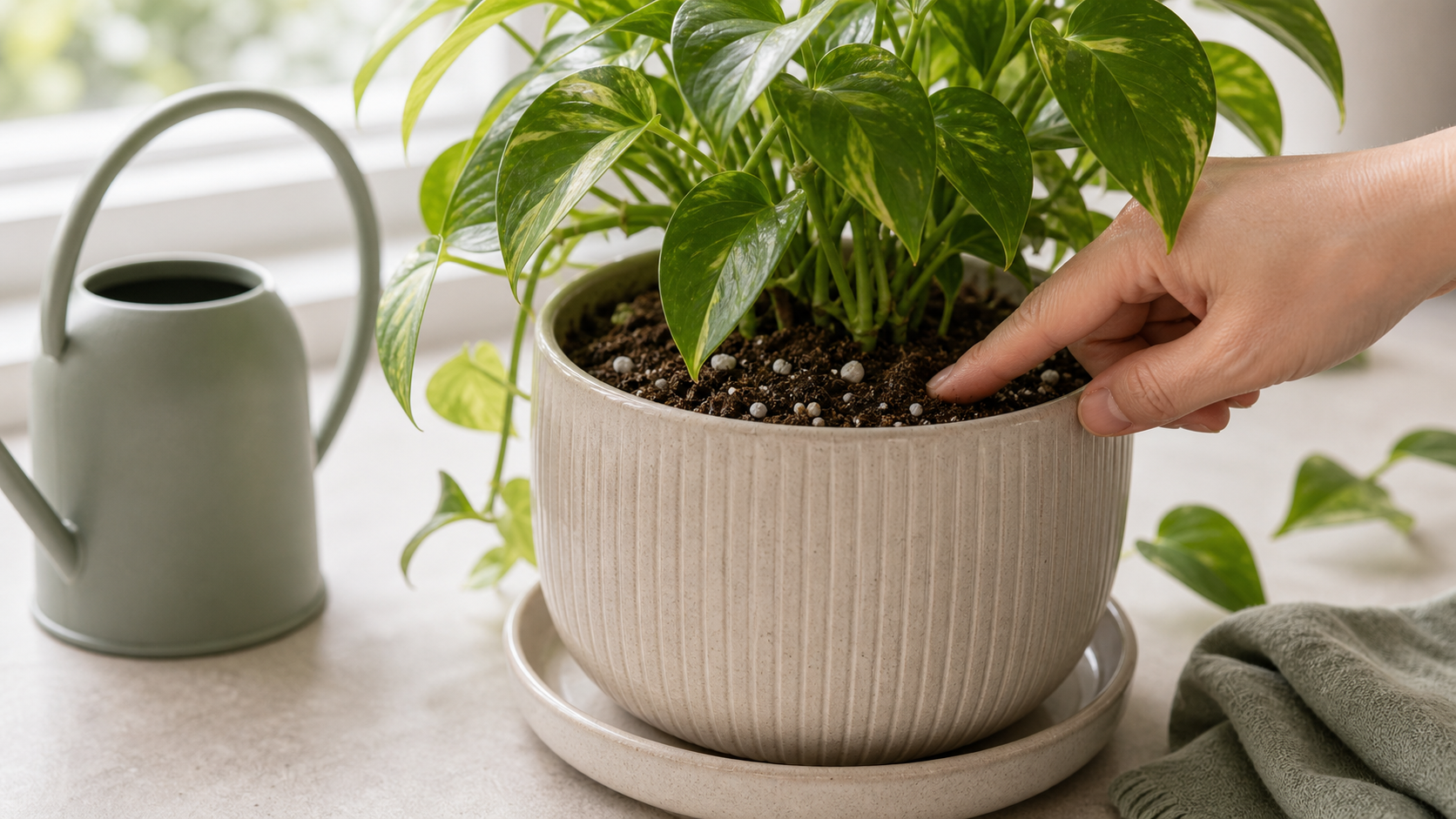
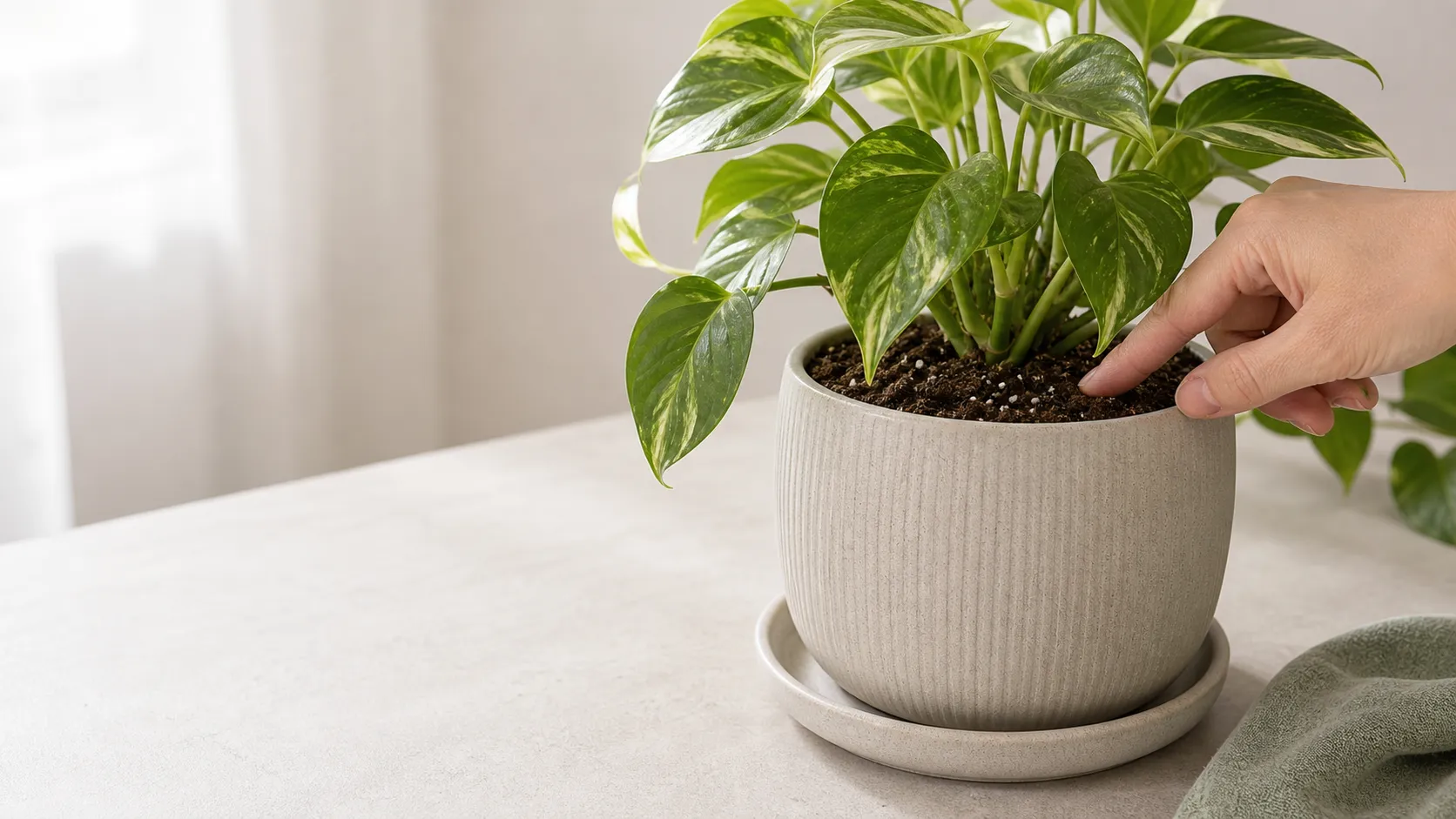
While the weight method is efficient, combining it with tactile inspection increases accuracy. Insert your finger two to three centimeters into the soil surface to feel moisture. If the fingertip feels dry, rough, and moisture-free, the soil is quite dry. If it feels cool, damp, and slightly clingy, moisture is still present. However, certain soil mixes (especially those high in peat) form a crusty surface when dry, making the top layer feel parched even when lower layers remain moist. Therefore, combining weight sensation with tactile observation provides more reliable results than either method alone.
Observing Drying Speed to Adjust Watering Frequency
Every pot dries at a different rate, depending on root density, pot breathability, soil drainage, and the light and air circulation at its location. Newly purchased plants have underdeveloped root systems and slower drying rates. As plants grow and roots fill the pot, the same plant may need more frequent watering. Track the interval between each watering session, and observe seasonal patterns: when intervals shorten noticeably, the plant is entering active growth or environmental conditions have become drier, so increase watering frequency. When intervals lengthen, decrease watering frequency accordingly.
Common Mistakes and How to Correct Them
When using the weight method, the most frequent mistake is checking so often that roots get disturbed. Lift pots gently without rocking them. Another common error is watering immediately whenever the pot feels light, ignoring the plant's actual condition—succulents and cacti can tolerate much lower dry weights, while ferns and tropical rainforest plants need to stay closer to the wet weight. Some gardeners find the pot very light and water thoroughly, but the surface soil may still hold some moisture, leading to root die-back in the upper root zone over time. The correct approach is to confirm with finger feel that the middle and lower soil layers are also dry before watering thoroughly.
Making Weight-Based Watering a Daily Habit
Developing the habit of regularly checking pot weights requires no extra tools—simply lift each pot as you pass by your plants. This connects you more directly with your plants' actual needs than memorizing complicated watering schedules ever could. Once weight-based checking becomes your second nature, you'll be amazed at how rarely your plants develop water-related problems, and how much more confident and relaxed your plant care routine becomes.