Overview
Check moisture, light, roots, and pests before acting
Yellowing is a signal, not a diagnosis. A simple inspection sequence separates normal aging from moisture, light, salt, and pest problems.
Start with where yellowing occurs
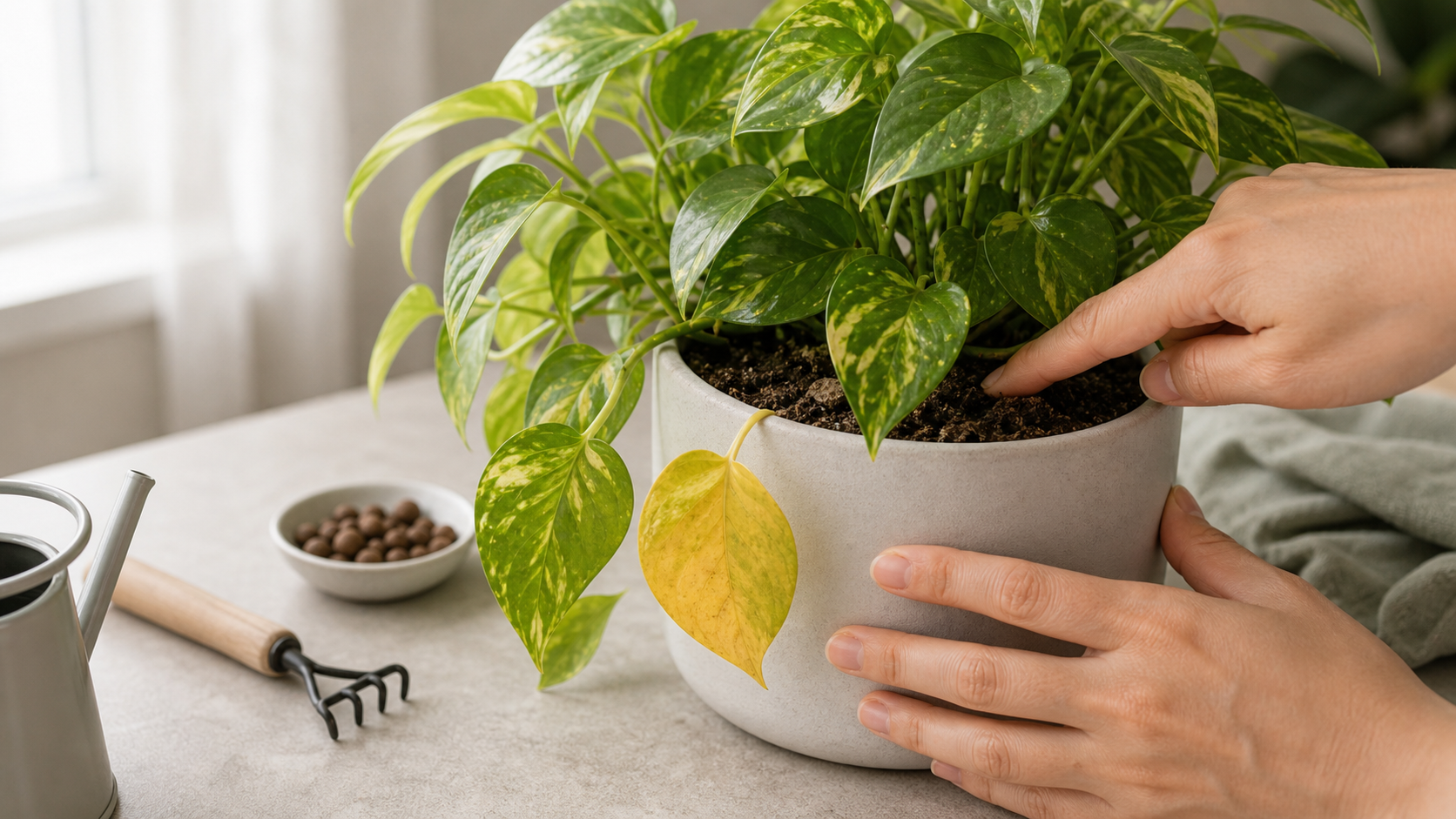
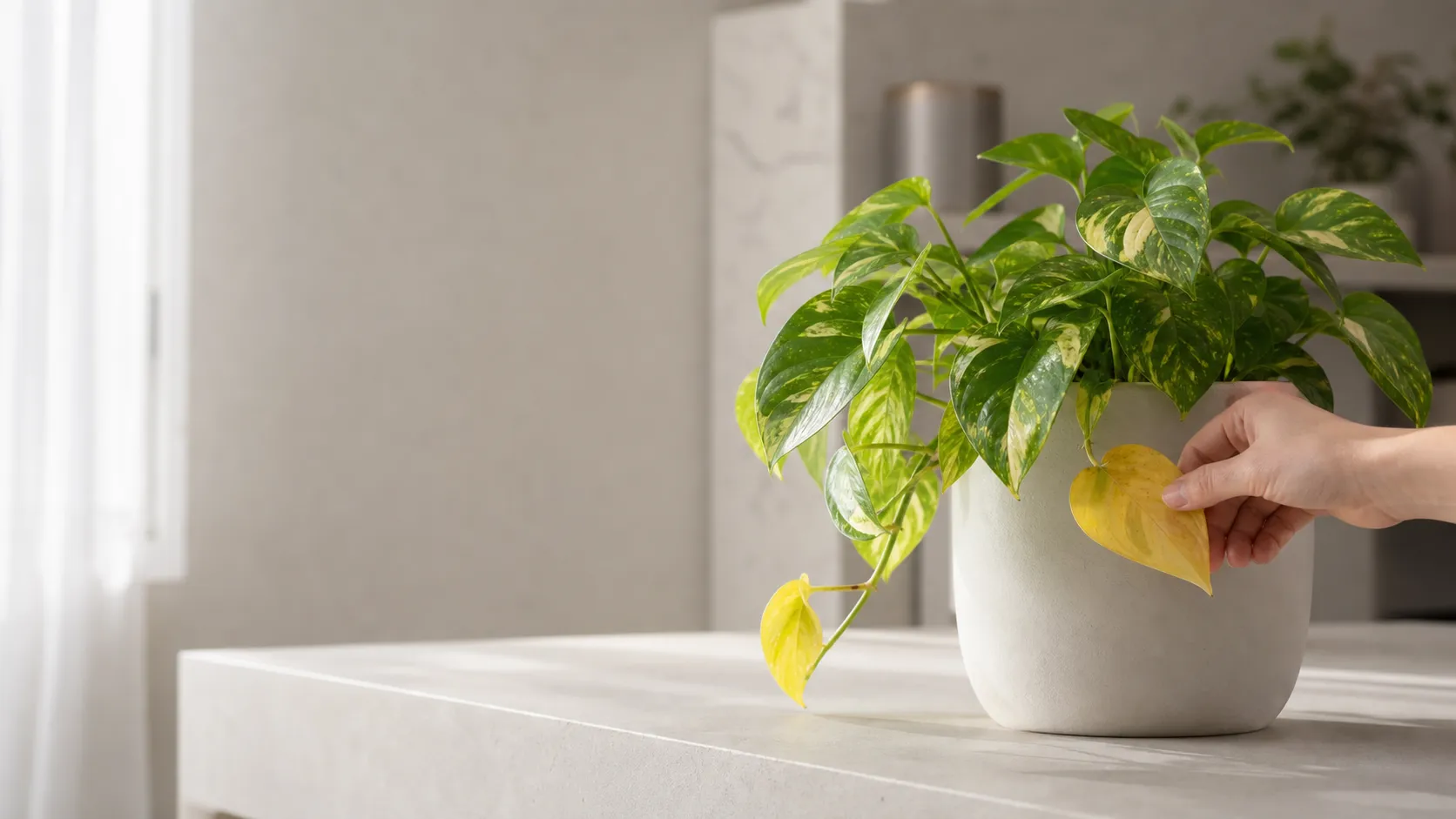
One or two lowest older leaves yellowing gradually may be normal turnover. Several leaves yellowing quickly, including new growth, or yellowing with wilting and odor requires investigation. Note the location, pace, and recent moves, repotting, or watering changes.
Then examine media and roots
When potting mix stays wet, a cachepot holds drainage, or the crown feels soft or smells stale, stop topping up water and inspect drainage and roots. If the mix is genuinely dry and leaves are uniformly limp, water thoroughly once and watch for recovery.
Check light, salts, and pests
Persistent low light can slowly thin lower foliage, while sudden intense sun more often produces localized pale or crisp patches. Brown tips with white crust may indicate salts. In natural light, inspect leaf undersides and new growth for mite stippling, scale, or thrips damage.
Correct one major factor at a time
Address the clearest issue in drainage, placement, or watering, then judge new growth over two to three weeks. Old yellow leaves rarely turn green again; stable fresh growth is the better measure of recovery.