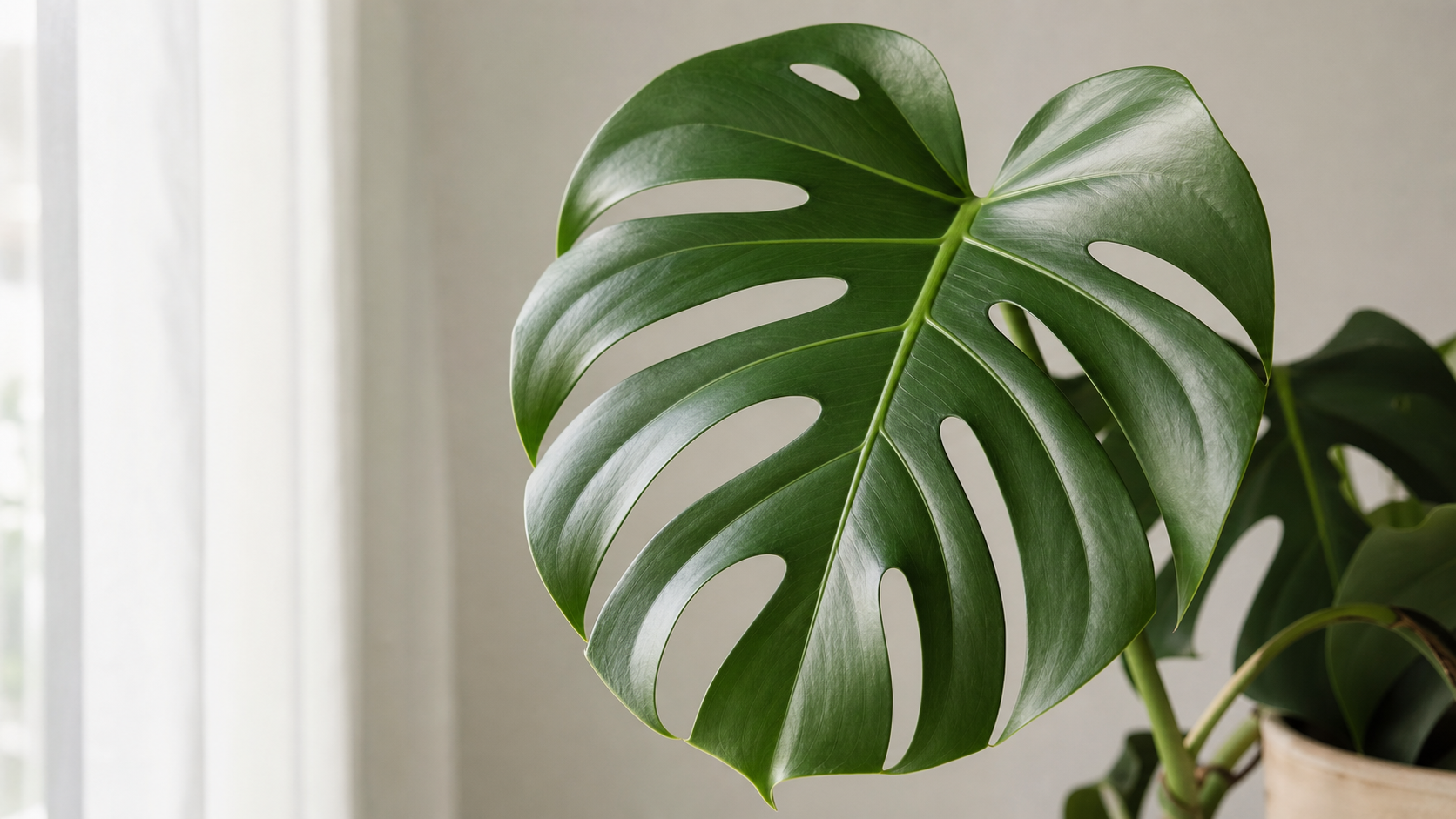
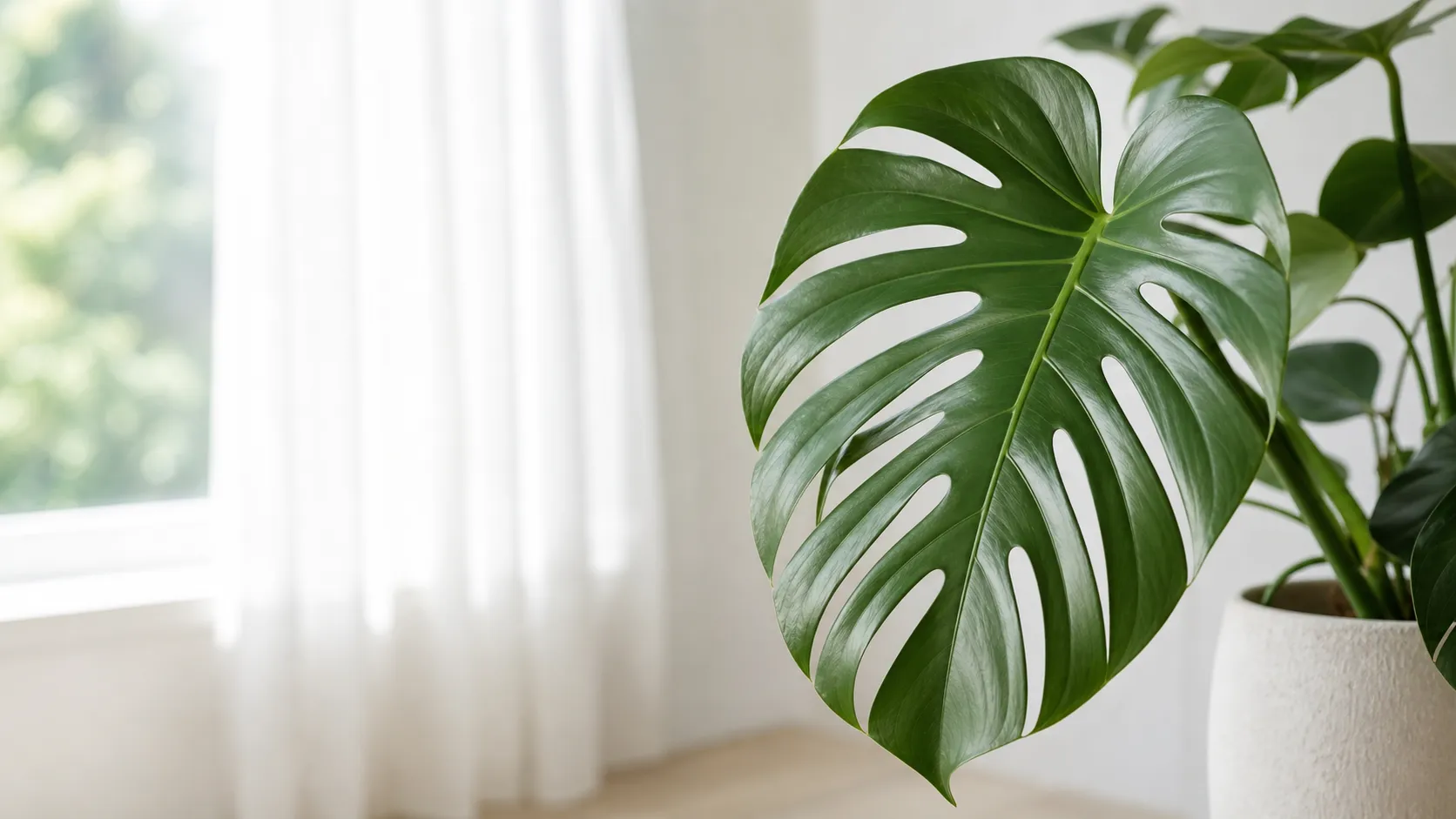
Overview
Fenestration is a sign of mature growth, not a quick fix
For larger fenestrated Monstera leaves, provide consistent bright indirect light and a vertical support. Pruning or fertilizer cannot replace light and maturity.
Why new leaves remain solid
Fenestration depends on maturity, light intensity, leaf size, and climbing habit. Newly propagated, recently repotted, or low-light plants commonly keep producing solid leaves; this is not a disease sign by itself.
Provide light without scorch
An east window or a south- or west-facing window softened by a sheer curtain is often suitable. Long petioles, strong leaning toward the window, and progressively smaller new leaves commonly indicate insufficient light. Pale dry patches mainly on the window-facing side suggest excessive direct sun.
Support encourages mature growth
Monstera naturally climbs upward. Add a stable coir pole, moss pole, or plank; secure the stem gently rather than tying leaf stalks, and guide aerial roots toward the support. Once upward growth is established, new leaves often size up and fenestrate more readily.
Avoid false shortcuts
- Heavy fertilizer cannot force fenestration and may injure roots.
- Removing solid leaves does not make the next leaf split automatically.
- Variegated plants need more caution around direct sun because pale tissue scorches more easily.