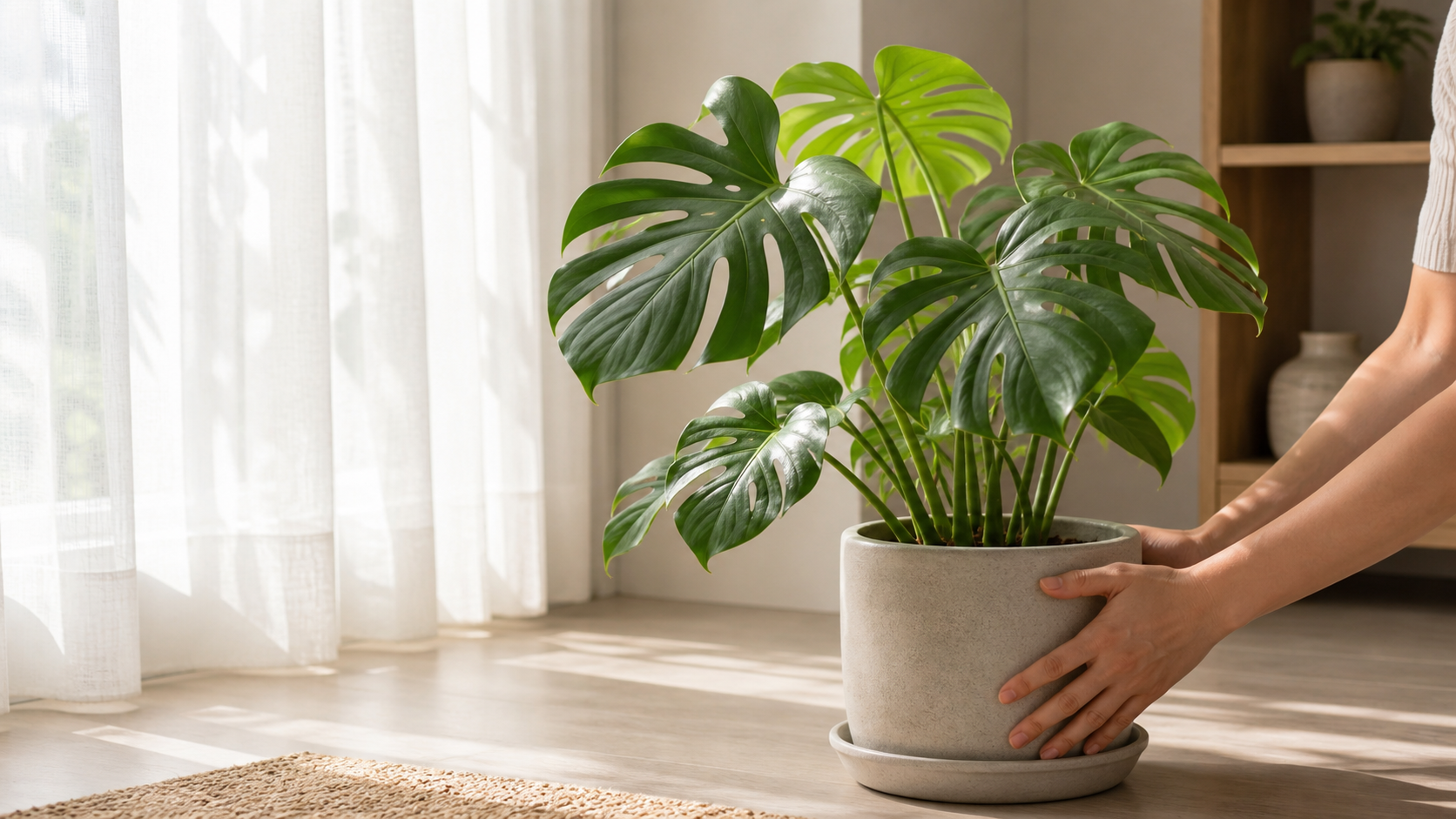
Overview
Manage light, airflow, temperature, and roots together
In hot weather, pots may dry faster or remain wet when heat and slowed growth combine. Judge the plant and setting first.
Separate sun, heat, and thirst
Dry pale or brown damage on the light-facing side more often fits scorch; whole-plant softness with dry media better supports thirst; media remaining wet in heat raises root-zone risk. Do not interpret every droop as a call for water.
Adjust light and airflow
Acclimate plants gradually to stronger light and soften the harshest exposure when appropriate. Maintain air exchange while avoiding direct hot or cold HVAC drafts on tender foliage.
Still check before summer watering
When media actually calls for moisture, water thoroughly and drain all excess, preferably at a milder time of day. Succulents and cacti slowing in extreme heat require particular restraint.
Respond to health risks
Hot dry conditions favor spider mites, while stagnant wet conditions increase risks of rot and leaf spotting. Isolate clearly affected plants first, improve conditions, and act on confirmed issues.