
Overview
A two-minute weekly check catches problems early
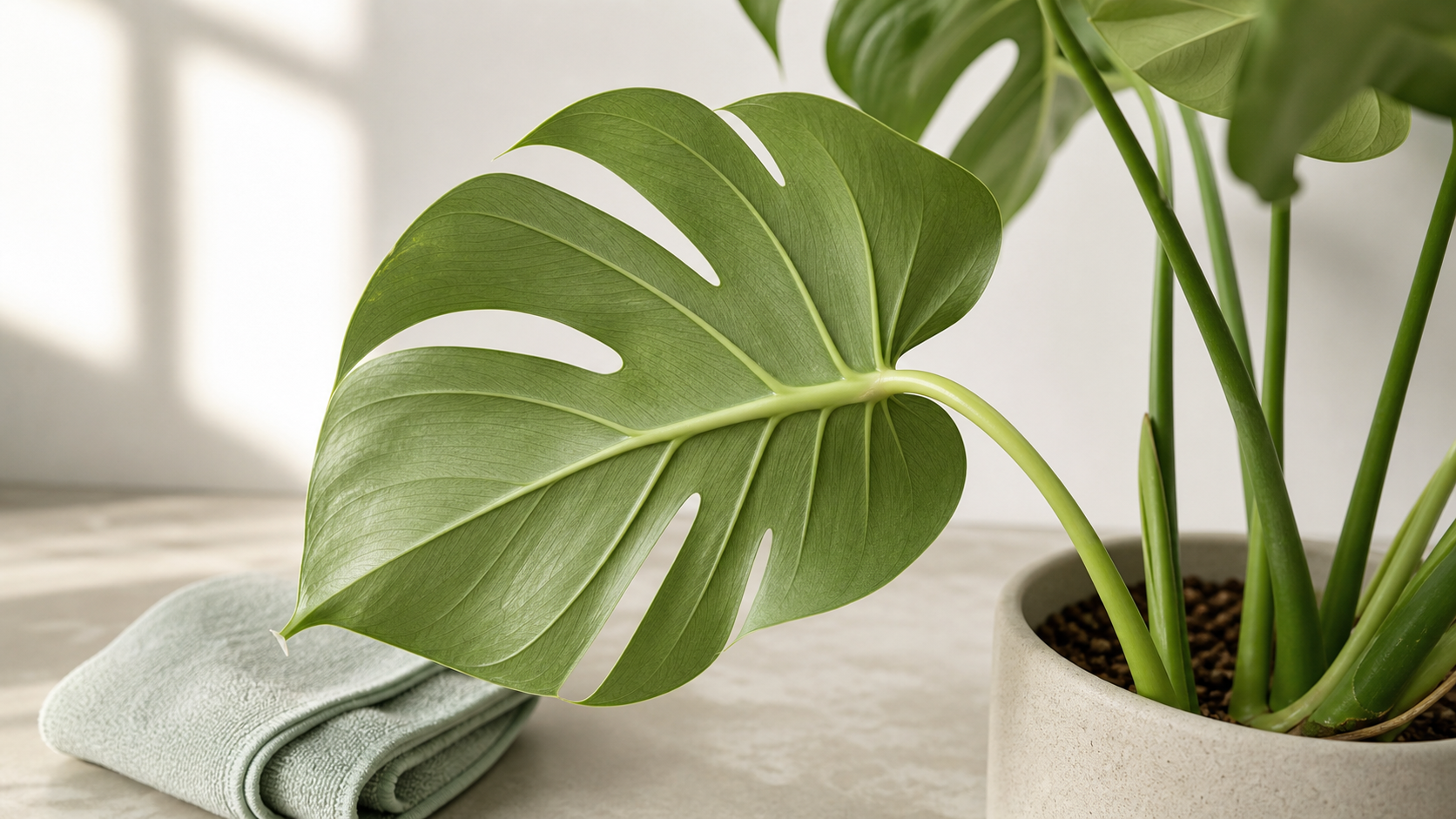
Monstera's broad leaves collect dust but also make early checks for mites, thrips, scale, and root trouble practical. Routine inspection is more useful than spraying blindly after decline.
Start the inspection underneath leaves
Each week in natural light, examine new leaves, undersides, petiole junctions, and the potting-mix surface. Fine pale stippling with webbing may indicate spider mites; silvery scarring with tiny black specks often points to thrips; brown attached bumps on veins or stems suggest scale.
Signs that call for a root check
One naturally aging lower leaf is not necessarily a crisis. But repeated yellowing, persistently wet foul-smelling mix, soft petiole bases, or sudden collapse should prompt isolation and root inspection rather than additional watering.
A measured response sequence
- Isolate the affected plant first.
- Rinse or wipe light visible pests and remove fallen debris.
- Correct light, watering, and airflow, then continue observing.
- If a pesticide is needed, use only locally registered products clearly labeled for the plant and target pest or disease.
Homes with pets and children
Monstera leaves and stems contain insoluble calcium oxalate crystals; chewing can irritate the mouth and cause drooling or discomfort. Place the plant out of reach, and consult a veterinarian or healthcare professional if ingestion causes notable symptoms.