Overview
Recognize signals and choose next steps without overdiagnosing
Plant disease assessment requires pattern, progression, and environment. Triage is for timely isolation and direction, not certainty from one image.
Exclude non-disease stress first
Sun scorch, cold injury, moisture imbalance, and fertilizer burn can all cause marks or yellowing. Note whether damage is concentrated on a light-facing side, followed watering or cold exposure, or accompanies persistently wet media.
Observable patterns to consider
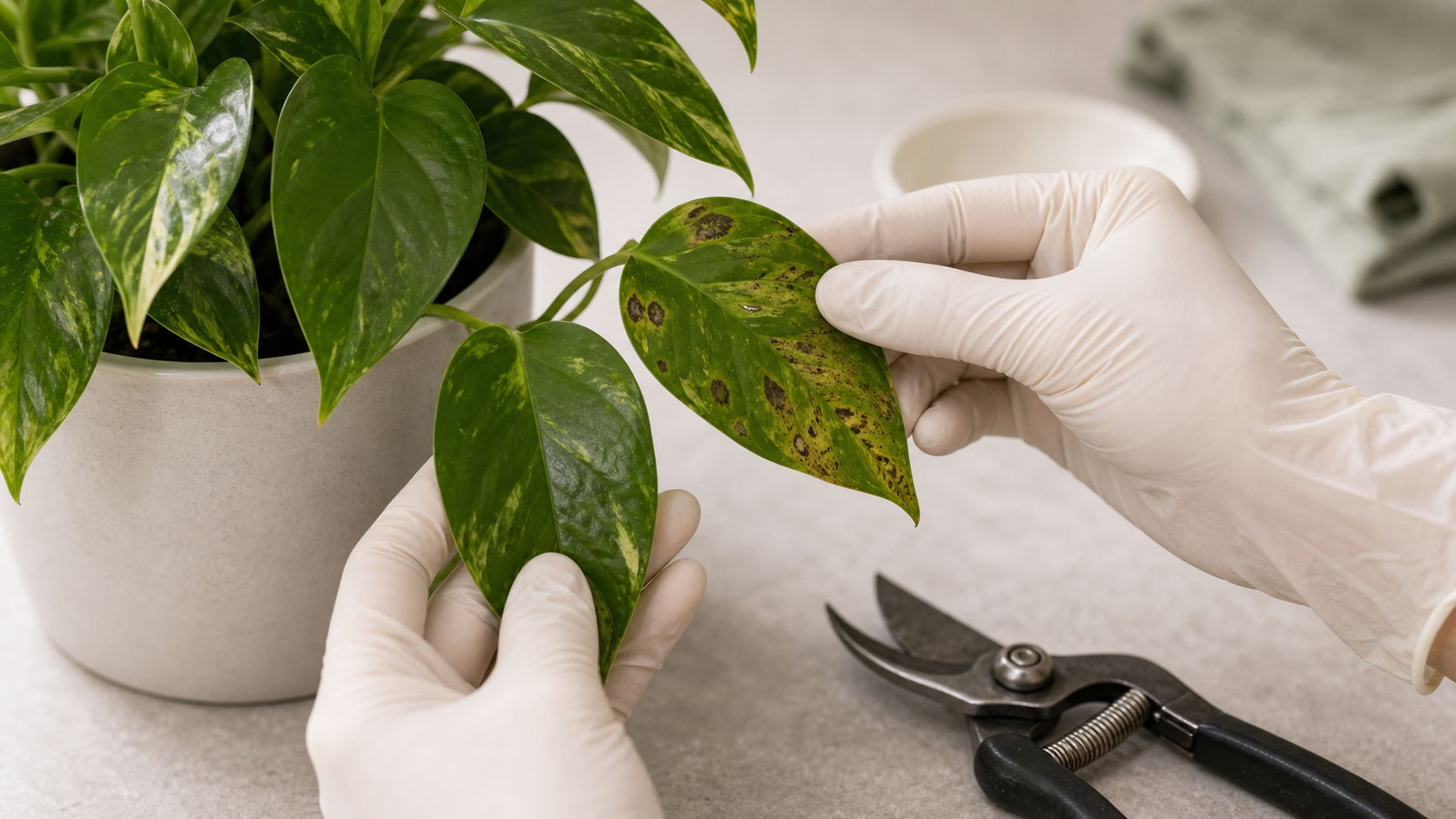
Expanding brown or black spots in damp conditions call attention to leaf-spot problems; visible white powdery coating suggests powdery mildew; wilt with prolonged wetness, odor, and soft roots makes rot a first concern.
Safe first actions
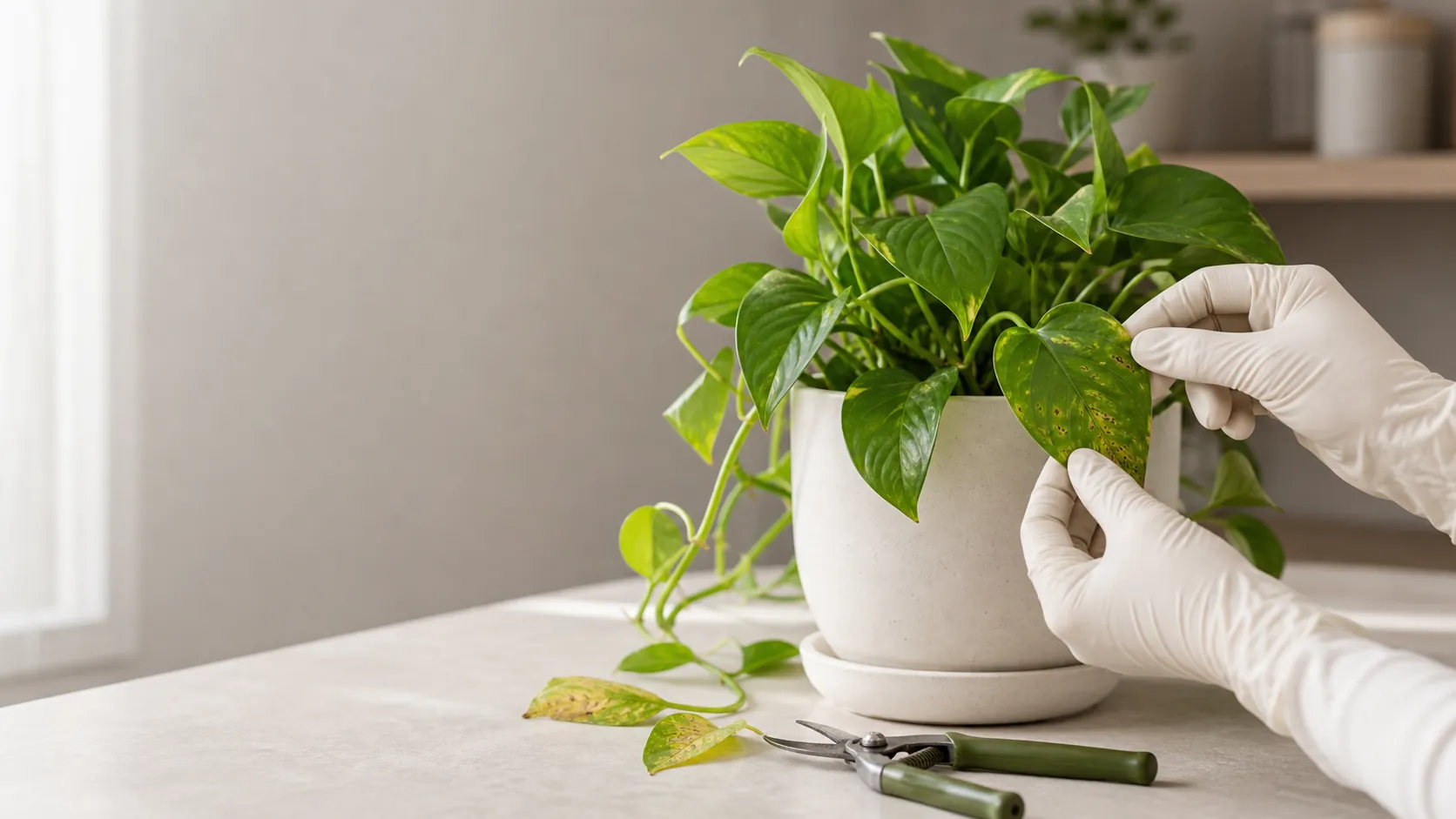
Isolate plants with ongoing decline or suspected spread, remove severely affected debris, keep foliage clean with adequate airflow, and correct clearly excessive moisture. Clean tools between plants.
When clearer guidance is needed
If symptoms expand rapidly, affect valuable collections, or cannot be distinguished from cultural stress, seek local Extension or diagnostic guidance. When products are necessary, use only locally registered labeled directions.