Overview
Do not treat fertilizer as emergency medicine
Fertilizer supports active growth but cannot repair soggy roots, low light, or pests. Fix conditions first, then feed gently by label.
When feeding makes sense
Plants are most likely to use nutrients when light is suitable, roots are healthy, and steady new leaves or shoots are active. After repotting, during decline, in very low light, or in a rest period, wait for recovery first.
Fertilizer cannot correct the environment
Yellowing, wilt, or slow growth does not automatically mean hunger. If media is wet, roots are failing, light is inadequate, or pests remain, adding fertilizer may increase stress.
Use products safely
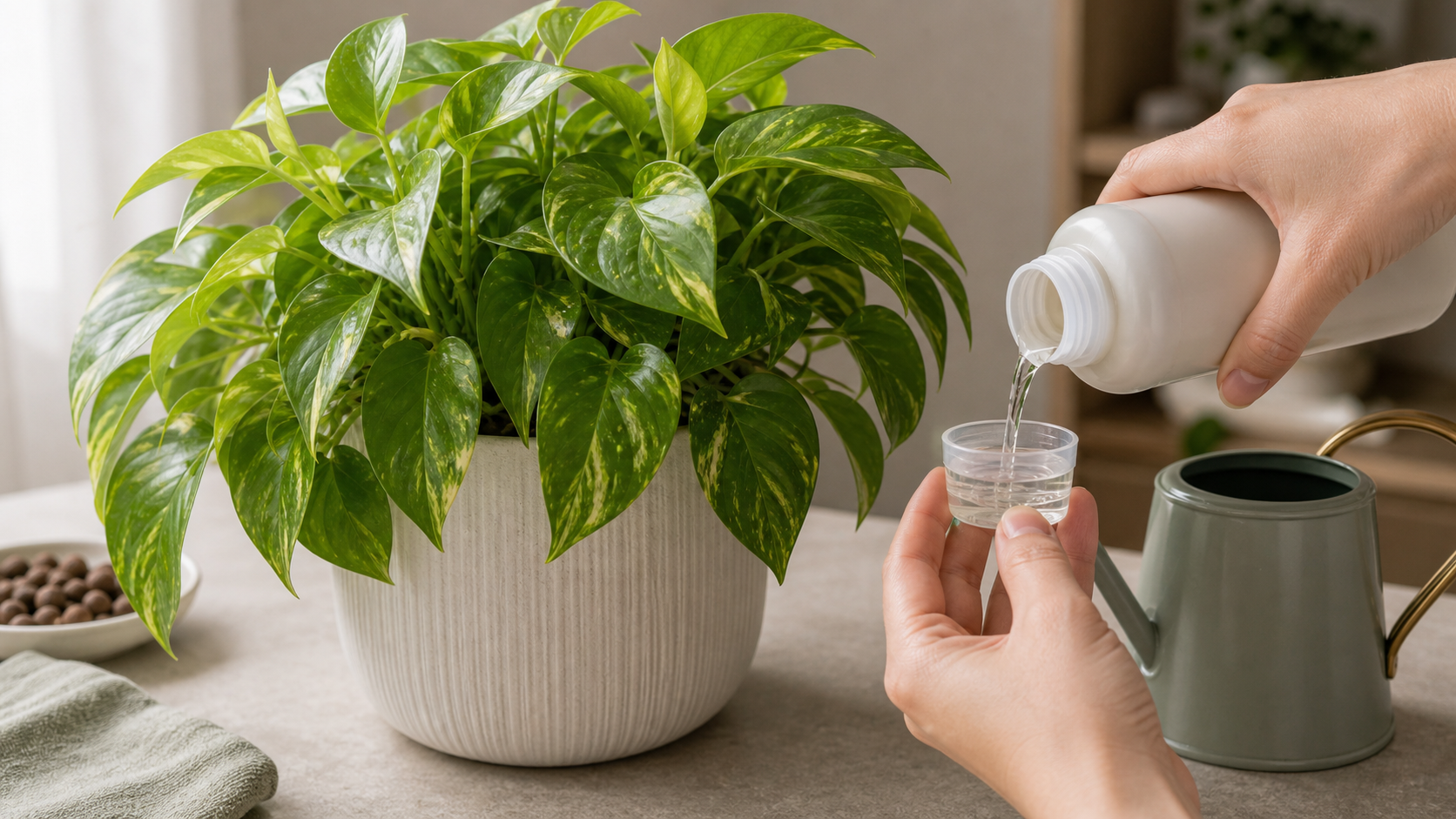
Choose products labeled for potted plants, start conservatively according to the label, and do not feed bone-dry media. Observe new growth afterward and avoid repeatedly layering multiple products.
Recognize salt and burn risk
White crust on a pot rim, browned tips, or rapid decline following feeding call for a pause and checks of salts, drainage, and roots. Where appropriate, flush media thoroughly with clean water and discard all drainage.