Overview
Stippling, leaf undersides, and dry warmth are key clues
Spider mites build quickly in warm dry conditions, often starting as fine pale stippling. Routine inspection reduces widespread outbreaks.
Look in the right places
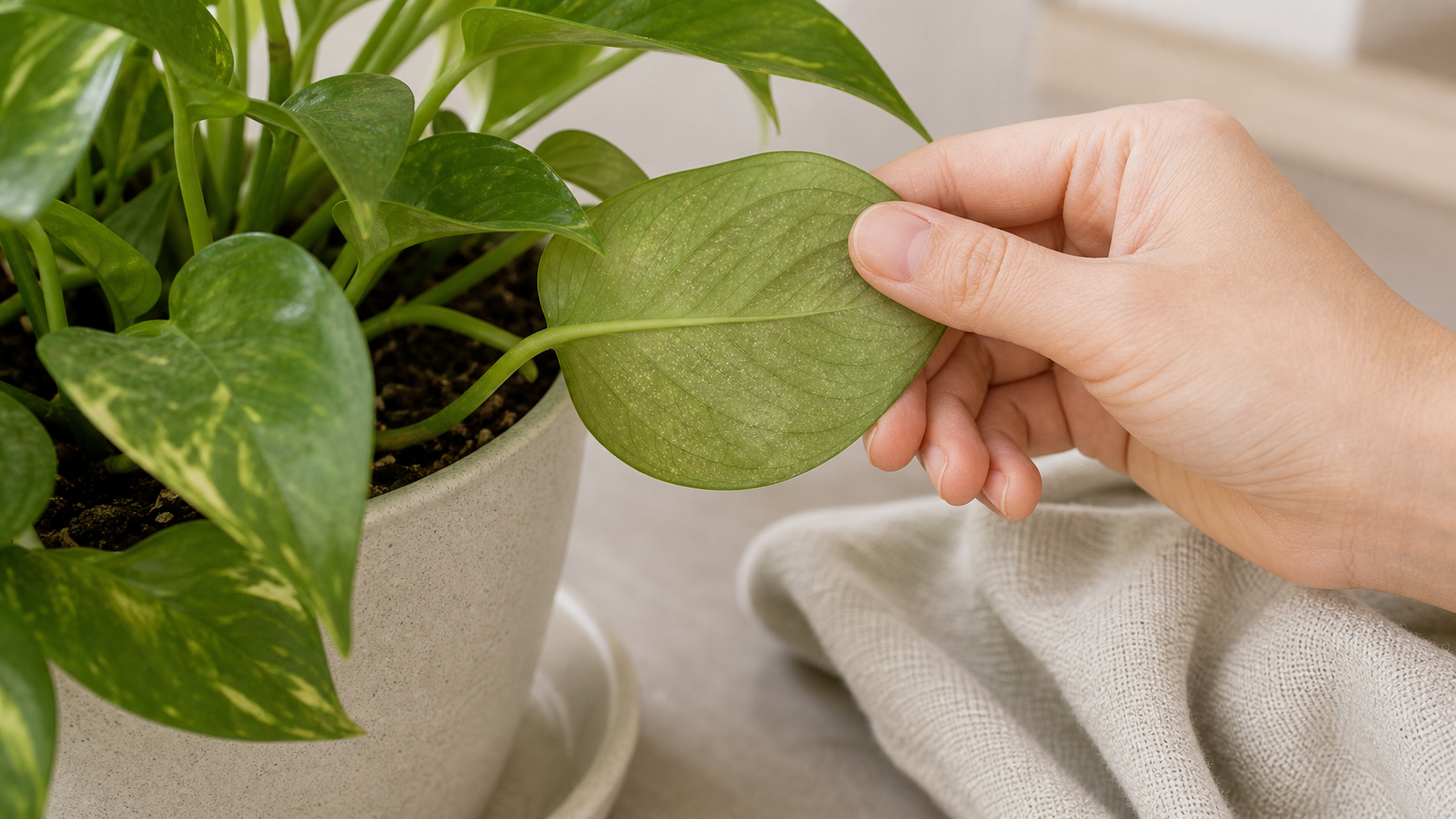
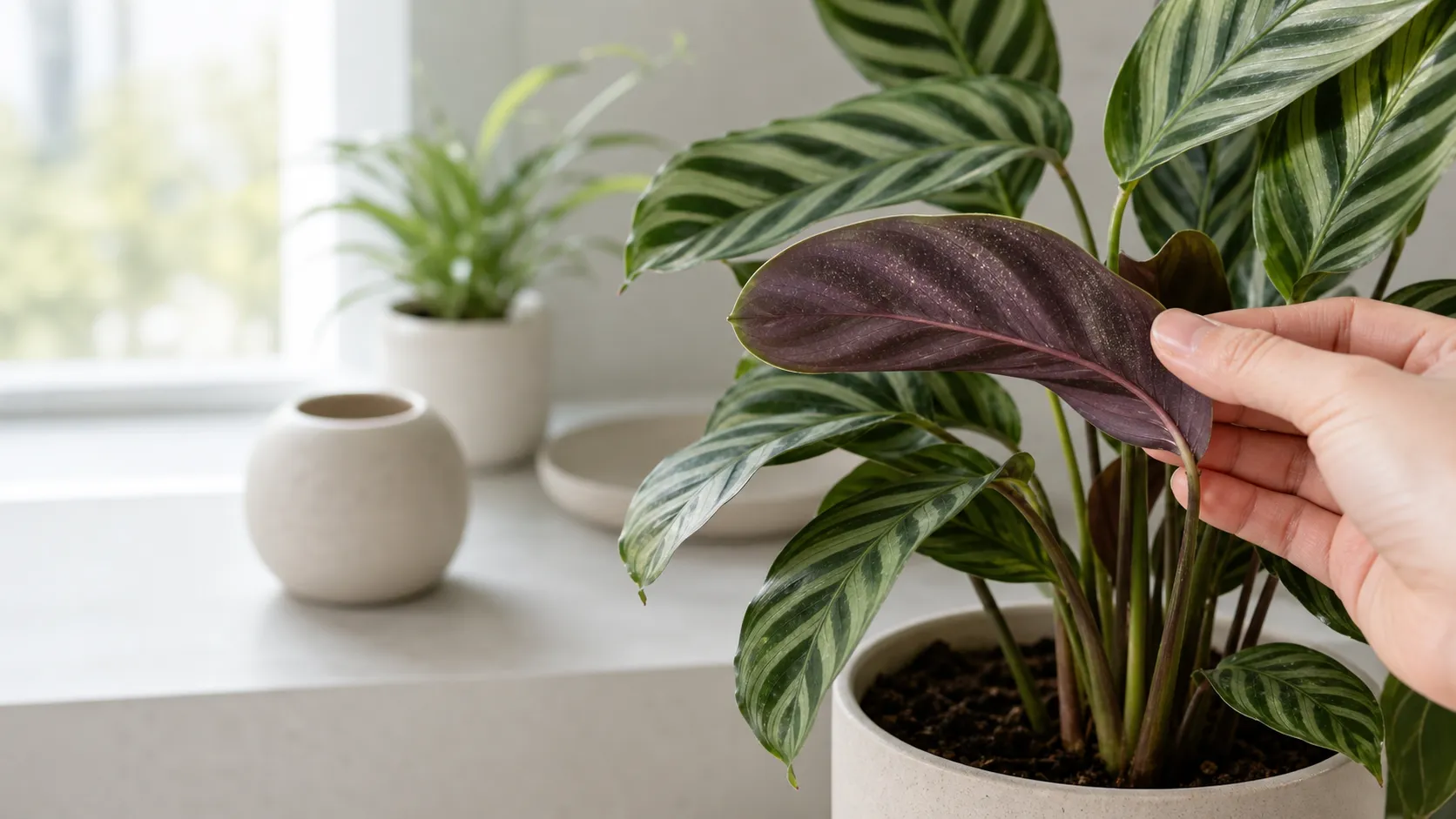
Hold foliage in natural light and focus on undersides, near veins, and new leaves. Fine pale stippling, a dull texture, or very fine webbing is a more useful early warning than waiting for broad browning.
Isolate and reduce the population first
Separate a suspicious plant immediately. On plants that tolerate washing, rinse leaf undersides carefully; for broad foliage, wipe gently with a damp soft cloth and remove severely damaged leaves.
Improve conditions without misunderstanding humidity
Warm dry dusty settings favor mite buildup. Better cleaning and appropriate local humidity can help, but they do not replace direct management of an established population.
Use labeled products when necessary
If live mites, webbing, or new damage continues, use a locally registered product labeled for mites and the target plant, following all timing and safety directions exactly.