Overview
Isolate, identify, remove, and recheck
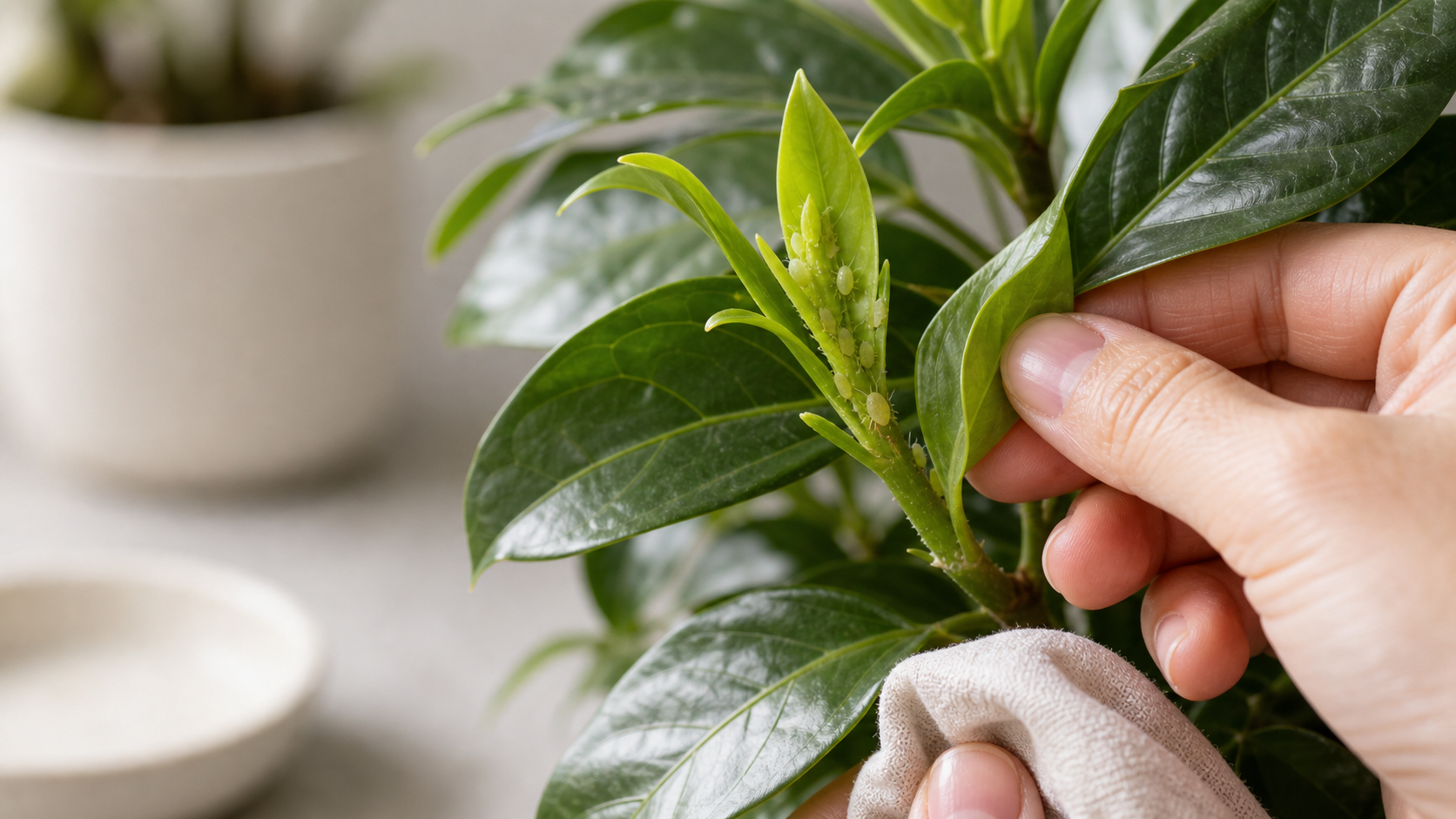
Aphids often cluster on tender growth and buds and leave sticky honeydew. Early isolation and removal make control easier.
Confirm that aphids are present
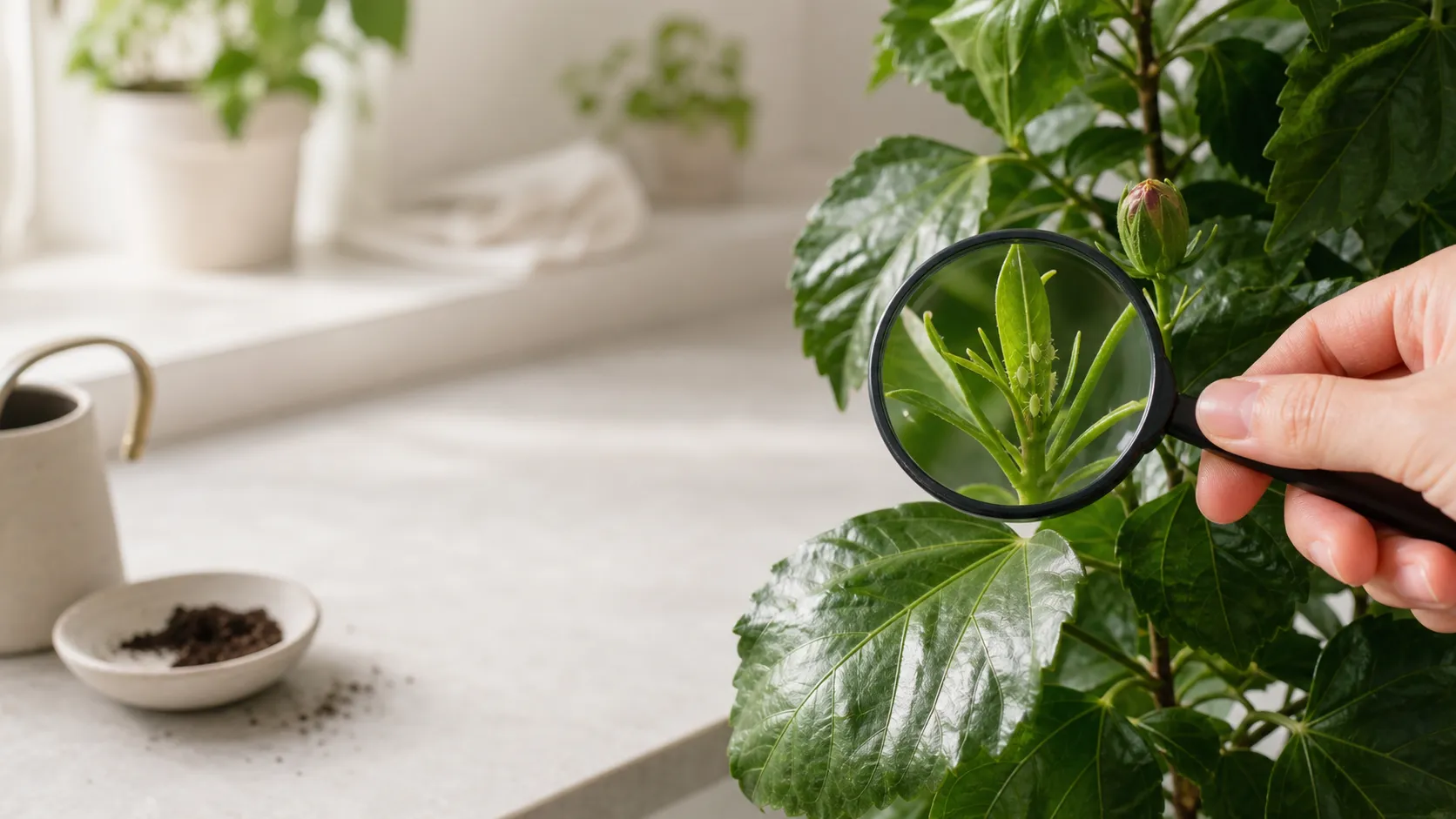
Inspect tender shoots, leaf undersides, and buds. Aphids usually cluster visibly, may be green, dark, or pale, and often leave sticky honeydew with slightly distorted new leaves. Yellowing alone without visible insects is not proof of aphids.
Isolate and clean immediately
Move the affected pot away from other plants, remove badly damaged tender growth or flowers, and rinse or wipe off a light population along with honeydew. Cover the potting surface while cleaning so pests are not washed into the media or scattered nearby.
Repeated checks matter more than one treatment
Revisit fresh growth and undersides every few days and inspect neighboring plants. If populations persist or increase, choose a locally registered product clearly labeled for ornamental plants and aphids and follow its instructions exactly.
Avoid improvised harsh mixtures
In indoor settings, unverified concentrated home mixes can damage foliage, mark surfaces, or raise exposure concerns for pets. Begin with isolation, physical removal, and properly labeled products when needed.