
Overview
Thrips-transmitted tospovirus disease covers important home-gardening risks including Tomato spotted wilt virus and Impatiens necrotic spot virus. Many flowering pot plants and foliage plants are susceptible, and thrips acquiring virus as larvae can transmit it as adults.
How to identify it
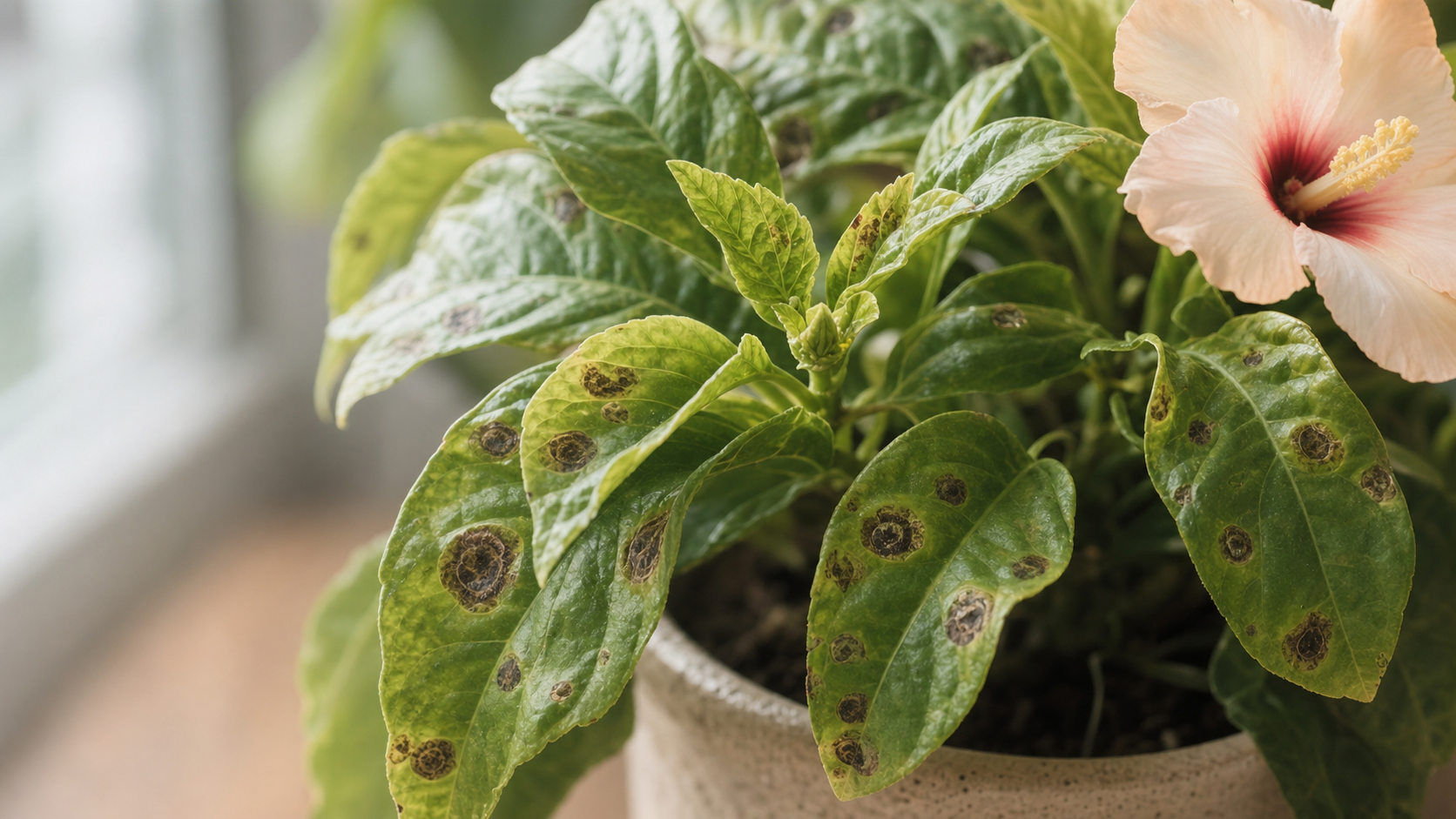
New leaves develop brown to black necrotic rings, streaks, and mottling with distorted or dead growing points. Petals may show color breaks, spotting, or malformed flowers, and plants become stunted.
Early signs and progression
Small non-removable rings or necrotic streaks appear on young leaves or flowers while thrips are detected on sticky cards or within blooms.
Infected plants cannot be cured and can remain ongoing virus sources when thrips are present. Flowering plants and plants with tender new growth nearby become particularly vulnerable.
Prevention
Quarantine new plants and monitor for thrips with sticky cards; inspect flowers, buds, and leaf undersides; remove spent blooms; do not propagate plants with ringspots or dead growing points; reduce thrips promptly when detected.
Lower-risk treatment
Isolate plants with characteristic virus symptoms and discard severe or strongly suspected cases. At the same time, remove open flowers and severely damaged tender shoots, deploy sticky monitoring cards, and inspect neighboring plants for thrips.
Treatment steps
- Isolate plants showing necrotic rings, flower color break, or dead growth points.
- Inspect flowers and new growth for thrips and install monitoring cards.
- Bag and remove spent blooms, debris, and severely affected tissue.
- Discard highly suspected virus-infected plants and never use them for propagation.
- Manage thrips and inspect adjacent plants for at least four weeks.
Chemical treatment and safety
Pesticides cannot cure virus-infected plants. If thrips control is required, choose locally registered products labeled for the crop and thrips, rotate modes of action where directed, and follow all label requirements.
Home remedies
- Flower sanitation — Thrips commonly hide inside blooms. Bag and remove open and spent flowers when thrips are detected to reduce harborages.
- Separated observation — Keep plants suspected of virus infection separate from thrips-infested plants without virus symptoms and monitor each group independently.
Referenced products
- Blue sticky monitoring cards — Place near the canopy to monitor thrips activity.
- Thrips-labeled horticultural product — Use only as registered locally for thrips management; it does not cure the virus.