
Overview
Edema is a physiological disorder caused when roots absorb water faster than leaves can transpire it; it is not an infectious disease. It is favored by persistently moist mix, high humidity, low light, or cool conditions and is common on fleshy-leaved plants, geraniums, peperomias, and some foliage plants.
How to identify it
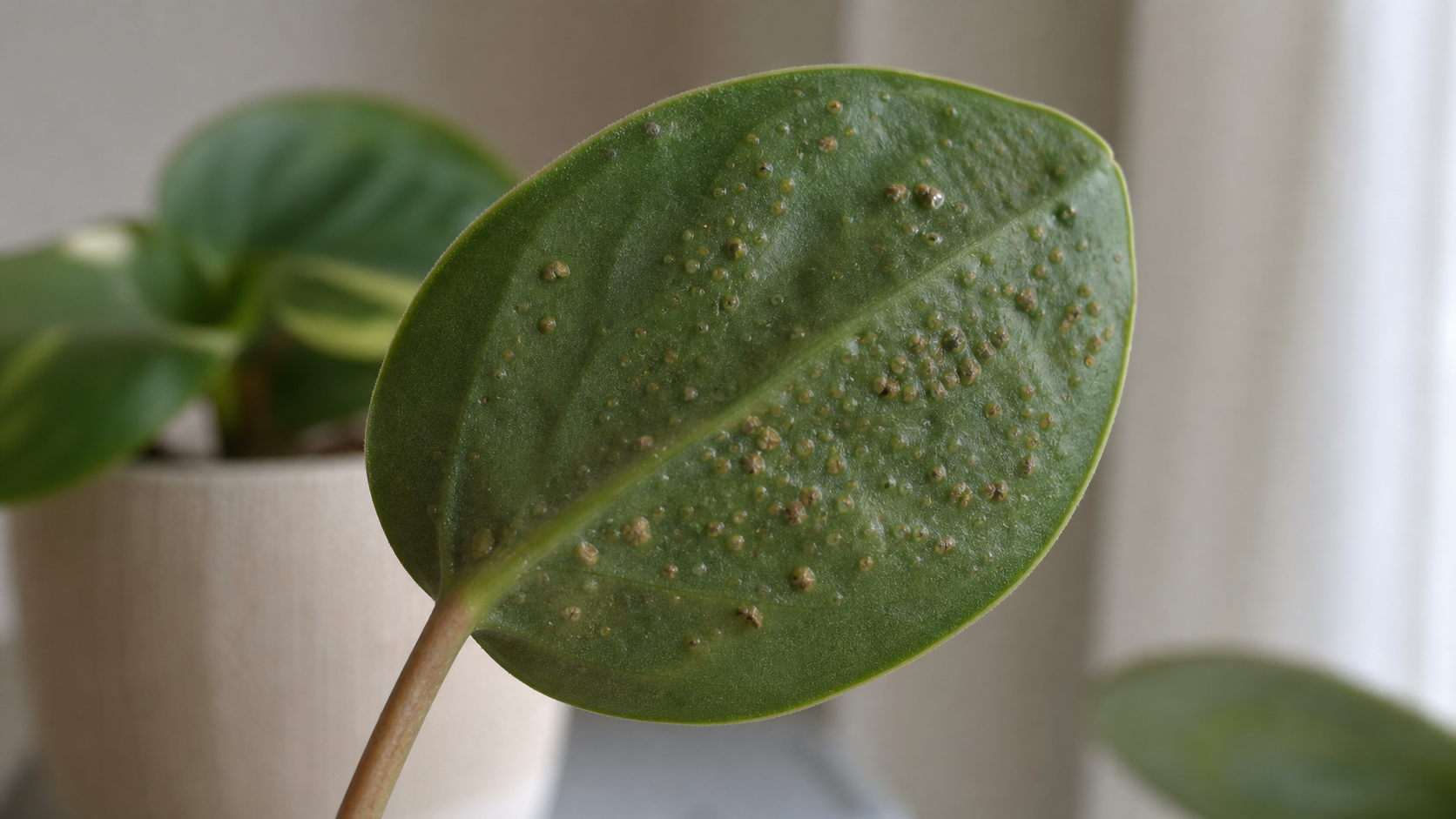
Small translucent or water-soaked blisters first appear on leaf undersides, later turning white, brown, or corky and rough; severe cases lead to distorted, yellowing, or dropping leaves.
Early signs and progression
The underside of leaves develops tiny raised bumps or pinhead blisters without insects, honeydew, webbing, or signs of spread to neighboring plants.
Existing corky lesions generally remain, but new growth can be healthy after conditions are corrected. If excess moisture and low transpiration persist, subsequent leaves will continue to be damaged.
Prevention
Water according to potting-mix moisture rather than a fixed schedule; reduce frequency during cool or low-light periods; ensure free drainage; water in the morning and improve airflow; avoid saturated mix overnight.
Lower-risk treatment
Pause watering until the mix reaches an appropriate dryness and move the plant to bright indirect light with better airflow. No spray is needed; retain functioning leaves and remove damaged old leaves only after healthy new growth appears.
Treatment steps
- Confirm blisters or corky lesions rather than scale insects, mites, or leaf spot disease.
- Check potting-mix moisture, drainage holes, and standing water in the saucer.
- Delay the next watering and improve bright indirect light and airflow.
- Track new growth; persistent old lesions do not indicate treatment failure.
- If new leaves continue to blister, adjust the mix and watering pattern.
Chemical treatment and safety
Edema is not caused by a pathogen, so fungicides and insecticides are not indicated. Unnecessary sprays can further injure foliage without correcting the water-transpiration imbalance.
Home remedies
- Moisture reset — Empty standing water from the saucer and wait until the mix below the surface has dried appropriately before watering thoroughly again.
- Improve transpiration conditions — Move the plant into bright indirect light with gentle airflow and avoid prolonged cool, wet conditions near windows at night.
Referenced products
- Potting-moisture checking tool — Helps assess deeper moisture before watering again.
- Well-draining potting mix — Use when repeated edema coincides with compacted, water-retentive mix.