
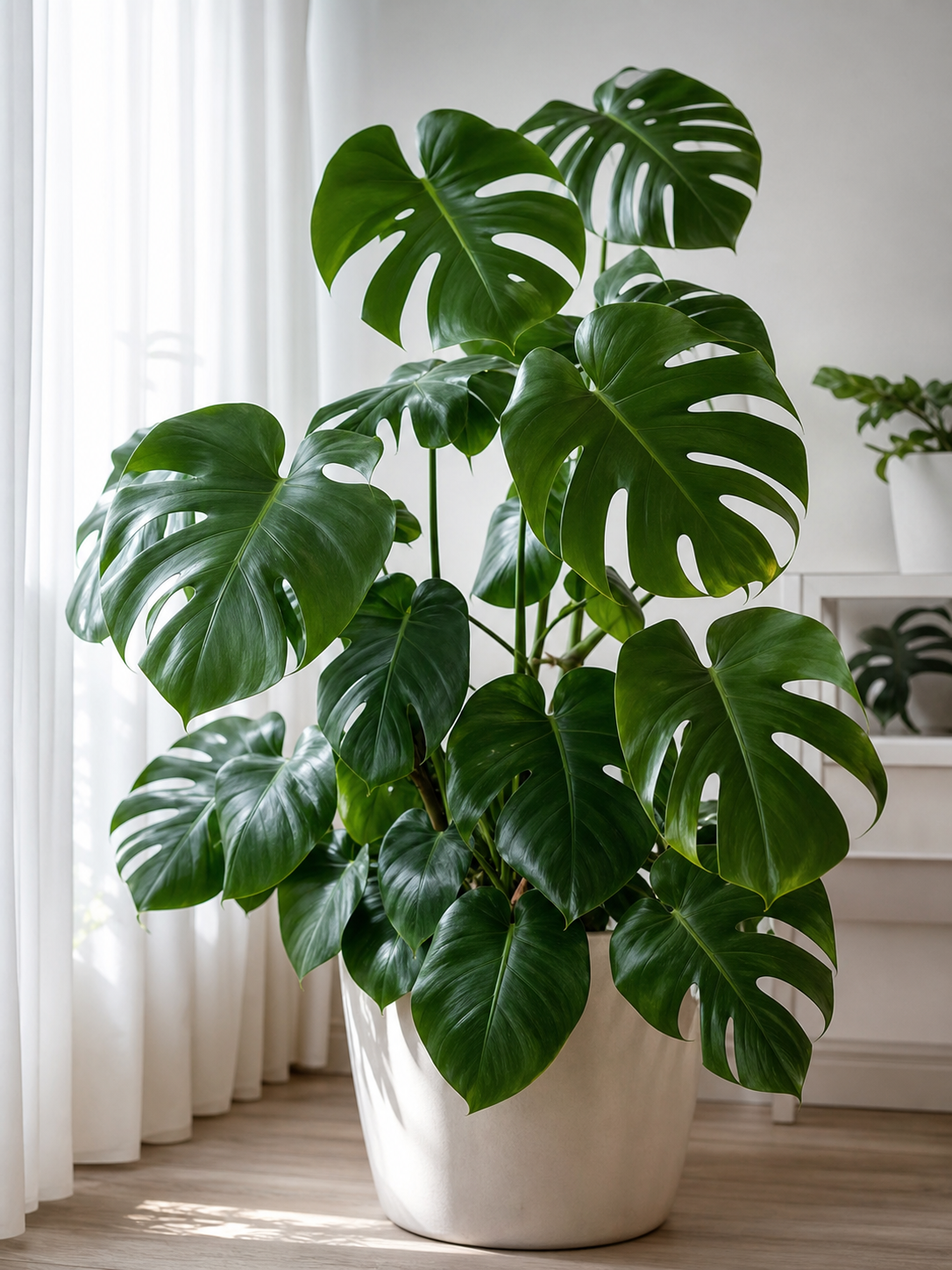
Overview
Navigating the Unique Challenges of Dark, Heated Indoor Spaces
European winters bring extremely short daylight hours and dry heated air that create specific challenges for Monstera plants. This guide provides practical strategies tailored for European home environments.
The Unique Environmental Challenges of European Winter
Winter in Europe presents some of the most demanding conditions for indoor plants throughout the year. From London to Rome, from Berlin to Madrid, daylight hours dramatically decrease, and many apartments have smaller windows potentially blocked by neighboring buildings. This results in indoor light intensity dropping to merely a tenth—or even less—of summer levels. Simultaneously, European homes predominantly rely on central heating systems, which can reduce indoor humidity to below 30%—a stark contrast to the tropical rainforest environment where Monstera deliciosa originates.
Understanding these challenges is the first step toward successfully caring for your Monstera during winter. While Monstera is renowned for its adaptability, it requires active adjustment of care strategies when facing prolonged low light and dry air conditions.
Light Management: Maximizing Limited Light Sources
Strategic Position Relocation
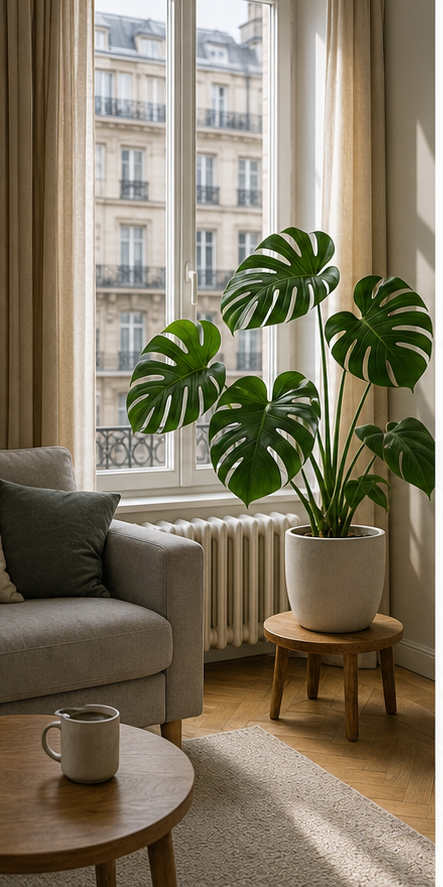
During winter, relocate your Monstera to the brightest spot in your home—typically near south or west-facing windows. Ensure the plant is no more than 60 centimeters from the window to maximize exposure to available light. Avoid placing your Monstera in room corners or on shelves far from windows.
Window Cleaning and Light Enhancement
European winters often bring increased airborne particles and haze. Regularly cleaning windows can increase light transmission by approximately 15-20%. If feasible, use reflective surfaces (white cardboard or aluminum foil) positioned behind the plant to bounce additional light back onto the foliage.
Supplemental Lighting Recommendations
If natural light is genuinely insufficient (less than 4 hours daily), consider using full-spectrum LED grow lights. Supplementing with 4-6 hours of artificial light daily can effectively prevent leggy growth. Position lights 30-50 centimeters from the plant, providing illumination for 10-12 hours weekly.
Temperature and Heated Environment Management
Temperature Control in European Heating Systems
Central heating typically maintains room temperatures between 20-24°C, which falls within Monstera's comfortable range. However, be mindful to avoid placing plants directly above radiators or in the path of heated air currents. The ideal placement is more than 1 meter from heat sources and away from air conditioning vents.
The Importance of Day-Night Temperature Variance
Monstera thrives in stable temperature environments, with day-night fluctuations not exceeding 8°C. If your apartment experiences significant temperature drops at night (such as when using timed heating systems or lowering thermostat settings), consider using heat mats or relocating plants to warmer rooms.
Watering Strategy: The Art of Winter Water Conservation
Methods for Determining Watering Timing
Monstera's growth rate significantly slows during winter, reducing water requirements considerably. Overwatering represents one of the primary causes of winter Monstera mortality.
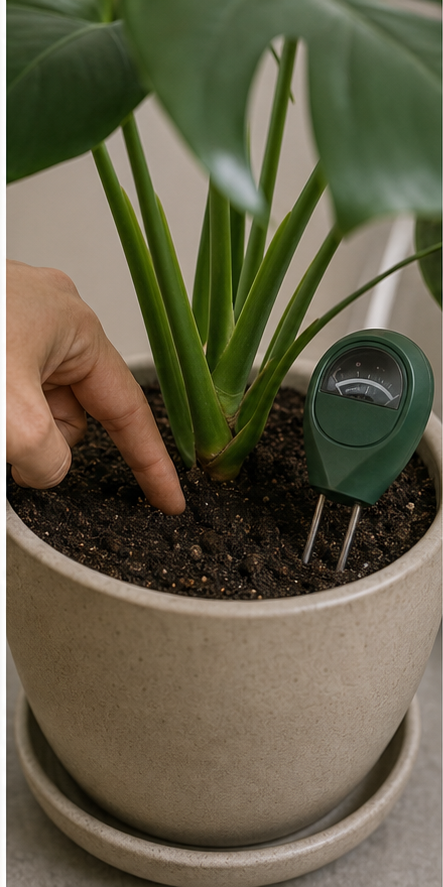
Utilize soil moisture meters or the finger test method: water only when the soil feels dry 2-3 centimeters below the surface. Winter watering intervals may extend to 10-14 days or even longer. Insert your finger into the soil—if it feels moist, continue waiting.
Water Volume and Application Methods
Apply the "when you water, water thoroughly" principle, but slightly reduce water volume during winter. Wait for a small amount of water to flow through the drainage holes, but avoid letting water sit in trays for extended periods. Using room-temperature water (18-22°C) is recommended, as overly cold water can shock the root system.
Water Quality Considerations
Some European regions have harder tap water, and prolonged use may lead to salt accumulation in soil. If you notice white leaf tips or white crystallization appearing on the soil surface, consider using filtered or rainwater for irrigation.
Humidity Management: Combating Dry Heated Air
Humidity Challenges in European Apartments
European winter indoor humidity typically ranges between 25-40%, far below Monstera's preferred 60-80%. Prolonged exposure to dry air causes leaf edge browning, poor development of new leaves, and increased vulnerability to pests.
Practical Humidity Enhancement Methods
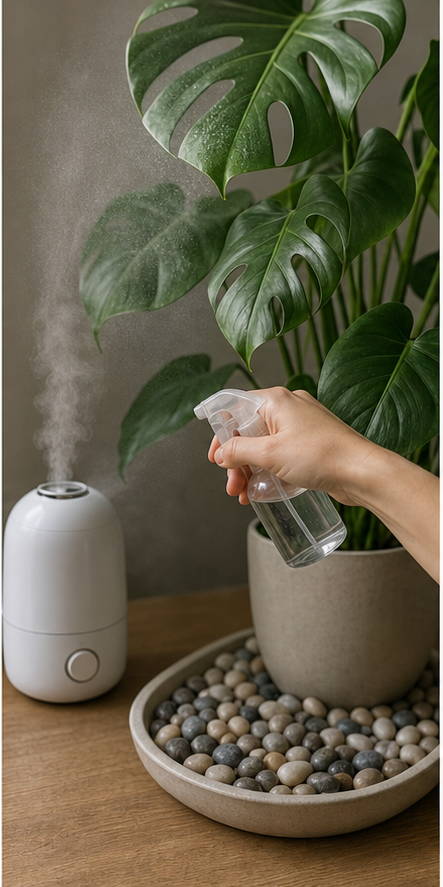
Method One: Pebble Tray Place your pot on a tray filled with water and pebbles, ensuring the pot base doesn't directly contact the water. As water evaporates, it locally increases humidity around the plant.
Method Two: Misting Mist leaves 1-2 times daily using room-temperature soft water. Apply misting in the morning to allow leaves time to dry before evening, preventing fungal issues.
Method Three: Grouping Effect Position your Monstera near other humidity-loving plants. Combined transpiration effectively raises surrounding air humidity.
Method Four: Humidifier If central heating runs continuously, a small humidifier can effectively maintain appropriate indoor humidity. Set your target humidity between 50-60%.
Fertilization Adjustment: The Winter Dormancy Principle
Why Winter Fertilization Should Stop
Monstera slows or semi-dormant growth during winter, with minimal nutrient requirements. Continuing fertilization during this period leads to salt accumulation in soil, damaging roots and potentially causing leaf yellowing or root rot.
Correct Fertilization Timing
In European regions, fertilization typically stops from November through February. If indoor temperatures remain relatively high and light is adequate, with the plant still showing growth signs, apply diluted liquid fertilizer (reduced to 1/4 normal concentration) every 6-8 weeks during December and January.
Pest and Disease Prevention: Winter High-Risk Issues
Spider Mite Prevention
Dry heated air creates ideal breeding conditions for spider mites. Winter requires increased humidity vigilance and regular inspection of leaf undersides for tiny red dots or white spots (mite eggs). Prevention measures include:
Mealybug Inspection and Treatment
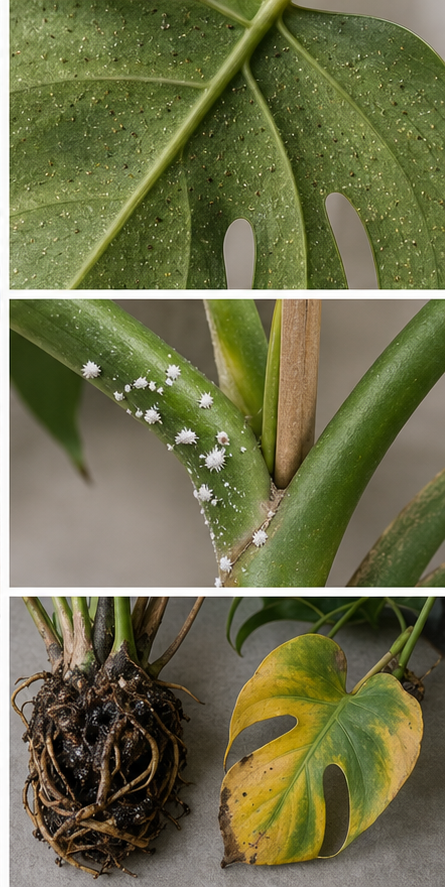
With reduced indoor ventilation during winter, mealybugs may seize opportunities to invade. Inspect stems and leaf axils for brown or white waxy bumps. Upon discovery, remove with cotton swabs dipped in rubbing alcohol, or apply diluted horticultural oil spray.
- Maintaining indoor humidity above 50%
- Weekly gentle leaf wiping with a damp cloth
- If infestation occurs, neem oil solution spraying or soap water application on both leaf surfaces can be effective
Shape Maintenance: Pruning and Support
Winter Pruning Principles
Winter isn't the time for major pruning operations, but promptly remove:
Using sterilized scissors, make diagonal cuts approximately 1 centimeter above nodes.
Aerial Root Management
Monstera may produce more aerial roots in low-light conditions, and these roots seek support structures. If climbing isn't desired, gently guide roots toward soil surface or trim shorter. Roots inserted into soil help stabilize plants and absorb moisture from air.
- Completely yellowed or dead leaves
- Leaves showing obvious disease infection
- Excessive leggy growth (elongated nodes, smaller leaves)
Repotting Recommendations: Winter Avoidance
Unless emergency root rot treatment is necessary, repotting should be avoided during winter. Plants in weakened states suffer further root damage from repotting, significantly increasing mortality risk. The optimal repotting window is spring (March-May), when vigorous growth resumes.
Preparing for Spring Recovery
As daylight hours increase in March, gradually resume normal watering frequency. Monitor plant condition weekly. When new leaf emergence becomes apparent, slowly increase water volume and consider resuming fertilization. Use liquid fertilizer diluted to half normal concentration.
Conclusion
While European apartment winter environments present considerable challenges, understanding your Monstera's growth requirements and making appropriate adjustments allows you to maintain plant health and vitality throughout this season. The key principles are: reduce watering, increase humidity, maximize light exposure, stop fertilizing, and inspect regularly. Remember, your Monstera is navigating a long winter in its own way—your role is to provide stable, gentle environmental support that helps it thrive until brighter days return.