
Overview
Essential Care Guide for Snake Plants in Southeast Asia's Warm and Humid Climate
Even with careful watering, snake plants frequently develop root rot in Southeast Asia's high-humidity environment. This article analyzes how moisture affects potting soil, teaches you to identify healthy roots, and provides step-by-step instructions for repotting to help your snake plant recover and thrive.
The Real Causes of Snake Plant Root Rot
Many plant parents assume snake plants are foolproof "set-it-and-forget-it" plants that only need occasional watering. However, in Southeast Asia's warm and humid climate, root rot remains a persistent problem. This isn't simply about overwatering—multiple environmental factors conspire against healthy roots.
How Humidity Affects Potting Mix
Southeast Asia maintains relative humidity levels between 70% and 90% year-round. This environment dramatically slows soil drying time. Even if you follow the "let it dry completely" rule, the deeper soil layers may stay moist for weeks. Snake plants have rhizomatous root systems that prefer well-aerated, dry conditions. When roots sit in consistently damp soil, they become oxygen-deprived, leading to anaerobic decomposition and rot.
Common Misconceptions
Many gardeners check only the top inch of soil to decide when to water, but this approach is unreliable. The surface may be dry while the root zone remains saturated. Use a bamboo skewer or moisture meter to check the soil several inches deep. Water only when the entire root zone is dry.
Warning Signs of Root Rot
Watch for these symptoms indicating root problems:
When these signs appear, immediate action is required.
- Lower leaves turning yellow and mushy
- Entire leaf rosettes collapsing or tilting
- Water-soaked spots appearing on leaves
- Plant wobbles loosely when gently pushed
- Base of the stem near soil level turns black and soft
How to Reset the Potting Mix
Step 1: Remove and Inspect
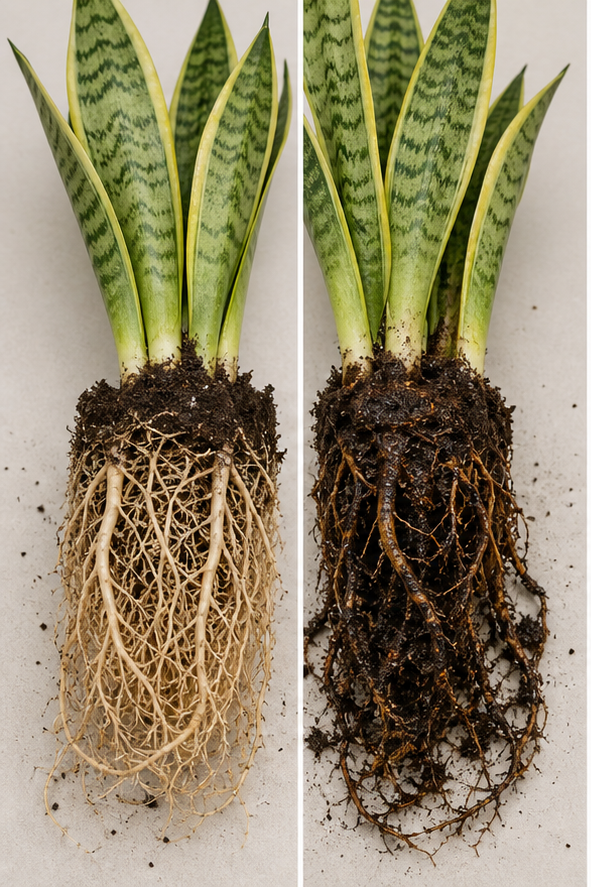
Carefully extract the snake plant from its pot and gently shake off clinging soil. Examine the roots closely: healthy roots appear pale yellow to cream-colored with firm, resilient texture; rotting roots appear brown to black and feel mushy when pressed, sometimes emitting a foul odor.
Step 2: Prune Damaged Tissue
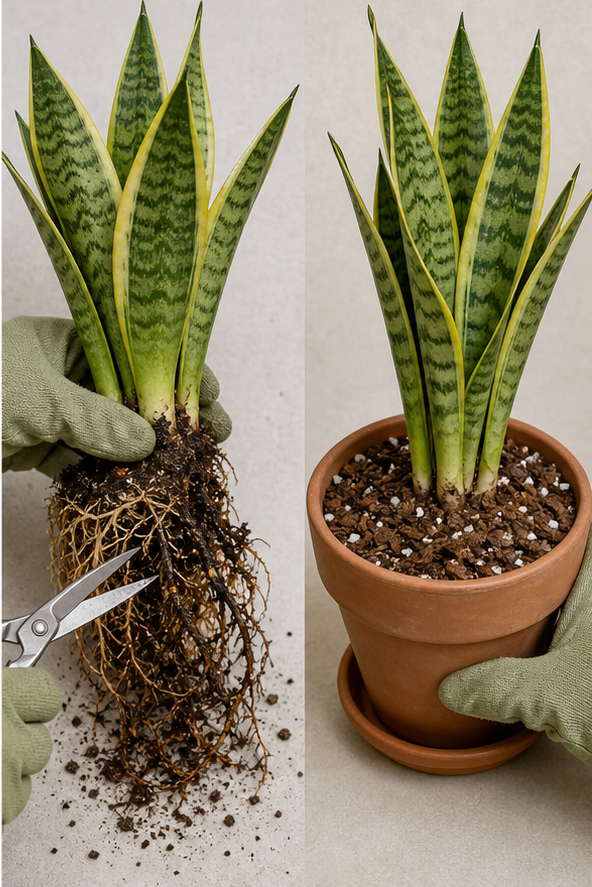
Using sterilized sharp scissors or a knife, cut away all brown, black, and soft roots completely. Healthy white roots should remain intact. Snake plants have remarkable regenerative abilities—even after removing most of the root system, as long as the rhizome is intact, new roots will develop. After pruning, dust cut surfaces with cinnamon powder or sulfur fungicide to prevent infection.
Step 3: Select Appropriate Potting Mix
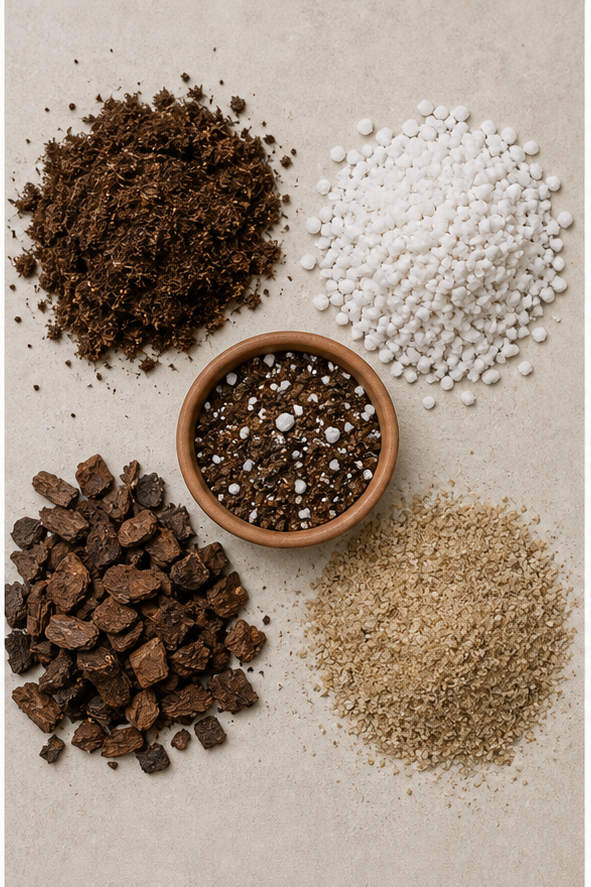
The new soil must provide excellent drainage and aeration. Recommended mix:
Alternatively, purchase commercial succulent/cactus mix and add approximately 30% extra perlite to improve drainage. Avoid standard potting soil with high water retention.
Step 4: Proper Repotting Technique
Choose a pot with adequate drainage holes. Terra cotta or unglazed ceramic pots are ideal—more breathable than plastic containers. Select a pot only 2 to 3 centimeters larger than the spread of the root system. Oversized pots slow the wet-dry cycle unnecessarily.
Begin by placing a drainage layer of pebbles or broken pottery at the bottom. Fill with fresh mix, position the snake plant so the rhizome sits just at soil level (do not bury leaves), and firm soil gently around roots to eliminate air pockets.
Step 5: Post-Repotting Care
Do not water immediately after repotting. Place the plant in bright, indirect light with good air circulation and wait 7 to 10 days for root wounds to callous. Then water thoroughly for the first time, and resume normal watering schedule thereafter.
- Coarse peat moss or coconut coir: 40%
- Perlite or pumice: 30%
- Composted bark or leaf mold: 20%
- Coarse sand or grit: 10%
Preventing Future Rot
Improve Air Circulation
During humid seasons, use a small fan or open windows to promote airflow and reduce ambient humidity around plants. Avoid placing snake plants in corners or enclosed spaces.
Adjust Watering Strategy
Try bottom watering: place the pot in a tray of water and let soil absorb moisture from below for 15 to 20 minutes. This method ensures even moisture distribution while keeping water away from foliage, reducing disease risk.
Regular Monitoring
Inspect snake plants monthly, especially during rainy seasons. When early signs of yellowing appear, remove the plant and check roots. Early detection makes treatment much more successful.
Optimal Placement
Position snake plants near east or north-facing windows where they receive gentle morning or late afternoon light. Avoid prolonged exposure to intense direct sunlight. Good lighting helps accelerate soil drying, reducing root exposure to prolonged moisture.
Conclusion
When snake plants develop root rot in Southeast Asian homes, the problem isn't necessarily your watering technique. Rather, adjustments are needed across soil composition, air circulation, and watering methods. With proper repotting procedures and consistent care, your snake plant can adapt to tropical humidity and flourish. Remember, plant care is an ongoing process of observation and adjustment—patience and attention are the keys to success.