Overview
Root crowding, failing media, and container stability
Repotting is not an annual chore. Root condition, drainage, and stability matter more than the calendar alone.
Visible signs that justify repotting
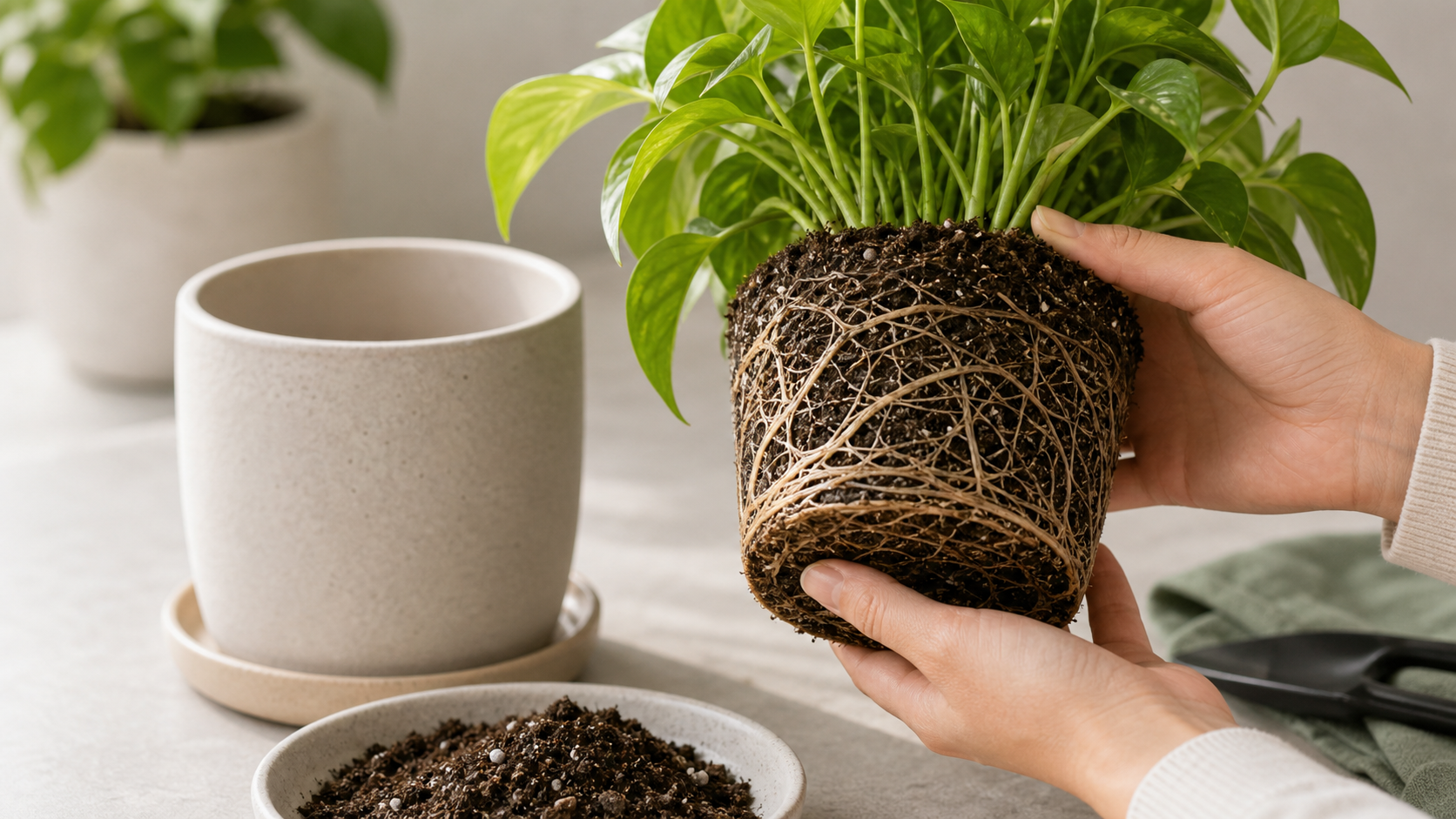
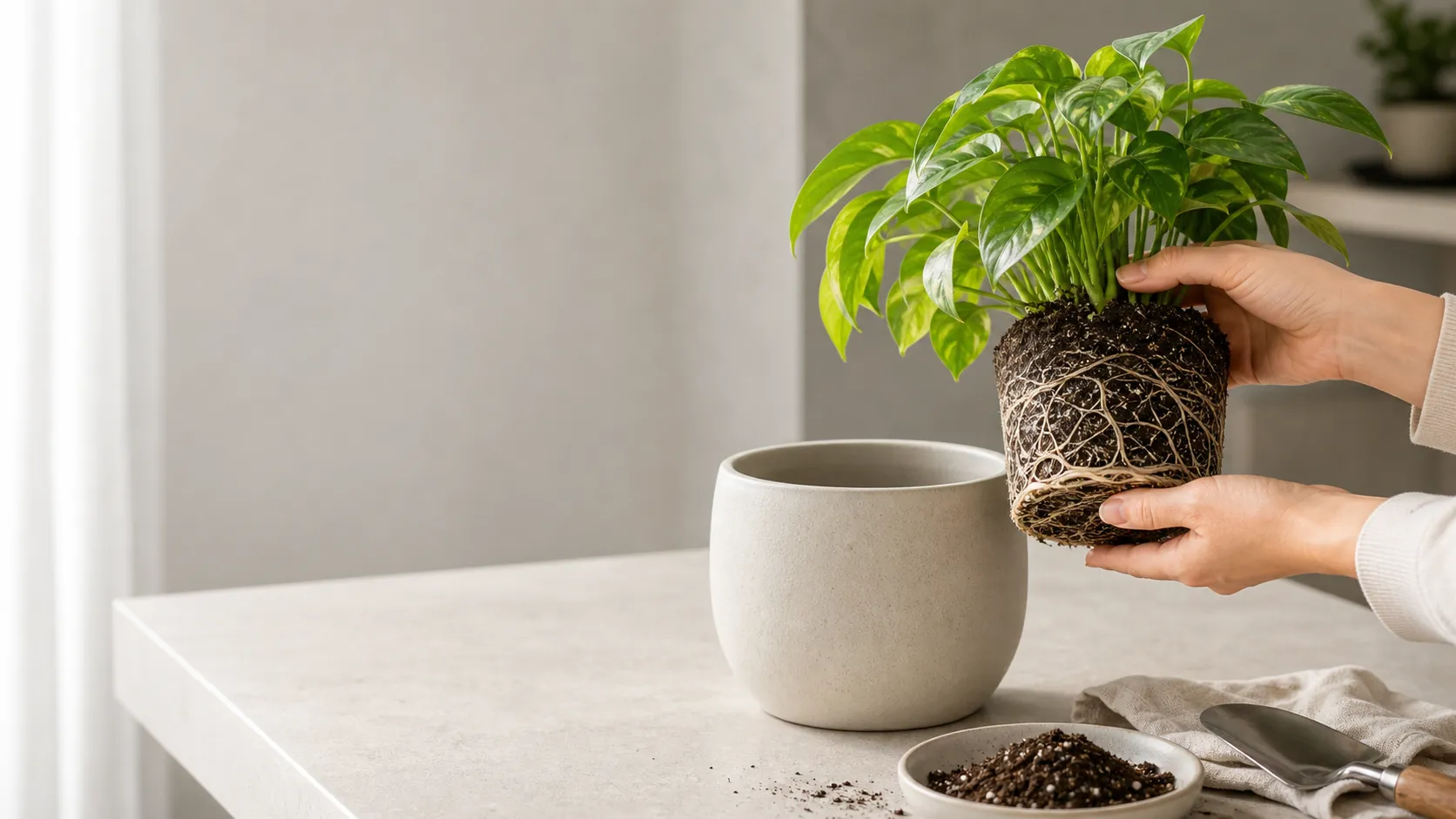
Roots emerging heavily from drainage holes, a tightly circling root ball with little visible media, very rapid drying after proper watering, or poor container stability all justify investigation.
Do not blame every problem on pot size
Yellowing or stalled growth may also reflect low light, watering errors, pests, or seasonal change. If roots are not crowded, an oversized new pot can increase the risk of prolonged wetness.
Choose container and media carefully
Usually increase by only one pot size and keep drainage holes clear. Use clean container media appropriate for the plant rather than garden soil indoors. Remove soft rotten roots while preserving firm healthy growth.
Recovery after repotting
Provide stable suitable light, water cautiously according to media moisture, and delay strong fertilizer. Resume ordinary care after new leaf or root activity signals recovery.