
Overview
Distinguishing Mild Root Binding from Containers That Truly Stunt Growth
Root circling is common in potted plants, but not all root binding requires immediate action. This article helps readers learn to observe root conditions, distinguish between mild root binding and severe growth limitation, understand proper repotting timing and techniques, and identify growth changes to watch for after repotting.
Observation Points: Understanding the Degree of Root Circling
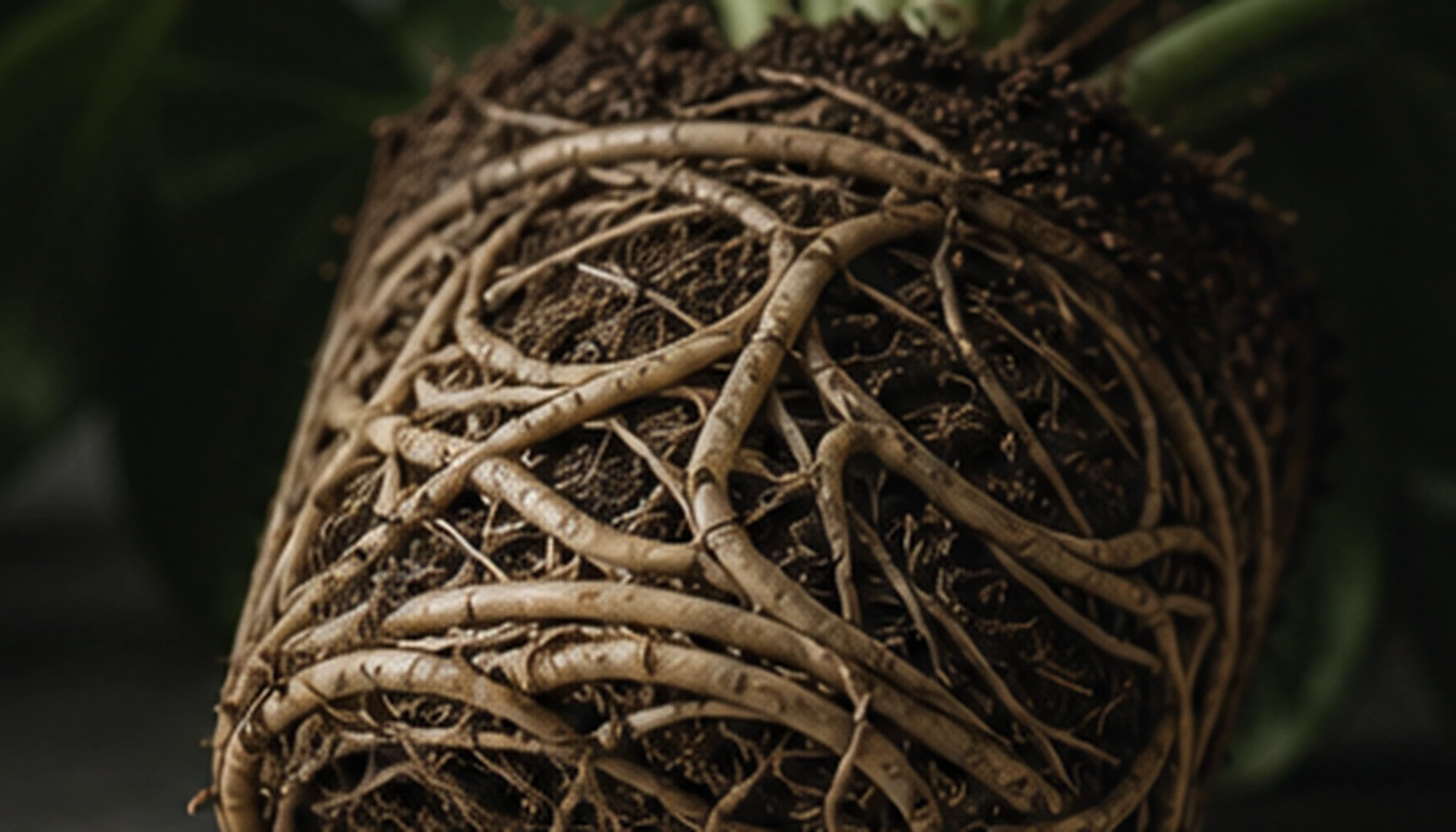
Root circling occurs when a plant's roots grow within a container and wrap around the root ball. Mild root binding is actually a normal adaptation for many species in confined spaces, and some plants actually bloom more readily when slightly root-bound. However, when roots become excessively circling, they form dense root masses that impede normal water and nutrient absorption.
Key indicators to watch for include: significantly slowed drainage, water pooling on the soil surface; stunted or noticeably slowed new leaf growth; wilting leaves despite moist soil; and roots emerging from drainage holes. When these symptoms appear together, the root system is likely severely restricted.
What to Do First: Accurately Assess Root Condition
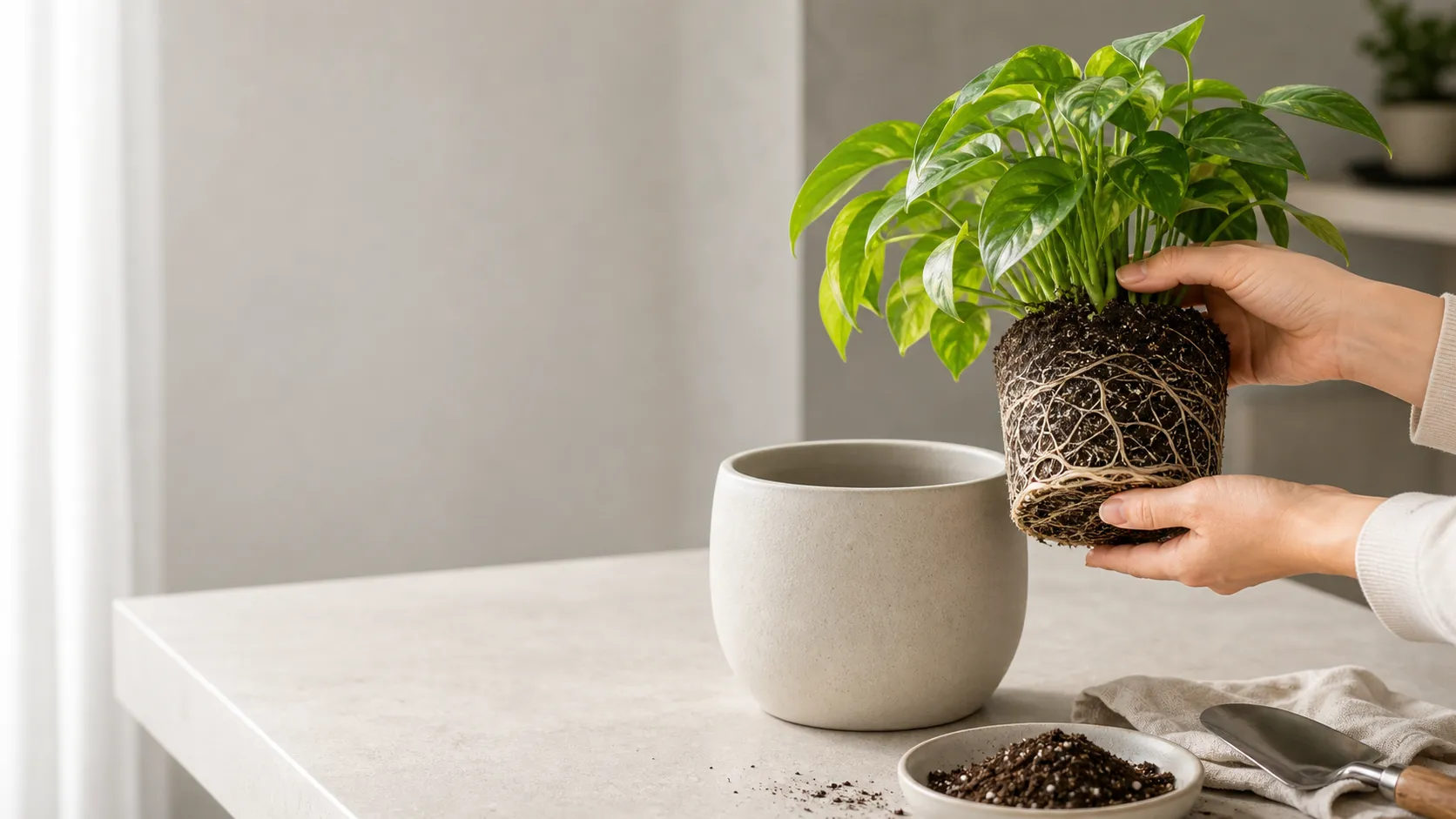
When root over-circling is suspected, first gently remove the plant from its container. Support the soil surface with your palm, invert the pot, and tap the sides to let the roots slide out naturally. Healthy roots should be white or light brown with firm, elastic texture. If roots have formed a dense network and appear dark-colored, soft, or emit an unpleasant odor, immediate intervention is needed.
For mild circling situations, repotting isn't urgent. Observe the ratio between the root ball and container—if roots occupy only one-third to one-half of the pot volume and the plant grows normally, continue caring for it in the original container for one to two growing seasons.
What Not to Do: Common Care Mistakes
Don't rush to repot at the first sign of roots. Repotting immediately upon discovering root circling is a common overreaction—mild root binding benefits many plants by promoting flower bud development. Don't choose oversized containers; the new pot should only be 2-3 centimeters larger in diameter. Oversized pots mean excess soil, leading to slower moisture cycles and increased risk of root oxygen deprivation and rot.
Don't completely break apart the original root system during repotting, even with circling roots. Forcible untangling damages numerous roots, requiring a longer recovery period afterward. Don't fertilize immediately after repotting—wait at least three to four weeks for roots to adapt to their new environment.
What Changes to Watch Next: Judging Repotting Success
After successful repotting, plants typically show positive changes within one to two weeks. Observe whether drainage resumes smoothly, with water penetrating quickly and flowing from the bottom. New leaf emergence signals important root recovery, while progressively brighter leaf color indicates positive progress.
If leaves temporarily wilt after repotting, this is a normal stress response. Keep soil moist, avoid direct sunlight, and recovery usually occurs within a week. If no improvement appears four weeks after repotting, investigate whether roots were damaged during the process or if root rot exists. Successful repotting manifests as enhanced growth vigor and overall improved plant condition—these positive changes serve as reliable indicators of root health.