
Overview
How Your Pot Choices Change Root-Zone Risk Indoors
Pot shape, saucers, cachepots, and drainage holes directly affect root health. This guide explains different pot types' drainage performance, common mistakes, and practical advice to help beginners avoid root rot and compaction issues.
Why Drainage Is Critical for Root Health
Indoor plant roots exist in a confined space where excess water from watering can easily become trapped. When soil remains consistently wet, roots are deprived of oxygen, harmful bacteria multiply, and root rot develops. An improperly designed pot drainage system is one of the most common causes of indoor plant health problems.
What to observe: After watering, check whether water flows out from the pot's bottom. If the soil surface still shows standing water several minutes after watering, the drainage design has issues and requires immediate correction.
Drainage Performance of Different Pot Types
Pot shape directly affects water distribution within the container. Wide, shallow pots have thin soil layers where moisture evaporates quickly, but roots concentrate near the surface and may experience stress from rapid drying. Narrow, deep pots hold more soil, keeping moisture longer at the bottom, which can cause waterlogging if drainage holes are insufficient.
Recommended choice: Cylindrical pots with a height-to-diameter ratio close to 1:1 offer moderate soil volume and even water distribution, making them the most reliable choice for indoor plants.
Number and Placement of Drainage Holes
One drainage hole is sometimes insufficient, especially for wide-mouthed or deep pots. Multiple small holes drain more evenly than a single large hole and also prevent soil from washing out through one opening. For square or rectangular pots, placing a hole in each corner effectively prevents water accumulation in diagonal areas.
Important note: When purchasing pots, test hole size by hand—ensure openings are at least 1 centimeter in diameter with smooth, unfrayed edges. Thin-walled plastic pot holes may deform under soil weight and require regular inspection.
Proper Use of Saucers and Drainage Trays
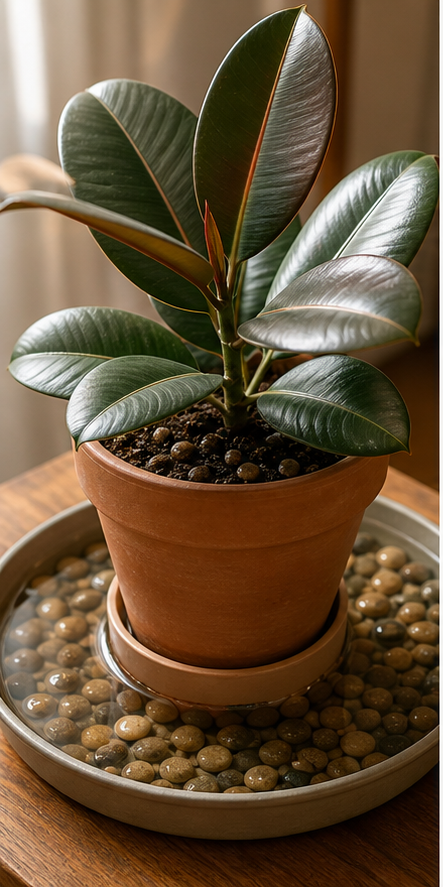
Water collection saucers are essential for catching excess moisture, but improper use creates problems. When a pot sits directly on a saucer with persistent standing water, the pot bottom remains in contact with water, creating a "reverse osmosis" effect where roots absorb excess moisture.
Correct practice: Check saucers 30 minutes after watering and empty any accumulated water immediately. For large planters, tilt the pot to let excess water drain or use absorbent pads to assist evaporation.
Cachepot Benefits and Risks
Cachepots (decorative pots without drainage holes) are attractive and functional but carry the highest risk. Placing a production pot with drainage holes directly into a cachepot means excess water accumulates at the bottom, creating a root suffocation hazard. The solution is using a breathable drainage layer: place a 2-3 centimeter layer of clay pebbles or gravel at the cachepot's bottom, suspending the growing pot above accumulated water.
Not recommended: Never plant directly in a drainage-free cachepot—even if the surface appears dry, bottom moisture gradually rises and causes root decay.
Practical Steps for Choosing Pots
Step 1: Determine the plant's water needs. Moisture-loving plants like monstera tolerate deeper pots; drought-tolerant plants like succulents need shallow, wide-mouthed containers.
Step 2: Inspect drainage design. Prioritize pots with raised bases or grid structures that keep the pot bottom elevated, enhancing air circulation.
Step 3: Match soil volume to pot size. Fill 80% of the pot's volume with soil, leaving 20% empty space to prevent water and soil overflow when watering.
Step 4: Test drainage speed. During initial planting, water generously and observe flow—significant water should emerge within 30 seconds.
Signs to Watch For and Adjustments
If leaves droop more than 24 hours after watering, poor drainage may have damaged the roots. When repotting, if roots appear tangled with a sour smell, prolonged water accumulation has caused root decay—immediately replace the pot, remove and discard damaged roots.
Seasonal changes also require adjustments: winter evaporation is slow, so switch to narrower-mouthed pots with faster drainage; summer heat periods allow use of deeper pots that retain moisture longer and reduce watering frequency.