
Overview
From Moving Stress to Light Adaptation — Expert Tips for Keeping Your Rubber Plant Thriving After Relocation
Rubber plants frequently experience leaf drop after being moved indoors or when seasonal light changes occur. This is not a rare problem but rather a natural physiological response to environmental changes. This article provides a comprehensive analysis of the causes of rubber plant leaf drop and offers practical solutions covering light adjustment, watering management, and temperature control to help you effectively reduce plant stress and restore healthy growth.
Why Rubber Plants Drop Leaves After Indoor Relocation
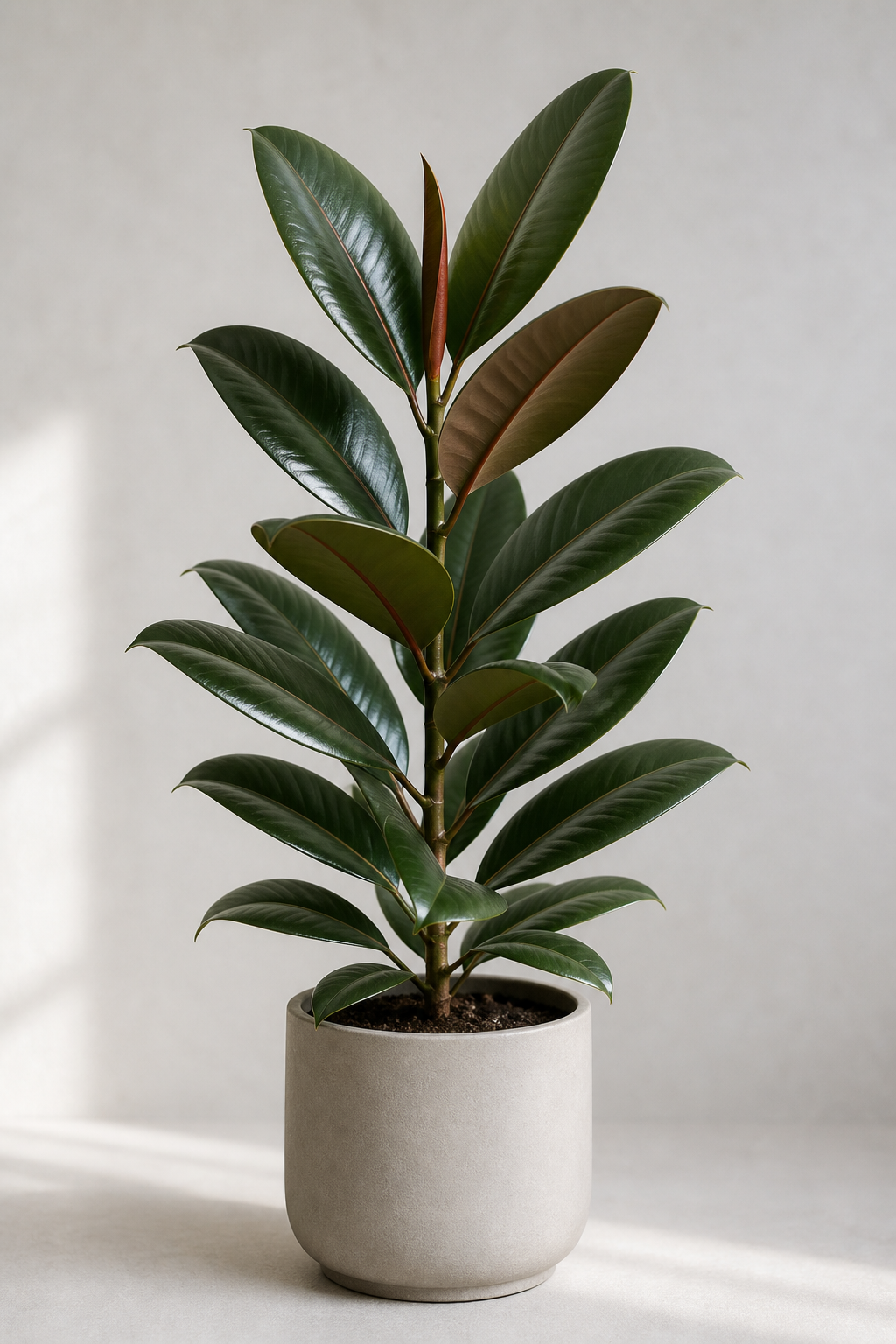
Rubber plants (Ficus elastica) are native to Southeast Asian tropical regions and are accustomed to stable lighting and temperature-humidity conditions. When we move a potted plant from one location to another—especially from a greenhouse, nursery, or friend's home to our own residence—the plant must go through an adaptation process. The greater the environmental change, the higher the likelihood of leaf drop.
Main Cause Analysis
Abrupt light changes are the primary factor. A sudden shift from the high light environment of a greenhouse or nursery to a darker corner indoors significantly reduces the rubber plant's photosynthesis efficiency. The plant will preferentially shed some older leaves to reduce energy consumption—this is a self-protection mechanism. Another common cause is temperature fluctuation, especially when moving during winter, as cold air can directly damage leaf tissue and lead to massive leaf drop.
Root damage should not be overlooked. During搬运 if the pot receives impacts or shaking, the contact between soil and roots gets disrupted, causing roots to temporarily lose their ability to absorb water and nutrients normally. Even when lighting conditions are adequate, the plant will drop leaves due to supply-demand imbalance.
How to Properly Care for Newly Moved Rubber Plants
Week One: Buffer Period Care
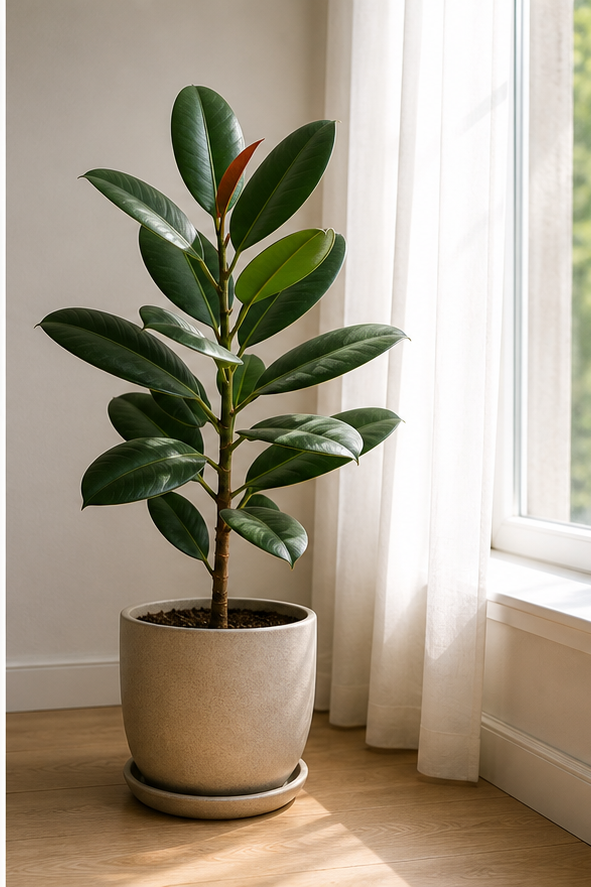
Place the rubber plant in a position with abundant indirect light but no direct sunlight, and avoid placing it near air conditioner vents or heaters. If coming from a high-light environment, use curtains to partially block light, simulating a gradual dimming process. For watering, keep the soil slightly dry during the first two weeks to give roots breathing room to recover. Avoid frequent watering, as this can easily lead to root rot.
Weeks Two to Four: Observation and Adjustment
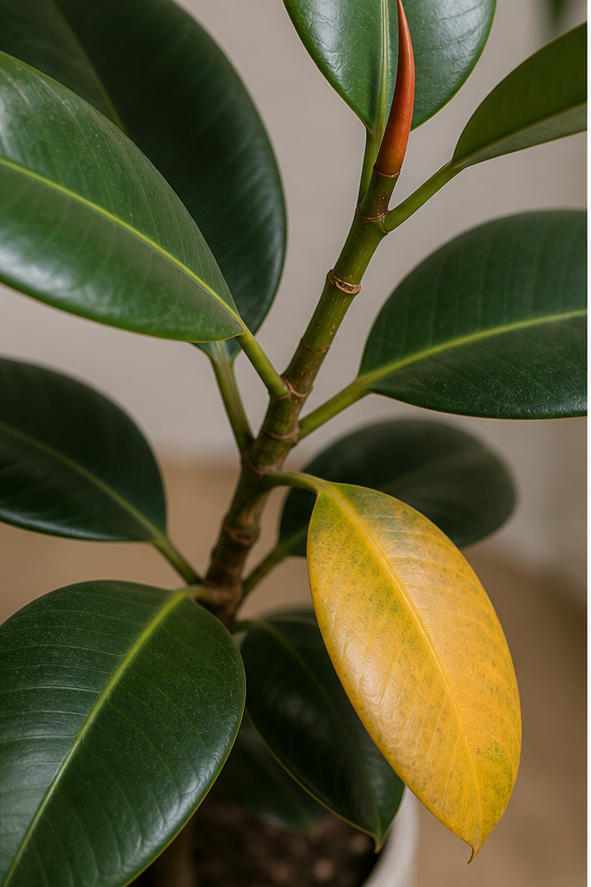
Pay close attention to leaf changes. If only a small number of older leaves at the bottom turn yellow and fall, this is normal; if large numbers of leaves wither and drop simultaneously, the stress response is severe and further investigation is needed. At this point, check soil moisture, room temperature, and proximity to heat sources.
Coping Strategies for Seasonal Light Changes
Special Care in Fall and Winter
In most regions of the United States, natural light intensity significantly decreases in fall and winter, and rubber plants easily experience growth stagnation or leaf drop. Move the plant to a location near windows to ensure it receives at least 4 to 6 hours of bright indirect light daily. South or west-facing windows are ideal choices, but avoid evening direct sunlight.
You can use supplemental grow lights to supplement natural light. Choose full-spectrum LED lights and run them for 8 to 10 hours daily, which can effectively alleviate leaf drop caused by insufficient light. Position the light fixture 30 to 50 centimeters above the plant's top to avoid leaf burn.
Spring and Summer Transition Management
As light gradually increases in spring, rubber plants begin recovering growth. Don't rush to move the plant from a dark corner to direct sunlight—gradually increasing light intensity is key. It is recommended to move the plant 10 to 15 centimeters toward the window each week, allowing the plant to slowly adapt to stronger light; otherwise, photoinhibition will cause sunburn spots and leaf drop.
Watering and Environmental Control Details
Scientific Watering Methods
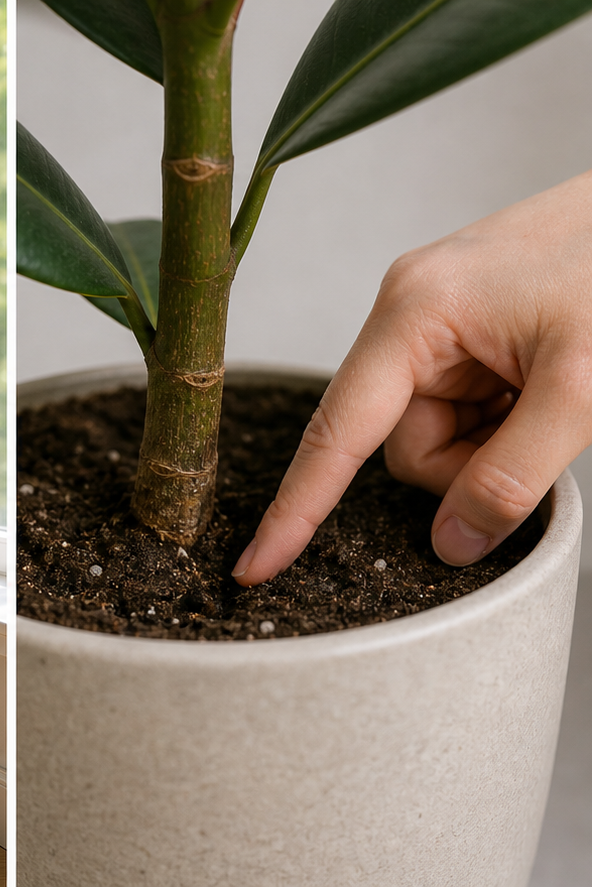
Rubber plants prefer a water when dry watering rhythm. In fall and winter when evaporation is low, extend the watering interval to 7 to 10 days; in spring and summer when growth is vigorous, shorten it to 5 to 7 days. The method to determine watering timing is: insert your finger 2 to 3 centimeters into the soil, and water only if it feels dry. Avoid prolonged waterlogging or prolonged drought—both will cause leaf drop.
Temperature and Humidity Requirements
Rubber plants thrive in temperatures of 18 to 27°C (65 to 80°F) with relative humidity maintained between 40% and 60%. Winter indoor heating can cause dry air; place a tray of water near the plant or use a small humidifier beside the pot. Avoid placing the plant directly in front of heaters or air conditioning vents.
Long-Term Maintenance Recommendations
Wipe leaves monthly with a damp soft cloth, which not only removes dust to maintain photosynthesis efficiency but also allows early detection of pest and disease signs. If new leaf growth is slow but older leaves are healthy, light is still insufficient. If older leaves consistently turn yellow and drop but new leaves appear normal, this may indicate overwatering or root issues—promptly check the root system.
Indoor rubber plant care requires patience and attentiveness. Understanding the plant's natural response mechanisms and providing appropriate care will allow you to help it flourish in its new environment.