
Overview
Complete Strategies for Indoor Dryness and Temperature Fluctuations
Korea's long heating season creates challenging conditions for rubber plants with low humidity and stable indoor temperatures. This guide provides practical solutions for Korean home environments, from adjusting watering frequency to humidity management, helping you maintain healthy rubber plants throughout the dry heating months.
The Unique Challenges of Rubber Plant Care During Korea's Heating Season
From November through March, most Korean homes maintain consistent indoor heating, creating temperatures of 20-24°C but often dropping relative humidity to just 20-30%. For rubber plants (Ficus elastica) native to Southeast Asian tropical rainforests, this dry environment poses significant challenges including leaf tip burn, leaf drop, and poor new leaf development. This guide provides systematic solutions for Korean apartment conditions.
1. Core Strategies for Humidity Management
The greatest threat to rubber plants during heating season is excessively dry air. Rubber plants thrive in humid conditions, and prolonged exposure to low humidity causes leaf edges to dry out, foliage to lose its glossy appearance, and can even trigger spider mite infestations.
Physical Humidification Methods:
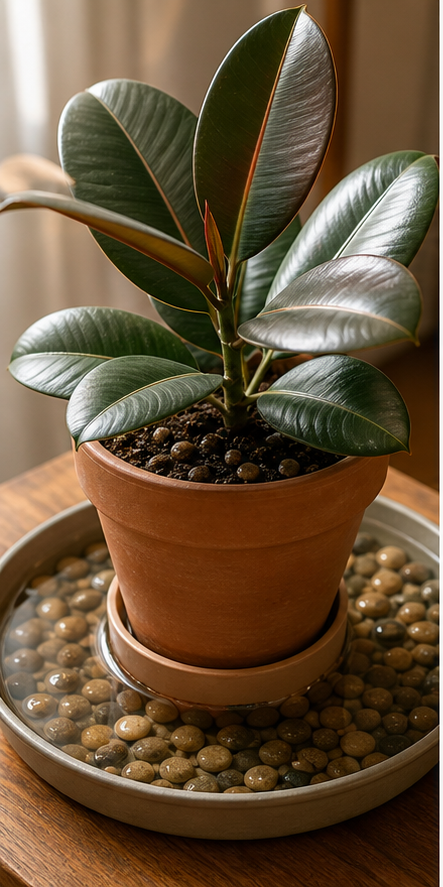
1. Pebble Tray Method: Place your pot on a tray filled with pebbles and water. Ensure the water level reaches just below the top of the pebbles—this allows evaporation to increase humidity around the plant without water touching the pot bottom directly. The pebbles also provide insulation, protecting roots from cold radiating from floors in heated spaces.
2. Companion Planting Effect: Group your rubber plant near other humidity-loving plants like Monstera or pothos. Plants naturally increase local humidity through transpiration, creating a micro-ecosystem with elevated moisture levels. This approach is both practical and enhances indoor aesthetics.
3. Regular Misting: Mist foliage with room-temperature water once daily in the morning. Avoid misting during direct sunlight hours—the best time is between 9 AM and 11 AM when temperatures are suitable and water evaporates at an appropriate rate. After misting, gently wipe leaves with a clean soft cloth to remove dust and improve photosynthesis efficiency.
2. Temperature and Environmental Control
While Korean home heating maintains relatively stable temperatures, several details require attention:
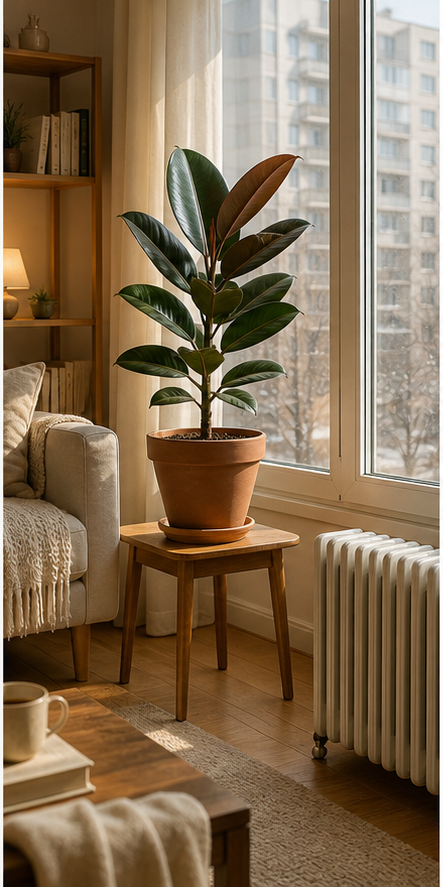
Avoid Direct Heat Radiation: Radiators, heated floors, and heating vents can cause soil on the warm side to dry excessively while exposing leaves to heat stress. Maintain at least 1 meter distance between your rubber plant and heating sources. When spatial limitations make this impossible, use insulating pads or small screens as physical barriers.
Dangers of Convection Zones: In traditional Korean homes, windows often conceal the densest heating pipes, creating intense air movement where cold and warm currents meet. Rubber plants placed here experience dramatic temperature swings—warm during sunny afternoons, then sharp drops when heating stops at night. Position your rubber plant in areas with consistent, stable temperatures, away from direct window and heating source exposure.
3. Adjusting Watering Strategies
Watering frequency during heating season requires different treatment than summer. With stable indoor temperatures and relatively consistent evaporation rates, watering frequency should moderately decrease.
Methods for Determining Watering Timing:
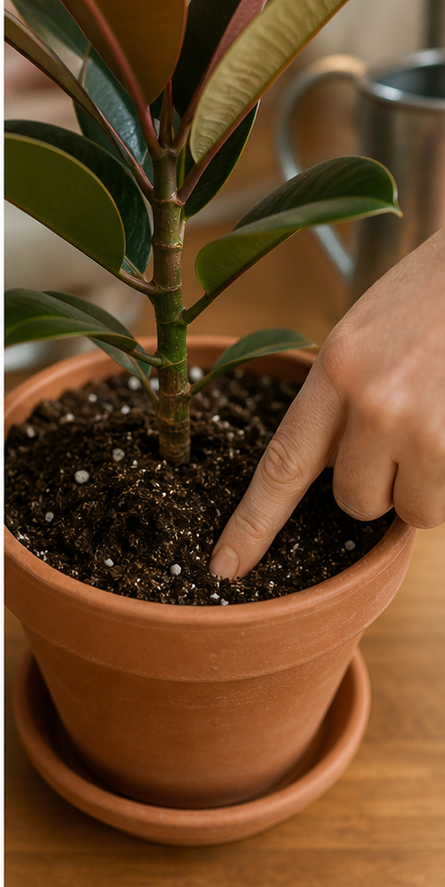
1. Finger Test: Insert your index finger about 2-3 centimeters into the soil. If it feels completely dry, water thoroughly. If it still feels moist, wait another 2-3 days. This method is more accurate than fixed watering schedules and effectively prevents overwatering.
2. Leaf Observation Signals: Healthy rubber plant leaves should appear upright, firm, and vibrant in color. Leaves beginning to droop or losing rigidity often indicate early-stage water deficit. However, note that drooping can also result from root rot caused by overwatering, so evaluate alongside soil moisture conditions.
3. Watering Technique: Apply water slowly, allowing it to evenly saturate the entire soil volume. Avoid using ice-cold water—let water sit indoors for 1-2 hours to reach room temperature. After thorough watering, ensure drainage holes work properly and empty any accumulated water in saucers promptly.
4. Optimizing Light Management
Korean winters bring short daylight hours and low sun angles, with indoor natural light intensity far below summer levels. Even though rubber plants tolerate some low-light conditions, extended periods of insufficient light cause slow growth, elongated internodes, and smaller, thinner leaves.
Maximizing Winter Light:
1. Position Adjustment: Move your rubber plant to the brightest spot in your home, typically near south or east-facing windows. Ensure leaves aren't blocked by curtains and receive at least 4-6 hours of indirect light. Avoid letting leaves touch window glass directly—glass becomes cold at night and direct contact may cause cold damage.
2. Regular Rotation: Rotate the pot 45 degrees every two weeks to ensure even light exposure on all sides. Rubber plants show strong phototropism, and without rotation, they'll grow asymmetrically.
3. Supplemental Lighting: If indoor light is genuinely insufficient, consider using full-spectrum grow lights. Supplementing 4-6 hours of artificial light daily effectively maintains normal physiological function. Position grow lights 30-50 centimeters above the plant's top, avoiding distances that cause leaf burn.
5. Pest Prevention and Early Identification
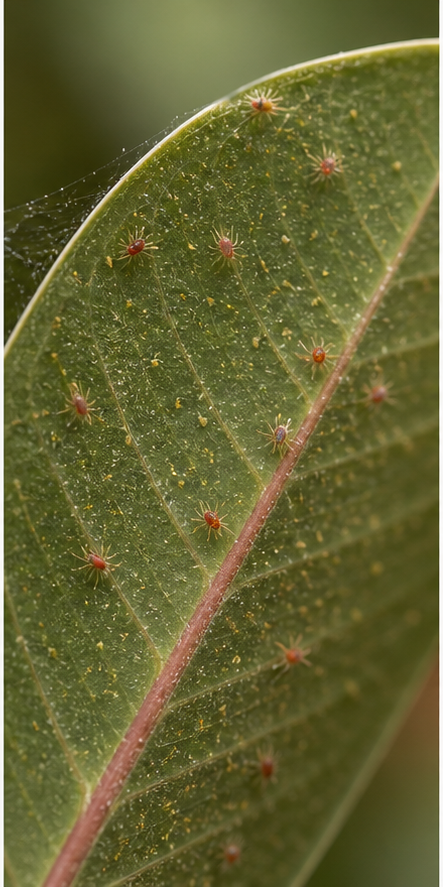
The dry heating environment creates ideal conditions for spider mite outbreaks. Spider mites are microscopic, making early infection difficult to detect with the naked eye—making prevention and early identification crucial.
Spider Mite Identification Signs:
Prevention Measures:
1. Keep foliage clean with regular wiping—this removes mite eggs and adults while improving photosynthetic efficiency 2. Maintain appropriate air humidity—spider mites reproduce rapidly in dry conditions 3. Inspect leaf undersides regularly; address problems promptly when discovered
应对轻度感染的方法:
For mild spider mite infections, use alcohol-soaked cotton balls to gently wipe affected areas, or create a spray from water with a small amount of dish soap. After treatment, rinse leaves with clean water to prevent soap residue buildup. For severe infections, isolate the affected plant promptly and consider using appropriate control products.
6. Additional Heating Season Considerations
Avoid Direct Cold or Hot Air Currents: When ventilating or using air-conditioned heating, avoid directing cold or hot air streams at your rubber plant. Rapid air current changes cause excessive leaf water loss and transpiration imbalance.
Suspend Fertilization: Rubber plants grow slowly in winter with dramatically reduced nutrient requirements. Stop fertilizing during heating season or apply liquid fertilizer diluted to half normal concentration. Over-fertilization causes soil salt accumulation and damages root systems.
Maintain Ventilation: Although outdoor temperatures are cold, consider opening windows briefly during warmer midday hours when weather permits. Circulating air reduces pest and disease risk while allowing rubber plants to adapt to some temperature variation. During ventilation, ensure cold air doesn't blow directly on plants.
Conclusion
Korea's extended heating season does present genuine challenges for rubber plant care, but through systematic humidity management, temperature control, optimized watering strategies, adequate lighting, and pest prevention, you can successfully keep rubber plants healthy through winter. The key lies in developing regular observation habits, promptly recognizing signals of water deficit, heat stress, or pest presence, and responding appropriately. Rubber plants are relatively tolerant houseplants—after suitable care adjustments, they'll reward you with lush tropical greenery enhancing your Korean living space throughout the cold months.
- Fine yellow or white spots appearing on leaf surfaces
- Tiny moving red, orange, or brown specks on leaf undersides
- Fine web-like structures along leaf edges
- Leaves gradually losing luster, appearing dull and greyish