
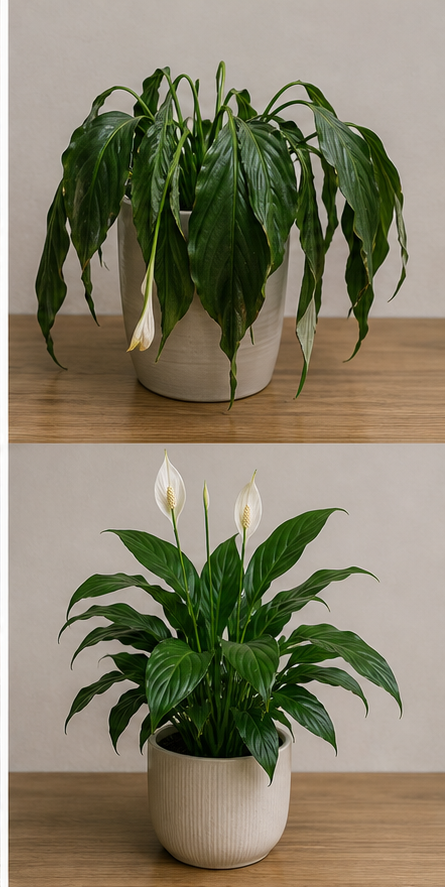
Overview
A Practical Guide to Judging Peace Lily Water Needs in European Central Heating Environments
European central heating creates dry indoor environments that cause peace lilies to droop, leading many to overwater and trigger root rot. This article helps readers distinguish between environmental droop and true dehydration, master correct watering judgment in heated homes, and protect peace lily health.
Why Peace Lilies Often Show 'False Thirst' in Heated Rooms
European central heating systems run continuously during winter, maintaining indoor temperatures between 20°C to 24°C while reducing relative humidity to often below 30-40%. This dry, warm environment accelerates transpiration in Spathiphyllum (peace lilies), causing the plant to actively reduce leaf support strength to minimize water loss—manifesting as the drooping we observe. This droop isn't caused by soil water deficiency but is the plant's natural response to environmental stress.
When you notice your peace lily drooping, your first instinct might be to water. However, in heated rooms, drooping is frequently a 'false signal.' Overwatering keeps roots in constantly moist conditions, hindering respiration and eventually causing root rot. Root rot prevents the plant from properly absorbing water and nutrients, so even if you continue watering, the plant's condition deteriorates—a vicious cycle.
Correctly Distinguishing Three Main Droop Causes
Environmental Droop (False Thirst)
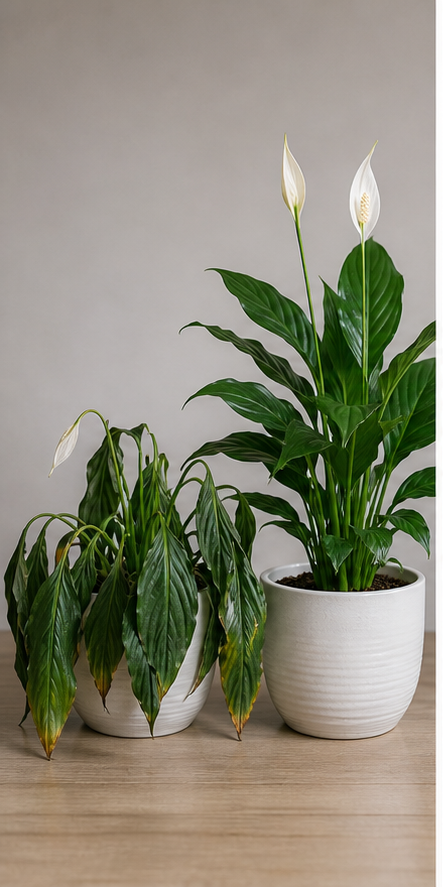
This is the most common type in heated rooms. Peace lily leaves gradually transition from upright posture to soft drooping, while the soil surface may remain moist. Key characteristics: leaf color remains essentially normal without yellowing or browning; drooping occurs more in afternoon or evening when heating runs continuously; leaves partially recover in morning or after window ventilation. If you touch the soil, you'll find it still moist 2-3 cm below the surface.
True Dehydration Droop
If the peace lily hasn't been watered for a long time or received insufficient water, the plant shows more severe wilting. Characteristics: leaves not only droop but appear faded and lose shine; leaf edges may show slight curling; soil is completely dry or only the deepest layers have trace moisture; leaves cannot recover upright posture even in morning. This situation requires timely water replenishment.
Root Rot Droop
This is the consequence of overwatering and the most important condition to guard against in heated rooms. Symptoms: leaves droop persistently but soil surface may not appear dry; leaf color appears dull, possibly gradually turning yellow from leaf tips; stem base may become soft or blackened; shows temporary improvement after watering but quickly returns to wilting. Root rot requires immediate intervention—light cases need water control for natural recovery, severe cases need soil replacement and root pruning.
Correct Judgment Steps in Heated Rooms
Step One: Observe Leaf Condition
Don't rush to check the soil. Spend 30 seconds observing the peace lily's overall condition. Healthy leaves should be deep green (some varieties have variegation), with firm, elastic texture. Environmentally drooped leaves, while drooping, still maintain natural green color and elasticity. Truly dehydrated leaves appear dull and lifeless with soft, limp texture. Root-rot leaves show persistent dullness and abnormalities.
Step Two: Check Soil Moisture
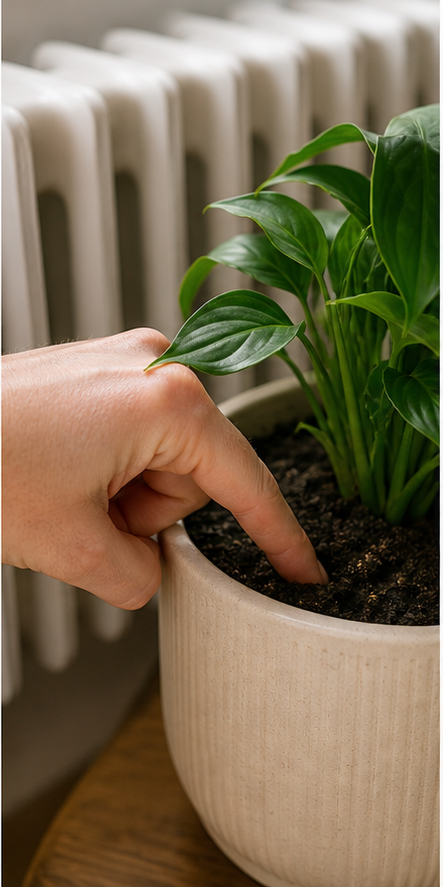
Insert your finger 2-3 cm into the potting mix and feel the actual soil moisture. This is the most reliable method for determining water needs. In heated rooms, the soil surface may appear dry, but deeper layers may still be moist. Remember: peace lilies prefer 'soak and dry' watering—waiting until the top layer is essentially dry before watering thoroughly.
Step Three: Consider Environmental Factors
Review recent environmental changes. Has heating been turned on? Has indoor temperature been continuously high? Is there a habit of opening windows for ventilation? These factors all affect the peace lily's water consumption rate. European winters have large indoor-outdoor temperature differences, and frequently opening and closing windows causes temperature fluctuations that also affect plant condition.
Watering Strategy Adjustments for Heated Rooms
Change Frequency, Not Volume
In heated environments, peace lilies do consume water faster than in spring and autumn. The correct response isn't increasing each watering amount but appropriately increasing intervals between waterings (though not dramatically shortening them). For example, if watering every 7 days before can become checking every 5-6 days, but still water thoroughly until water flows from the drainage hole.
Use Trays for Humidity
In heated rooms, both roots and leaves face drying challenges. Place a water-filled tray under the pot (but don't let the pot bottom directly soak in water) to increase local air humidity, giving roots selective water absorption. Place pebbles in the tray so the pot bottom sits above the water with an air layer in between.
Choose Appropriate Watering Time
In heated rooms, watering in the morning is recommended so the peace lily has all day to absorb water, and moisture won't be lost too quickly through transpiration during cooler nighttime. Avoid watering at night or during peak heating hours.
Practical Techniques for Preventing Overwatering
Choose Appropriate Pots
Breathable clay pots are more suitable for heated environments than plastic pots. The pores in clay pots allow excess moisture to evaporate faster, reducing root rot risk. Flower pots must have sufficient drainage holes, and a layer of hydrogravel or broken pottery can be placed at the bottom to increase the drainage layer.
Optimize Soil Mix
Peace lilies prefer loose, well-draining soil. A mix of peat moss, perlite, and vermiculite in approximately 3:1:1 ratio works well. This combination maintains appropriate moisture while preventing roots from sitting in waterlogged conditions.
Observe Leaf Recovery Speed
If you're still unsure whether to water, perform a test: water a small amount (about one-quarter of normal volume), then observe leaf recovery over the next 6-8 hours. If leaves recover upright within a few hours, true dehydration is confirmed. If there's no significant change, the issue is likely environmental droop or root rot, and watering should be paused for further observation.
Peace Lily Care Checklist for Heated Rooms
To help you correctly care for peace lilies in winter heating environments, conduct a systematic check weekly:
1. Observe leaf color and posture, record when droop appears and how long it lasts 2. Test soil moisture with your finger (depth 2-3 cm) 3. Check that drainage holes are clear and trays don't have standing water 4. Observe whether new leaves are growing (healthy peace lilies should continuously produce new leaves under suitable conditions) 5. Check leaf undersides for spider mites and other pests (dry heated environments easily harbor spider mites) 6. Assess indoor humidity, use humidifiers or misting to increase air moisture if needed
Early Detection and Treatment of Root Rot
If through the above judgment methods you suspect your peace lily has root rot, take immediate action. Remove the plant from its pot and check root condition: healthy roots are white or light yellow with firm, elastic texture; rotting roots are dark brown or black with soft, mushy texture and possibly foul smell.
For mild root rot, use sterilized scissors to cut away all brown and black roots, keeping white healthy roots. Place in a ventilated area for 2-3 hours to let wounds heal, then replant in fresh, dry soil. Don't water for the following 1-2 weeks, only mist for moisture, and resume normal watering after the plant stabilizes.
For severe root rot (more than two-thirds of roots have rotted), consider cutting away all leaves, keeping only 2-3 cm of the base stem, and inserting into clean sphagnum moss or perlite for rooting. Maintain high humidity and wait for new roots to emerge before transplanting to soil.
Environmental Adjustments: Reducing Heating's Negative Impact
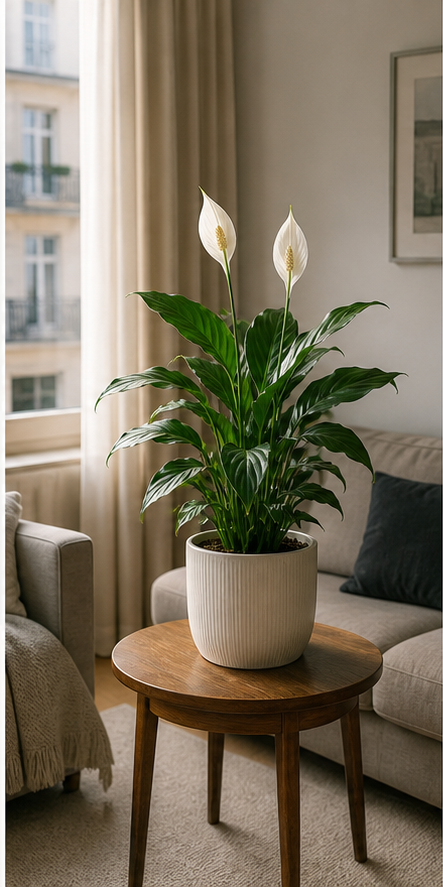
Heated rooms aren't enemies of peace lilies—the key is creating a suitable micro-environment. Place peace lilies away from heating vent openings but not in overly dark corners. The ideal position is 1-2 meters from windows, receiving bright indirect light without direct heating exposure.
If indoor humidity consistently stays below 40%, consider using a small humidifier or placing a tray with water and pebbles around the plant to raise local humidity. Regularly wipe leaves gently with lukewarm water—both to clear dust (promoting photosynthesis) and to add moisture to leaves.
European homes commonly have wall-mounted radiators that make surrounding temperatures 5-8°C higher than other room areas. This is why plants placed near radiators need more frequent soil and leaf condition checks.
Conclusion: Trust Your Observations, Not Single Signals
Peace lilies are relatively shade-tolerant and adaptable indoor plants, but their changing water needs in heated environments require more careful observation and judgment. Don't immediately water just because leaves are drooping—consider comprehensively leaf condition, soil moisture, environmental factors, and overall plant vitality. When you learn to correctly read the peace lily's 'language,' you can maintain appropriate watering while avoiding root problems from overmanagement, allowing this elegant foliage plant to continuously display its verdant beauty in your heated home.