
Overview
How to protect your Pothos from root rot during Southeast Asia's humid rainy season
Southeast Asia's rainy season brings persistent high humidity that creates ideal conditions for root rot in Pothos plants, especially in warm apartments with poor airflow. This guide provides systematic prevention strategies covering watering management, soil medium selection, environmental improvement, and early symptom recognition to help you maintain healthy Pothos throughout the wet season.
Why Pothos Is Vulnerable to Root Rot During Rainy Season
Southeast Asia's rainy season typically spans from May to October, with ambient humidity consistently ranging from 75% to 95%. This warm, humid environment poses a significant threat to Pothos root systems. When pot soil dries slowly and the lower layers remain constantly moist, anaerobic bacteria and fungi proliferate rapidly. These pathogens first attack the most vulnerable parts of the root system, causing tissue decay. Once roots are compromised, the plant cannot properly absorb water and nutrients, leading to yellowing leaves and soft stems. Without timely intervention, an entire plant can die within two to three weeks.
Warm, humid apartments are particularly dangerous. Many households keep windows closed while running air conditioning to block outside heat and moisture, resulting in extremely poor indoor air circulation. In this sealed environment, soil moisture evaporation drops dramatically—even when the surface appears dry, the middle and lower soil layers may still be overly wet. Additionally, some families place Pothos in bathrooms or near kitchens where humidity is inherently higher, compounding the problem during rainy season.
Scientific Watering Strategies
The core principle for rainy season watering is "observe the soil rather than following a fixed schedule." The traditional once-per-week watering recommendation is completely unsuitable during rainy season because evaporation rates vary significantly with weather, room temperature, pot material, and placement location. Use the following methods to determine when to water:
Finger Test: Insert your index finger's first knuckle about two centimeters into the soil. If it feels dry, water; if moisture remains, wait. For larger pots, insert a wooden popsicle stick into the soil for several minutes, then check the moisture level on the stick.
Visual Observation: Pothos water requirements decrease during rainy season. Under normal conditions, leaves should remain upright and glossy. If leaves begin to wilt slightly but the soil is still moist, the roots may already be compromised—this is not a water deficit, so check the root system immediately.
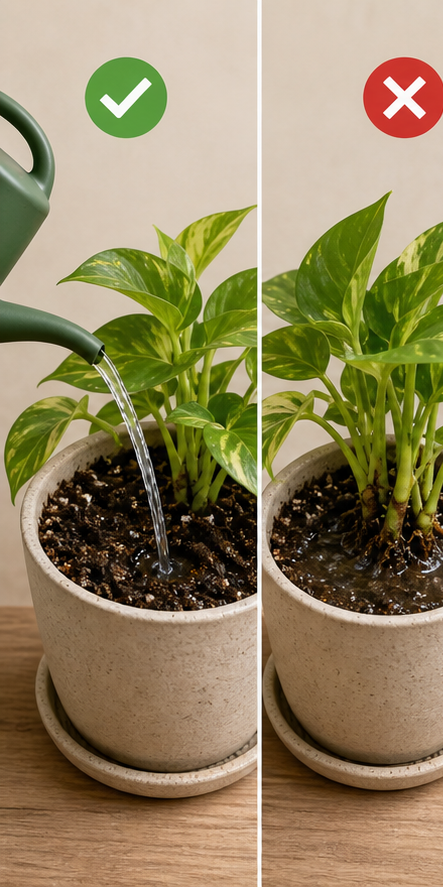
Watering Technique: When you determine watering is needed, use a "small amounts, more frequently" slow-watering approach instead of flooding the pot. Use room-temperature water, pour slowly along the pot's edge, allowing water to gradually penetrate the entire soil mass until a small amount flows out from the drainage hole at the bottom. This ensures the entire root zone is evenly moist rather than having wet surface with waterlogged bottom.
Choosing Appropriate Growing Medium
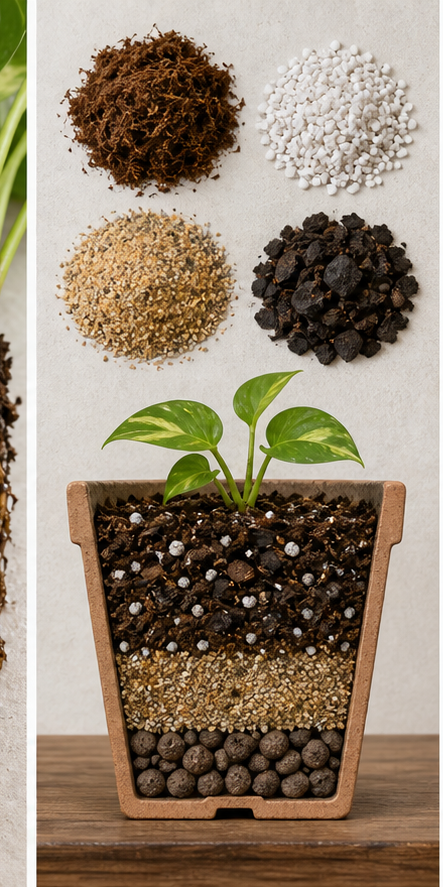
Potting medium selection directly affects soil drainage and aeration—fundamental factors in preventing root rot. During rainy season, strongly recommend adding the following components to enhance drainage capacity:
Perlite: Should comprise 20% to 30% of the total medium, increasing soil porosity, accelerating excess water drainage, while maintaining some water retention.
Coarse sand or volcanic rock: Particles approximately 3 to 6 millimeters in diameter effectively prevent soil compaction. Recommend adding 15% to 20%.
Pine bark or coconut husk chunks: These organic materials provide some water retention while preventing medium compaction. Suitable for adding 10% to 15%.
If using standard potting soil, mix it thoroughly with the materials above before potting. Recommended ratio: peat moss or coco coir 50%, perlite 25%, coarse sand 15%, organic fertilizer 10%. This blend allows rapid drainage of excess moisture during rainy season while maintaining sufficient air circulation around roots.
Improving Ventilation
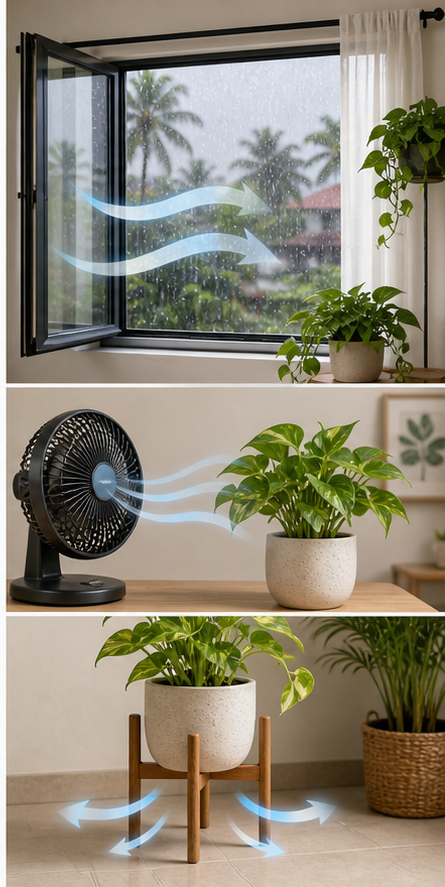
During rainy season, indoor ventilation is critical for preventing fungal diseases. Even when it's raining outside, indoor air needs to maintain some circulation. Here are specific methods to improve ventilation:
Natural ventilation: Open windows at least two to three times daily, for 15 to 30 minutes each time, allowing relatively dry outdoor air to exchange with indoor air. If concerned about rain splashing inside, open windows a crack, or use window screens.
Fan assistance: For apartments with poor ventilation, place a small fan near plants, set to the lowest speed, allowing air to circulate slowly. Ensure the fan does not blow directly on plants to avoid excessive leaf moisture loss.
Elevate pots: Place Pothos pots on open-air plant stands or trays, avoiding direct contact with floors or desktops. This allows the pot's drainage hole to maintain ventilation and reduces the risk of bottom root rot from water accumulation.
Avoid corners: Wall corners and areas behind furniture have the worst ventilation—avoid placing Pothos in these locations. Ideal placement is near windows but avoiding direct sunlight, in bright locations.
Early Recognition of Root Rot Symptoms
Early detection and intervention directly impact treatment success rates. Here are symptom identifications for different stages:
Mild symptoms (less than 30% root rot): Leaf color changes from vivid green to pale yellow, leaf growth rate noticeably slows, new leaves become smaller. At this stage, only some roots are affected, and recovery probability is high with timely treatment.
Moderate symptoms (30% to 70% root rot): Stems near the base begin softening, extensive yellowing appears on leaves, pot weight significantly increases (indicating excessive soil moisture). Immediate repotting and腐烂 root pruning is necessary.
Severe symptoms (more than 70% root rot): Entire plant wilts, cannot recover even with watering, base of stems turns black and emits odor. Recovery success rate is extremely low at this stage.
Root Rot Treatment Steps
Once root rot symptoms appear, immediately perform the following steps:
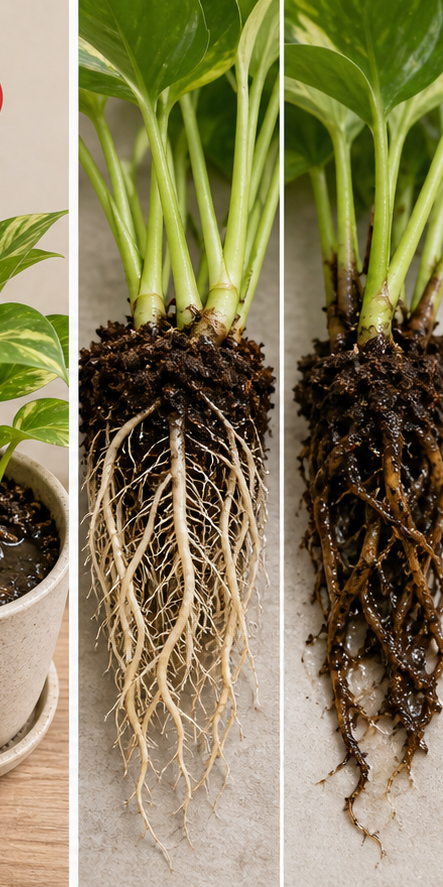
1. Remove and inspect: Gently remove Pothos from the pot, lightly shake off attached old soil, carefully observe root color and texture. Healthy roots appear white or light brown with elasticity; rotting roots appear black or dark brown with soft, mushy texture.
2. Prune and disinfect: Use sterilized scissors (wipe with alcohol or flame-treat) to thoroughly cut away all rotting, discolored roots, cutting until healthy tissue is visible. If main roots are severely rotted, consider cutting healthy stems for propagation instead.
3. Air dry: Place pruned roots in a cool, shaded, well-ventilated area for two to four hours, allowing wound surfaces to heal and reduce re-infection risk.
4. Replace medium: Pot with entirely new, well-draining mixed medium. Do not use old soil from the previous pot because it may contain pathogens that caused the root rot.
5. Control watering: Keep medium slightly moist for the first two weeks after repotting—no need to water thoroughly. Gradually resume normal watering frequency once the plant shows signs of recovery.
Preventive Maintenance Recommendations
To maintain long-term Pothos health during rainy season, establish the following maintenance habits:
Inspect the pot's bottom drainage hole monthly, ensuring it is not clogged by roots. If drainage slows noticeably, roots may be overgrown—either transplant to a larger pot or appropriately prune roots.
Suspend fertilizing during rainy season because plant metabolism slows in high temperature and humidity environments; excess fertilizer only increases root burden.
If any Pothos shows disease symptoms, immediately isolate it from healthy plants to prevent pathogen spread. During isolation, place it in a separate location and use separate watering tools.
For Pothos placed in bathrooms or near humidifiers, consider moving them to relatively drier locations during rainy season, returning them during the dry season.
Through these systematic prevention measures and timely proper treatment, even during the wettest rainy season, you can effectively protect your Pothos from root rot, allowing it to continue playing its role in purifying indoor air and beautifying your living space.