
Overview
Step-by-Step Instructions for Beginners to Identify and Treat Water Damage
When your Pothos shows yellowing leaves, soft stems, or soil that stays wet for days, overwatering is likely the culprit. This comprehensive guide walks you through recognizing overwatering symptoms, performing emergency root rescue, repotting with proper drainage, and establishing a healthy watering routine. Perfect for US indoor plant beginners who want to save their water-stressed Pothos and prevent future issues.
Recognizing Overwatering Symptoms in Pothos
Pothos (Epipremnum aureum) is an excellent beginner houseplant, but overwatering remains the most common mistake new plant parents make. When soil stays waterlogged for extended periods, roots become deprived of oxygen and begin to rot, causing a cascade of visible problems throughout the plant. Early detection is crucial for successful rescue.
Early Warning Signs
Distinguishing from Underwatering
Beginners often confuse overwatering with underwatering. Key differences: underwatered Pothos will have整体 limp, drooping leaves that feel thinner but not translucent, whereas overwatered plants develop yellowing leaves that feel soft and thin. If the soil surface is cracked but the deeper soil remains moist, underwatering is unlikely. Checking the soil moisture at multiple depths is the most reliable diagnostic method.
- Widespread yellowing of lower leaves: While it's normal for the oldest leaves to yellow and drop occasionally, if several leaves turn yellow simultaneously, root problems are likely present.
- Soft, translucent leaves: Gently squeeze a leaf. If it feels thin, soft, and has a water-soaked translucent appearance, cellular damage has occurred.
- Mushy or dark stems: Healthy Pothos stems are firm and upright. If stems feel mushy when pressed or show black soft spots, rot has spread from the roots.
- Soil that stays wet for extended periods: Insert your finger about 2 inches into the soil. If it still feels damp and sticky, you're watering too frequently or the soil lacks proper drainage.
- Water leaking from leaves when touched: In severe cases, leaves will release water when lightly brushed, indicating extreme cellular saturation.
Emergency Rescue Procedure
Once you've confirmed your Pothos is overwatered and possibly rotting, immediate action is necessary. The sooner you intervene, the better the plant's chances of recovery. Perform all steps indoors in bright, indirect light, avoiding direct sunlight.
Step 1: Remove Plant and Inspect Roots
1. Gather supplies: Clean, sharp scissors or pruning shears, disposable gloves (recommended if dealing with rot), paper towels or clean cloths, fresh well-draining potting mix.
2. Removing the plant: Tilt the pot and gently squeeze the sides to loosen the soil. Hold the plant by the base of the stems and carefully slide the entire root ball out. If roots have circled the bottom, use a chopstick or stick to gently push up from the drainage holes to help release.
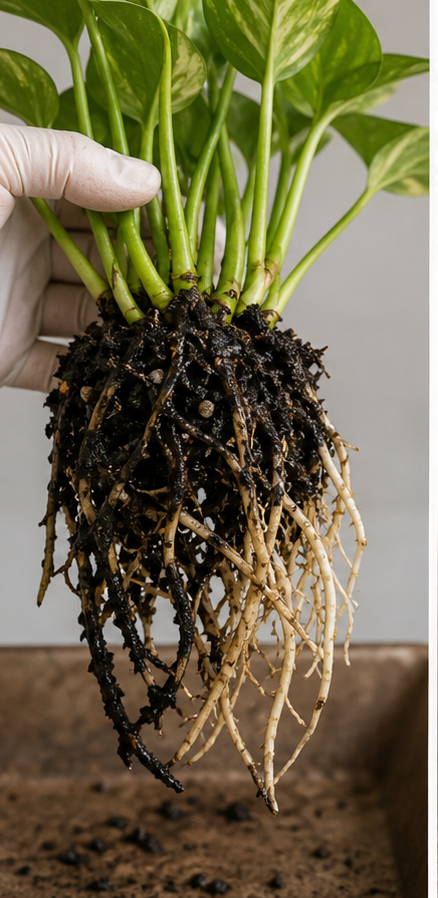
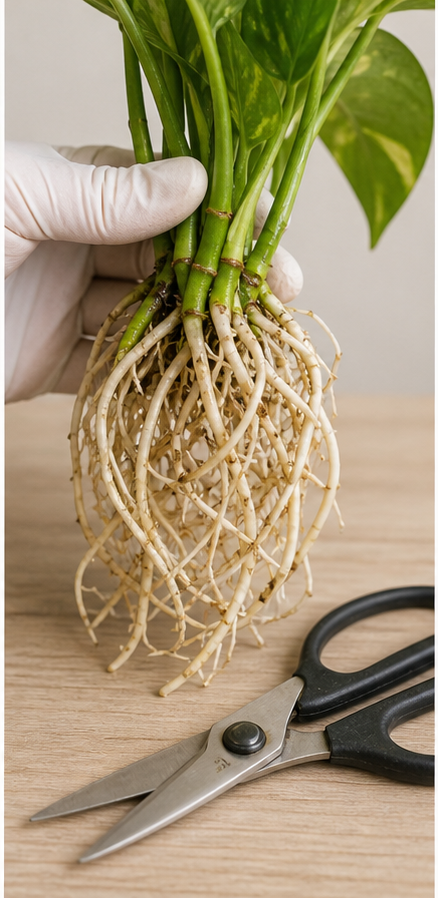
3. Examining the roots: Healthy Pothos roots are white or light tan, with abundant fine root hairs and some structural rigidity. Rotted roots appear black or dark brown, feel slimy, release murky liquid when squeezed, and have a distinct unpleasant smell. If most roots are still white and healthy, simply trim away the obviously black, mushy sections.
Step 2: Pruning Damaged Roots
1. Using sanitized scissors, cut at the junction where healthy roots meet rotted roots. Make angled cuts to maximize the wound surface for healing.
2. All rotted tissue must be removed, even if it means leaving only a small amount of healthy roots. Better to have fewer healthy roots than to leave infected material that will continue to spread.
3. If the base of the stems shows soft rot, continue cutting upward until you reach clean, healthy tissue that is green or pale yellow inside.
4. After pruning, gently rinse the remaining healthy roots in clean water to remove remaining soil and contaminated debris.
Step 3: Drying and Optional Disinfecting
1. Place the pruned Pothos in a cool, well-ventilated area away from direct sun. Allow 2 to 4 hours for root wounds to surface-dry and callous over. Never expose to hot sunlight, which will stress the already-weakened plant.
2. If available, a light dusting of cinnamon powder or activated charcoal on cut surfaces can provide mild antimicrobial protection. This is optional but can help reduce risk of reinfection.
Step 4: Repotting
1. Choosing a new pot: Select a pot with drainage holes at the bottom. Terra cotta or plastic pots work well; size should just accommodate the existing root mass, only 1 to 2 inches larger in diameter than the root ball. Larger pots hold more soil, which stays wet longer and increases the risk of recurring problems.
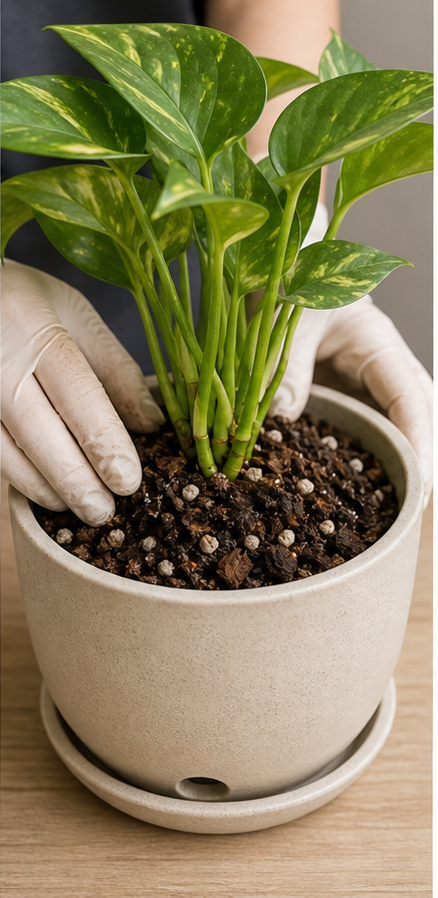
2. Preparing soil mix: Pothos thrives in loose, airy substrate. Mix peat moss, perlite, and vermiculite in a 2:1:1 ratio, or use commercial potting soil for foliage plants blended with about one-third perlite for improved drainage. Never use pure garden soil or heavy clay-based mixes.
3. Planting: Add a 1 to 2 inch layer of gravel or broken pottery shards at the bottom for drainage. Add some fresh soil, position the Pothos in the center, and fill around the roots, gently firming the soil so the plant is stable. Plant at the same depth as before—don't bury stems deeper than they were originally growing.
4. After repotting, water lightly with a small amount of water to settle the soil, but do not saturate. Keep soil slightly moist for the next one to two weeks, erring on the drier side.
Recovery Care Guidelines
Post-rescue care is critical for helping your Pothos rebuild a healthy root system and restore foliar vigor.
Watering: When in Doubt, Wait
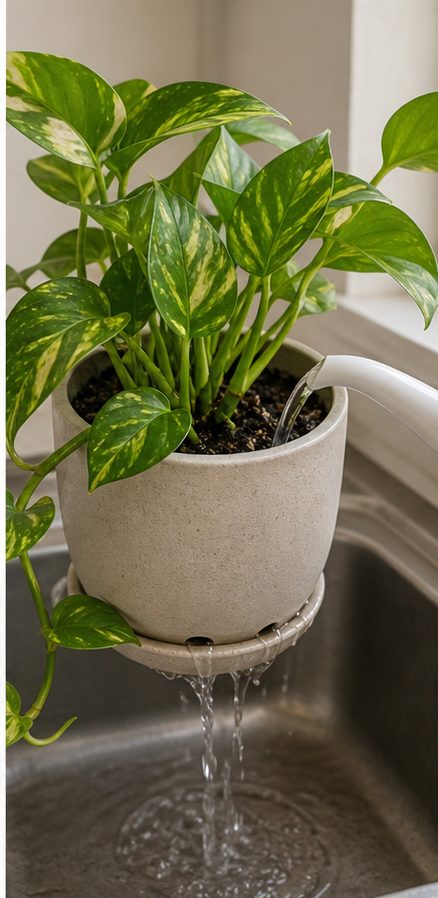
During the recovery period, watering management is the make-or-break factor. Follow the "soak and dry" method: wait until the soil is dry about 2 to 3 inches below the surface, then water slowly and thoroughly until water flows out of the drainage holes. After watering, place the pot on a tray and allow excess water to be absorbed back into the soil, then empty the tray promptly. Never let the pot sit in standing water.
In spring and fall, once-weekly watering is typically sufficient. Summer heat may require more frequent watering, while winter calls for reducing to every two weeks or longer. Adjust based on your home's temperature, humidity, and light levels. The key principle is: never let soil remain consistently wet.
Lighting: Bright Indirect Light
Place recovering Pothos in a location with bright, indirect light—near a window with sheer curtains or on a bright north-facing windowsill. Direct sunlight should be avoided because damaged roots cannot yet efficiently absorb water to compensate for water loss through leaves. However, too-dark locations will also hinder photosynthesis and new root growth.
Temperature and Humidity
Pothos prefers temperatures between 60°F and 85°F (15°C to 30°C), which aligns with most US home interiors. During winter heating season, indoor air may become quite dry. Occasional light misting around (not directly on) the foliage can help, but avoid heavy, frequent wetting of leaves to prevent fungal problems.
Preventing Overwatering in Daily Care
Prevention is always easier than cure. Integrate these practices into your regular plant care routine.
1. Use proper containers: Pots must have drainage holes. Terra cotta pots are preferable due to their breathability compared to plastic. Never plant directly into decorative cache pots without holes.
2. Improve soil drainage: Mix perlite, coconut coir, or bark chips into your soil at a minimum ratio of one-third. This creates air pockets and prevents compaction.
3. Water based on soil moisture, not schedule: Never water on a fixed calendar. Always check soil moisture first.
4. Increase air circulation: Use a low fan setting or ensure good ventilation in your growing area to speed surface evaporation.
5. Routine inspections: Check plant health every one to two weeks. Learn to recognize your plant's normal appearance so you notice changes early.
When to Seek Additional Help
If your plant shows no improvement within two weeks despite following all rescue steps, or if root damage was so severe that less than one-fifth of the root system remains healthy, consider propagating from healthy stem cuttings. This is the plant's natural survival strategy when conditions become extreme.
Select healthy stem sections with two to three nodes (the points where leaves emerge). Remove leaves from the nodes below the water line, then place cuttings in clean water in bright indirect light. Change water weekly. Within two to four weeks, roots will emerge from the nodes. Once roots reach about 2 inches long, you can plant them in soil to continue growing. While the original plant may not survive, this method preserves a piece of your Pothos and gives you a fresh start with a new plant.
Pothos are remarkably resilient. Even complete beginners have excellent chances of saving overwatered specimens by following proper techniques, observing carefully, and learning from each experience. Patience and consistent care will reward you with a thriving plant that purifies your home air and adds natural beauty to your living space.