
Overview
From Leaf Tip Burn to Stunted Growth: Early Detection and Proper Plant Relocation
As winter heating systems activate, many households notice their previously healthy plants developing yellowing leaf tips, curling leaves, or even wilting. This is often not due to improper watering, but rather hot dry airflow from heaters quietly damaging plants. Hot dry air rapidly evaporates moisture from leaf surfaces, disrupting the plant's transpiration balance and causing cell damage. Different heating devices—including central heating, radiators, underfloor heating, and electric heaters—produce varying patterns of hot dry airflow that require specific handling. When damaged by hot dry airflow, plants typically show symptoms like dried leaf margins or tips, faded leaf color losing luster, and noticeably slowed growth. Upon detecting these signs, immediately move plants away from heat sources while increasing ambient humidity. When repositioning plants, avoid swinging to the opposite extreme—suddenly placing plants in poorly lit corners can cause equally harmful damage. The ideal solution is finding a balanced spot with adequate indirect light while remaining away from direct heat sources. During the two to three weeks following relocation, closely observe whether new leaves emerge and whether leaf color gradually recovers luster—these are positive signals of good recovery.
Observing Early Signs of Hot Dry Airflow Damage
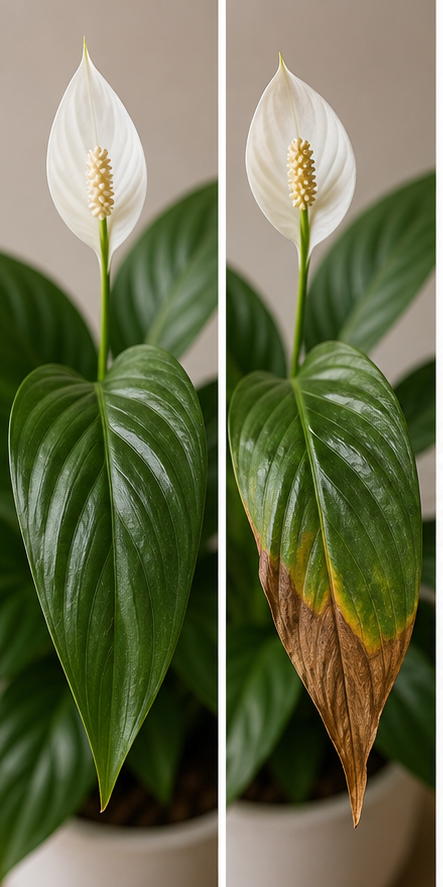
Damage from hot dry airflow is often a gradual process, with initial symptoms that can be quite subtle. The primary observation point is the edges and tips of leaves. When leaf margins or tips begin showing brown drying, while the rest of the leaf remains green, this is typically a classic sign of hot dry airflow damage. Unlike fungal diseases, this drying won't form concentric rings or mold—instead presenting as uniform dry, brittle texture.
A second observation focus is leaf gloss and texture. Healthy plant leaves usually maintain some sheen, while leaves continuously affected by hot dry airflow gradually lose their luster, becoming dull and rough. If your plant's leaves were originally glossy and smooth but now feel like thin paper, this could signal accumulated heat stress.
A third point requiring attention is growth rate changes. If your plant was growing vigorously before winter but shows stopped or noticeably slowed new leaf emergence after the heating season begins—even without obvious leaf tip drying—consider whether hot dry airflow issues might exist. This hidden damage is often overlooked until the plant's overall condition visibly deteriorates.
Immediate Steps Upon Discovering Damage
Once confirming your plant may have hot dry airflow damage, the first step should be immediately moving it out of the heat source's influence. Don't hesitate waiting for a better time—continuous hot dry airflow will only worsen the situation. Relocate the plant to a position in the room away from radiators, air conditioning vents, and electric heaters.
The second step is increasing ambient humidity. Hot dry air not only has high temperature but also very low humidity, which intensifies moisture loss from plants. Use a humidifier to raise indoor humidity to forty to fifty percent, or cluster plants together to create a localized humid microenvironment using their collective transpiration. Placing pebbles and water in a tray beneath the pot is also an effective humidification method.
The third step is checking and adjusting watering frequency. Hot dry airflow accelerates soil drying, and plant water needs may increase beyond normal levels. However, avoid overwatering due to concern about insufficient water—this causes root rot. The correct approach is checking soil surface dryness before each watering, feeling soil moisture by touch, and watering only after the top two centimeters dry out.
Mistakes to Avoid When Repositioning Plants
After recognizing hot dry airflow damage, many people hastily relocate plants to what they consider a "safe" location, but swinging from one extreme to another is equally harmful. The most common mistake is moving plants directly into poorly lit corners or deep within rooms. Plants need photosynthesis to generate energy for repairing damaged tissue; suddenly placing them in near-dark environments causes secondary stress reactions.
Another mistake to avoid is immediately repotting or performing major pruning. Roots may already be affected by damage, and repotting at this time creates unnecessary additional stress. While pruning can remove obviously damaged leaves, excessive pruning deprives plants of leaf surface area for photosynthesis to obtain repair energy. Unless leaves are completely dead, preserve damaged leaves and let them recover naturally.
Also avoid placing plants near cold air vents from air conditioning. While cold air doesn't directly evaporate moisture like hot dry air, dramatic temperature changes equally cause stress to plants. Draft areas near doors and windows should also be avoided, as winter's cold and hot air convection creates unstable environments.
Key Points for Selecting an Ideal New Position
The core of safely repositioning plants is finding a balance: sufficient indirect light for photosynthesis needs while staying away from any direct heat or cold sources. An ideal indoor position should be at least one to two meters from radiators, avoiding direct upward heat influence from radiators below. If using central air conditioning, choosing room corners away from main vents will be safer.
For low-light plants such as pothos, monstera, and similar varieties, consider placing them one to two meters from windows in bright locations. These plants have relatively modest light requirements—indirect light already suffices for normal growth while being distant from windows means maintaining some distance from cold air and drafts.
For sun-loving plants such as succulents, spider plants, and snake plants, positions near south or east-facing windows work well, but ensure they're not pressed directly against window glass. Glass becomes icy cold in winter, and plants placed against windows experience cold radiation on their backs. Maintain at least twenty to thirty centimeters distance between plants and windows.
Post-Relocation Observation and Recovery Indicators
After relocating plants to new positions, patience is needed for recovery—don't expect immediate results. Recovery from hot dry airflow damage typically takes several weeks, depending on damage severity and plant species. During the first week, primarily observe whether the plant stops deteriorating and whether damaged leaves remain stable rather than spreading.
During weeks two through three, begin observing positive recovery signals. New leaf emergence is the clearest positive signal, indicating the plant has adapted to the new environment and resumed growth. Also observe whether leaf color gradually recovers luster and whether wilting leaves regain firmness.
If after three weeks there's still no recovery signal, or the plant's condition continues deteriorating, further care strategy adjustments may be needed. Check whether light remains insufficient, whether humidity needs further improvement, or whether other potential issues like root damage exist. If necessary, gently remove the plant from its pot to inspect roots—healthy roots should be white or light-colored; if there are extensive brown, rotted roots, pruning and appropriate treatment may be required.