
Overview
A Practical Guide to Recognizing Etiolation Signs and Improving Light Conditions Safely
This article explores the etiolation phenomenon where houseplants produce pale, elongated new growth, analyzes its root causes, and provides safe, effective solutions for improving light conditions to help restore compact, healthy plant forms without causing damage.
Understanding Etiolation and Its Typical Signs
Etiolation is an adaptive response plants exhibit when they receive insufficient light for photosynthesis. When a plant cannot capture enough light energy, it compensates by elongating stem internodes and increasing growth rate to expand its light-capturing surface area, essentially searching for better light sources. This phenomenon is extremely common in home plant care, especially when plants are placed away from windows or during winter when sunlight becomes more oblique.
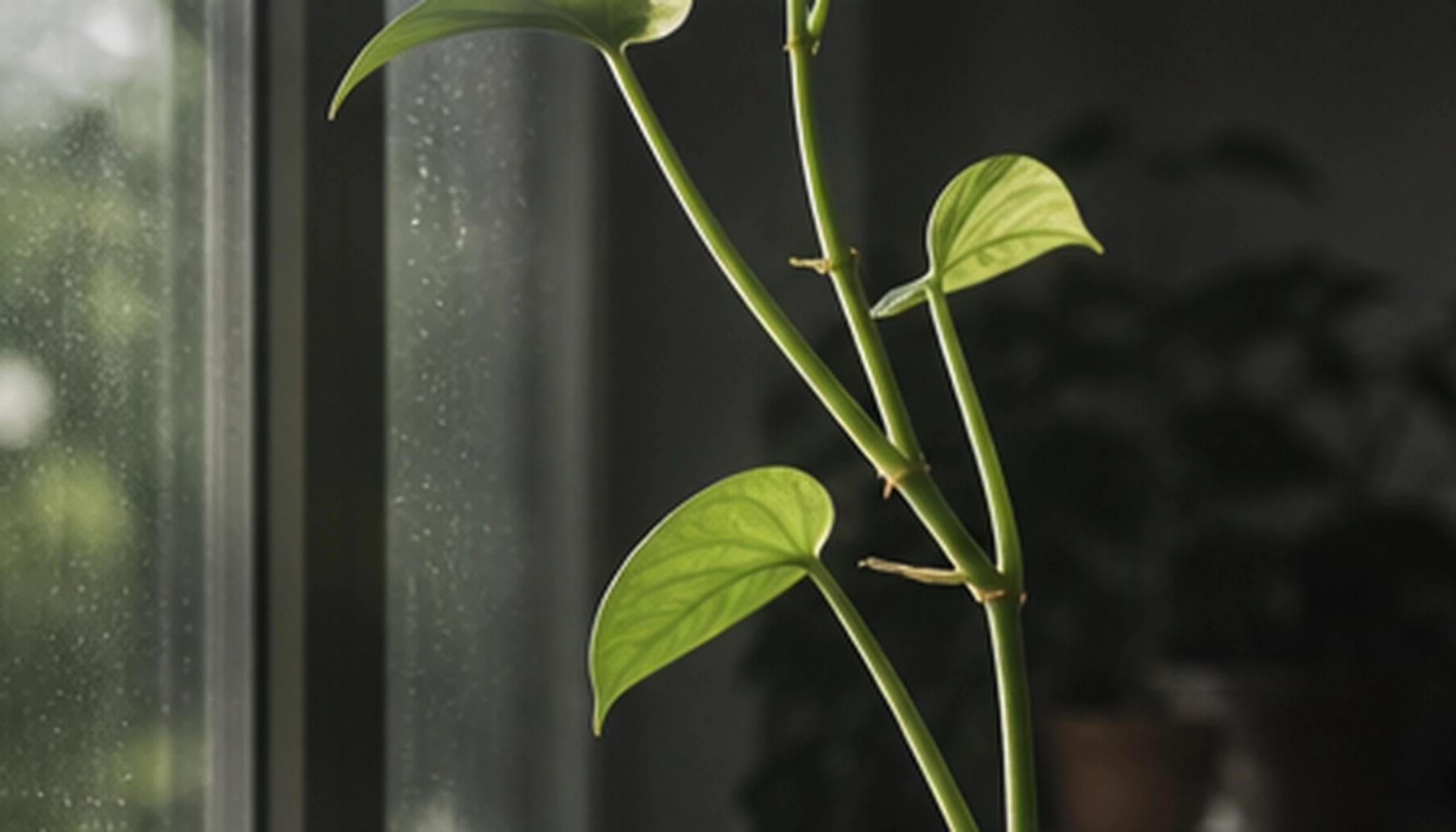
Typical signs of etiolation include: newly emerged leaves appearing pale or light yellow-green, creating a stark contrast with deeper green mature leaves below; noticeably elongated internodes that make the entire plant appear sparse and thin; and new leaves that may be smaller in size with thinner texture, lacking the firm, upright appearance of healthy foliage. Without timely intervention, plants become increasingly weak and spindly, with reduced resistance to pests and diseases, ultimately diminishing their ornamental value.
Observation and Diagnosis: Confirming Etiolation
When discovering abnormal new leaves, avoid jumping to conclusions. First, observe carefully: is this pale appearance limited to new growth, or are mature leaves also losing color? If only new leaves are pale while mature leaves maintain normal green coloration, etiolation is the likely cause rather than nutrient deficiencies like nitrogen or iron deficiency. Next, examine the stems—etiolated plants typically have thin, elongated stems with insufficient structural support, making them prone to bending or falling over. Also review recent changes in the plant's location: has it been moved from a bright spot to a corner or deeper into a room?
It's important to note that new leaves of certain healthy varieties may naturally appear lighter in color. For example, some foliage plants naturally produce light green juvenile leaves, which should not be confused with etiolation. The key distinction is that etiolation is accompanied by elongated internodes, while healthy pale leaves should still emerge from normally spaced stem nodes.
Immediate Action: Properly Improving Light Conditions
After confirming etiolation, the first step is to assess current light levels. Use a smartphone camera or dedicated light meter to measure the light intensity at the plant's current location. A typical bright indoor area ranges from 500-2000 lux, while etiolated plants usually exist in environments below 500 lux. Gradually moving the plant closer to windows is a direct way to improve light conditions, but it is crucial to avoid another extreme—suddenly exposing the etiolated plant to direct sunlight.
After etiolation, plant tissues are fragile, and leaf cuticles and protective mechanisms are not yet fully developed. Direct exposure to harsh sunlight can cause leaf burn, resulting in scorch marks or even extensive yellowing and leaf drop. The correct approach is the "gradual transition method": move the plant approximately 20-30 centimeters toward the window every 3-5 days, allowing the plant sufficient time to adapt to gradually increasing light intensity. Simultaneously observe leaf responses—if slight wilting or yellowing at the edges occurs, the transition is happening too quickly and should be slowed down.
Common Mistakes to Avoid
Many caretakers, upon discovering etiolation, tend to overcorrect and make the following errors. First, incorrectly believing that "more sun is always better," they move plants directly from dark corners to south-facing balconies with direct sunlight, causing anything from sunburn to severe transplant stress leading to leaf drop or plant death. Second, frequently relocating the plant in an attempt to achieve instant results—the plant needs a stable environment to adapt to new light conditions, and frequent position changes only increase its stress. Third, over-relying on grow lights while neglecting proper installation height and exposure duration—plants need consistent, stable illumination rather than flickering, inconsistent light.
Additionally, do not attempt to "save" etiolation solely through fertilization. The root cause of etiolation is light deficiency, not nutrient deficiency. Fertilizing will not resolve etiolation, and excessive fertilizer application will only burden the root system, potentially causing fertilizer burn. Always address the light source problem first, then consider proper fertilization.
Follow-up Observation: Monitoring Recovery Progress
Recovery after improving light conditions takes time, with visible improvement typically evident within 2-4 weeks. Key indicators to observe include: whether newly growing leaves gradually return to normal green coloration; whether new leaf internode spacing shortens, progressively approaching the compactness of mature leaves below; and whether leaf thickness and firmness increase, with more upright texture. Also pay attention to changes in mature leaves—if older leaves also begin showing improved green coloration, overall photosynthetic efficiency is increasing.
Throughout the recovery period, maintaining a stable care environment is more important than making frequent adjustments. Choose a location that can receive at least 4-6 hours of indirect light daily as the plant's permanent home, regularly rotate the pot to ensure even light exposure on all sides, and establish consistent watering and fertilization habits. As long as light conditions are fundamentally improved, the plant will naturally replace etiolated portions through new growth, ultimately restoring a healthy, compact form.