Overview
Do not diagnose from leaves alone; check the mix and roots
Monstera is usually more vulnerable to prolonged soggy conditions than to a short dry interval. Combine mix moisture, pot weight, and root condition to reduce yellow leaves and rot risk.
There is no fixed watering interval
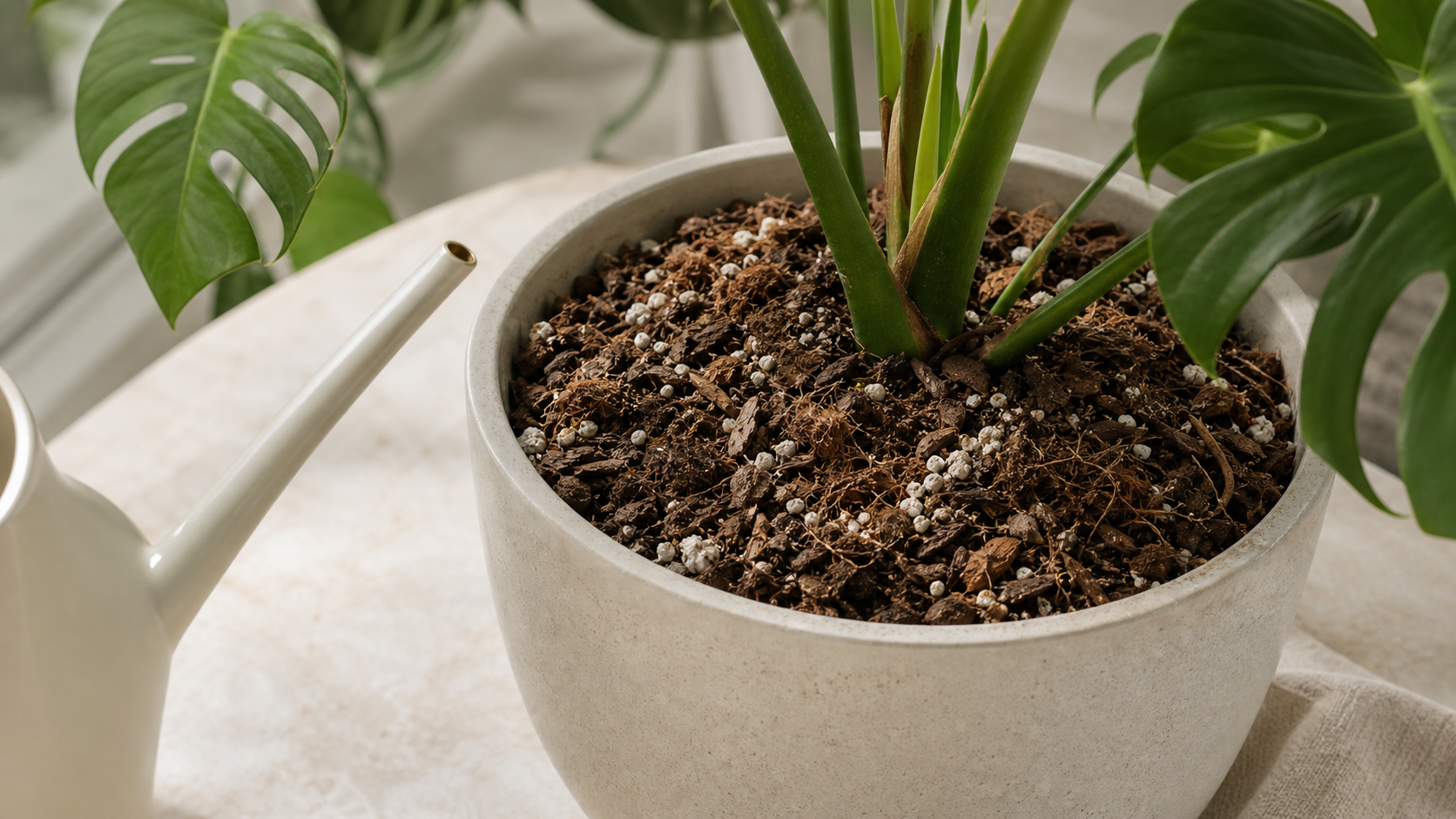
The same Monstera can dry much faster in a bright summer position than during low-light winter conditions. Before watering, check the upper 1 to 2 inches of potting mix with a finger or wooden skewer; once suitably dry, water thoroughly and allow excess water to drain.
Diagnose yellowing and droop in order
- Wet mix with yellow leaves: First suspect excessive moisture, poor drainage, or damaged roots rather than adding more water.
- Dry mix with soft overall droop: Recovery within hours to a day after thorough watering generally points to drought.
- Wet mix with odor or a soft stem base: Unpot and inspect promptly; this is a high-risk sign.
If you find rotten roots
Healthy roots are generally firm; injured roots become black, mushy, or lose their outer layer easily. Trim soft roots with sanitized tools, discard old mix, and repot into clean airy media. When the crown or stem base is extensively soft, rescue is less likely and isolation is important to protect neighboring containers.
Lower future risk
Use pots with drainage holes, never let a cachepot hold water for long, reduce watering in cool low-light periods, and do not push a newly repotted plant with strong fertilizer. Healthy roots restore confident foliage.