

Overview
Mastering Light Intensity Control and Preventing Yellow Leaves in Air-Conditioned Spaces
Summer heat and air-conditioning create a dual challenge for Monstera light management. This guide covers practical techniques for controlling bright indirect light intensity, identifying AC-related yellowing symptoms, and implementing humidity and temperature balancing strategies to keep your Monstera thriving throughout the hot season.
Core Principles of Summer Indirect Light Management
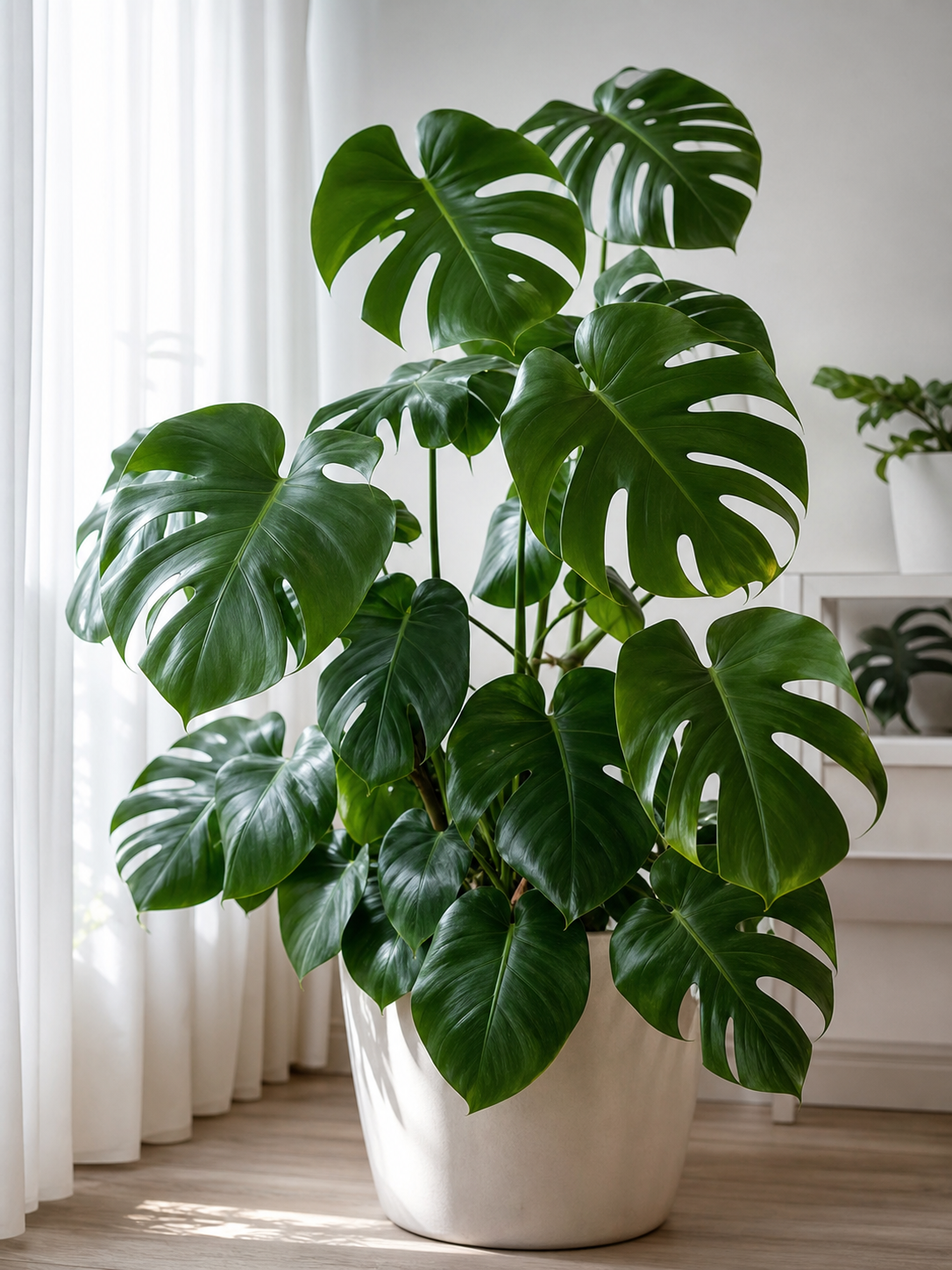
Monstera deliciosa naturally inhabits the understory of Central American tropical rainforests, evolved to thrive under bright but diffused light rather than direct sun. Summer sunlight intensity can reach 3 to 5 times that of winter, and without proper management, new leaves develop scorched patches while older leaves experience accelerated chlorophyll breakdown, ultimately turning yellow and dropping prematurely.
Quantifying Indirect Light Intensity
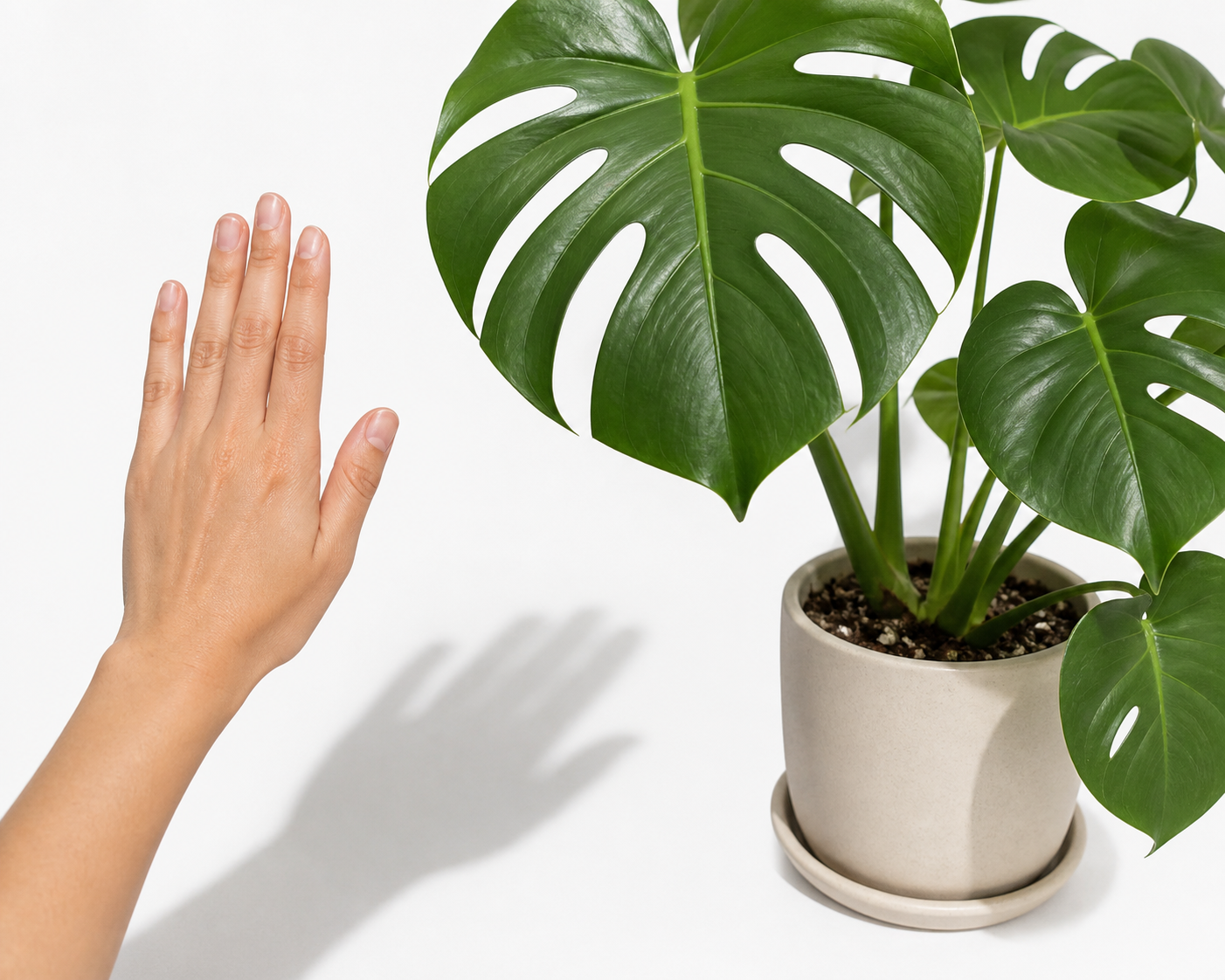
The hand shadow test is the most practical tool for assessing light levels. On a clear midday, hold your palm beside the plant. If the shadow's edges appear distinct but soft, light intensity falls within the ideal 8,000 to 15,000 lux range for Monstera. If the shadow appears sharply dark, light intensity likely exceeds 20,000 lux and requires filtering. For windowsill placements, east-facing or north-facing windows typically provide ideal diffused light. South-facing windows in summer need sheer curtains or frosted film to block 40% to 50% of incoming light.
Selecting Curtains and Light-Filtering Materials
Lightweight white sheers represent the ideal choice for summer Monstera light management, effectively filtering harsh rays while maintaining interior brightness. Avoid dark heavy curtains, as these reduce light below Monstera's compensation point, triggering leggy growth and yellowing. When using adjustable blinds, set slat angles to 45 degrees, allowing light to reach the canopy through diffusion rather than direct beams.
The Unique Challenge of Air-Conditioned Environments
Dual Temperature and Humidity Stress
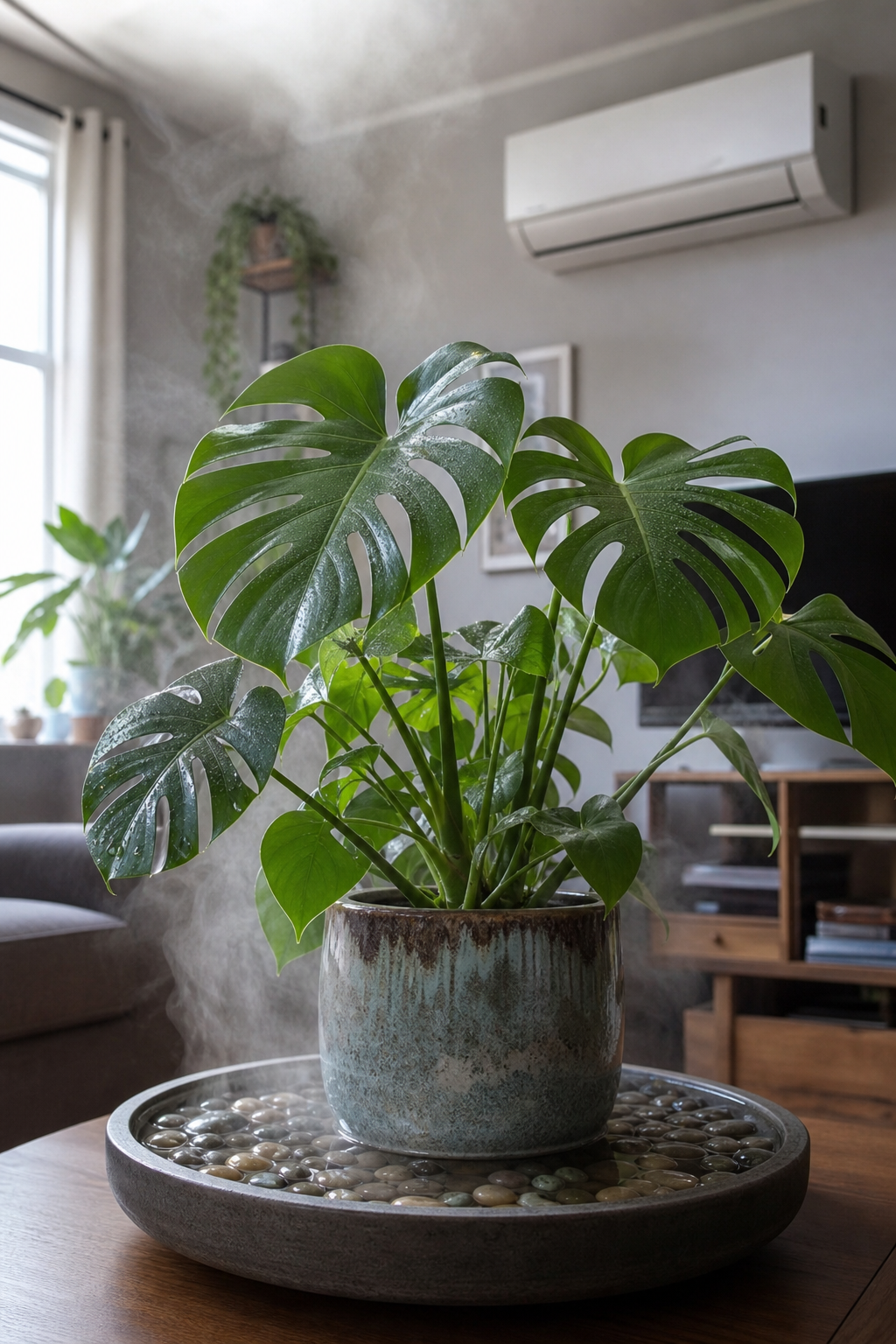
Modern apartments commonly use split-unit air conditioners, maintaining indoor temperatures between 22 and 26 degrees Celsius during summer—well within Monstera's comfortable range. However, AC operation reduces indoor relative humidity to often below 40%, while Monstera naturally prefers 50% to 70% humidity. Insufficient humidity accelerates leaf transpiration, and when root water uptake cannot compensate, leaf edges begin losing green pigment, manifesting as the primary cause of AC-related Monstera yellowing.
Temperature Differential Stress and Leaf Response
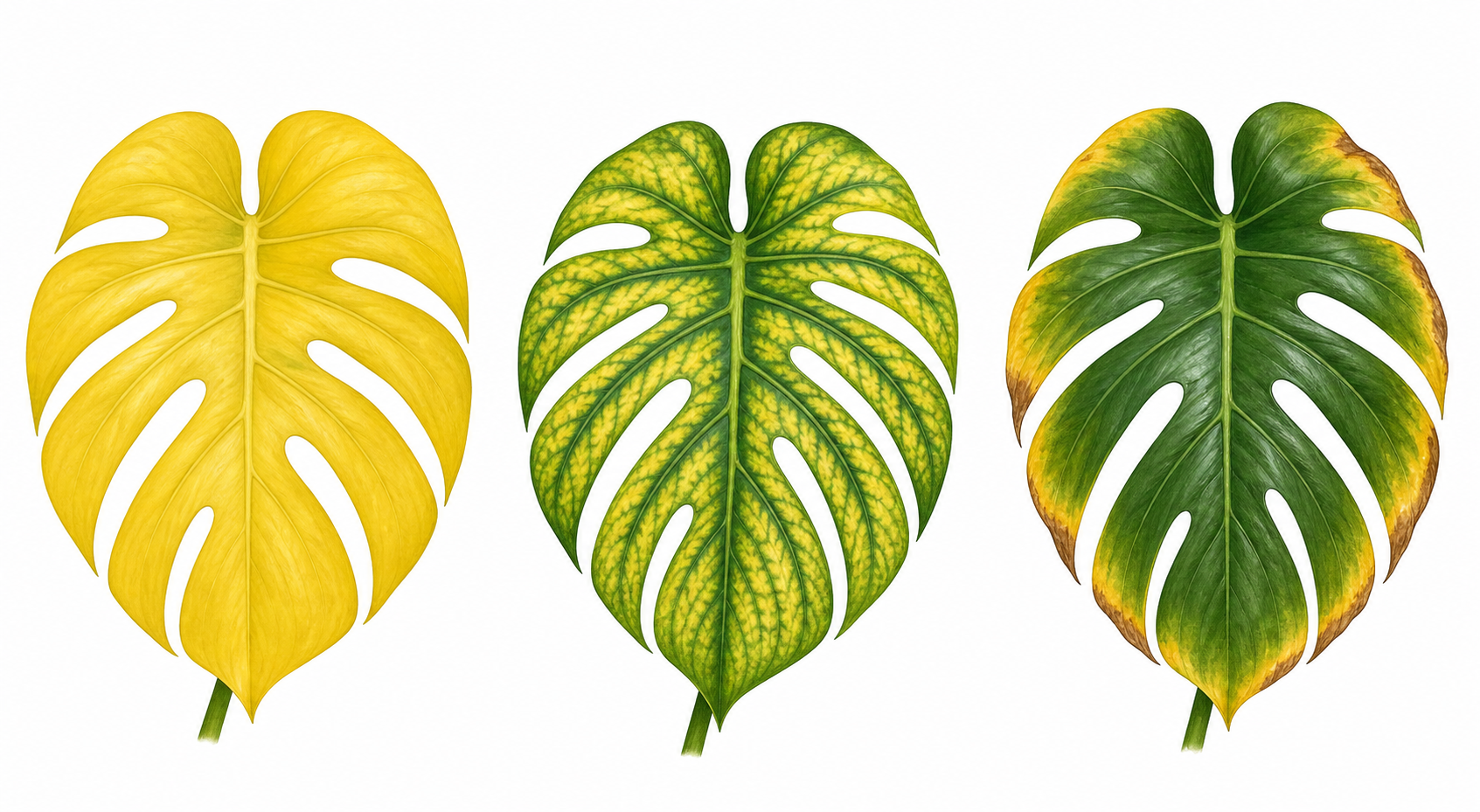
Intermittent AC cycling creates indoor temperature fluctuations that disrupt Monstera's normal metabolic rhythm. When cool air directly blows on the plant, localized leaf tissue cools, cellular activity decreases, and chloroplast degradation accelerates. This manifests as yellowing spreading from leaf margins toward the center. In homes with pronounced hot-cold zoning, placing plants near supply vents dramatically intensifies this yellowing pattern.
Distinguishing Yellow Leaf Types and Targeted Treatments
Characteristics of Physiological Yellowing
Physiological yellowing from excessive light or insufficient humidity typically produces uniformly yellowing leaves without spots or lesions. The petiole and stem junction remains green, and yellowed leaves naturally drop from the base of the petiole. This represents the plant's self-regulation response, reducing transpiration pressure by shedding older foliage. Upon observing physiological yellowing, first relocate the plant to a position with ample diffused light but no direct sun exposure, then elevate ambient humidity using a humidifier, pebble tray, or misting.
Water Management-Related Yellowing
Overwatering causing root rot also triggers yellowing, but this type accompanies consistently moist soil, softened petiole bases, and overall dull leaf appearance. During hot summer months when Monstera grows actively, watering frequency increases, but each application should amount to roughly one-third of the pot volume, ensuring the top 1 to 2 centimeters of soil have dried since the last watering. When suspecting root rot, immediately remove the plant from its pot, excise blackened rotting roots, soak the remaining root system in diluted potassium permanganate solution for 30 minutes, and repot in fresh substrate.
Nutrient Deficiency Yellowing
Monstera fed only plain water over extended periods may develop nitrogen, magnesium, or iron deficiencies, manifesting as interveinal chlorosis on older leaves. During the active summer growing season, apply diluted liquid foliage fertilizer every two weeks, using an NPK ratio of 3:1:2 to effectively prevent nutritional yellowing. For existing deficiency symptoms, spray chelated iron solution on foliage, applying once every seven days for three consecutive treatments to observe noticeable improvement.
Practical Summer Light Management Protocol
Position Rotation Method
Adjusting plant placement according to sun trajectory forms the core of summer light management. During morning hours, position Monstera on east-facing windowsills to receive gentle sunrise light. In afternoon hours, relocate to a spot 1.5 to 2 meters from the window to avoid intense western sun exposure. This dynamic management proves particularly effective for south-facing or west-facing room environments.
Balancing Supplemental and Filtered Light
If overall room light remains insufficient, full-spectrum LED grow lights provide effective supplementation, maintaining daily light duration of 10 to 12 hours. Position fixtures at least 40 centimeters above foliage to prevent localized light intensity from becoming excessive. When using artificial supplementation, simultaneously monitor leaf surface temperature to prevent heat damage from prolonged fixture exposure.
Humidity Maintenance Techniques
For Monstera in air-conditioned rooms, ultrasonic humidifiers effectively maintain humidity around 55%, backed by hygrometer monitoring. A simpler alternative involves creating a pebble tray: fill a shallow tray with pebbles, add water until it just reaches the top of the pebbles, and place the pot on top. Evaporating water elevates local humidity. Mist foliage twice daily using fine atomization, timing applications for before 9 AM and after 6 PM to avoid water droplets acting as magnifying lenses that cause sunscald.
Summer Care Inspection Checklist
Perform systematic Monstera inspection every seven days, focusing on new leaf color and unfolding speed, older leaf yellowing, petiole base firmness, and soil moisture levels. Maintaining a growth journal with weekly smartphone photographs from top and side views, building a chronological record of leaf color changes, proves essential for early problem identification. Through scientific light control combined with adaptive management for air-conditioned environments, Monstera fully maintains healthy vigorous growth throughout summer, with new leaves continuously emerging healthily and older leaves remaining lush and intact.