
Overview
What special care does Monstera need transitioning from humid rainy season to dry heated winter?
Japan's distinctive seasonal climate—humid tsuyu and dry winter heating—presents unique challenges for indoor Monstera care. This article explains in detail how to adjust watering frequency, humidity management, lighting, and pest prevention during both extreme seasons, helping you create stable growing conditions for your Monstera at home.
Guide
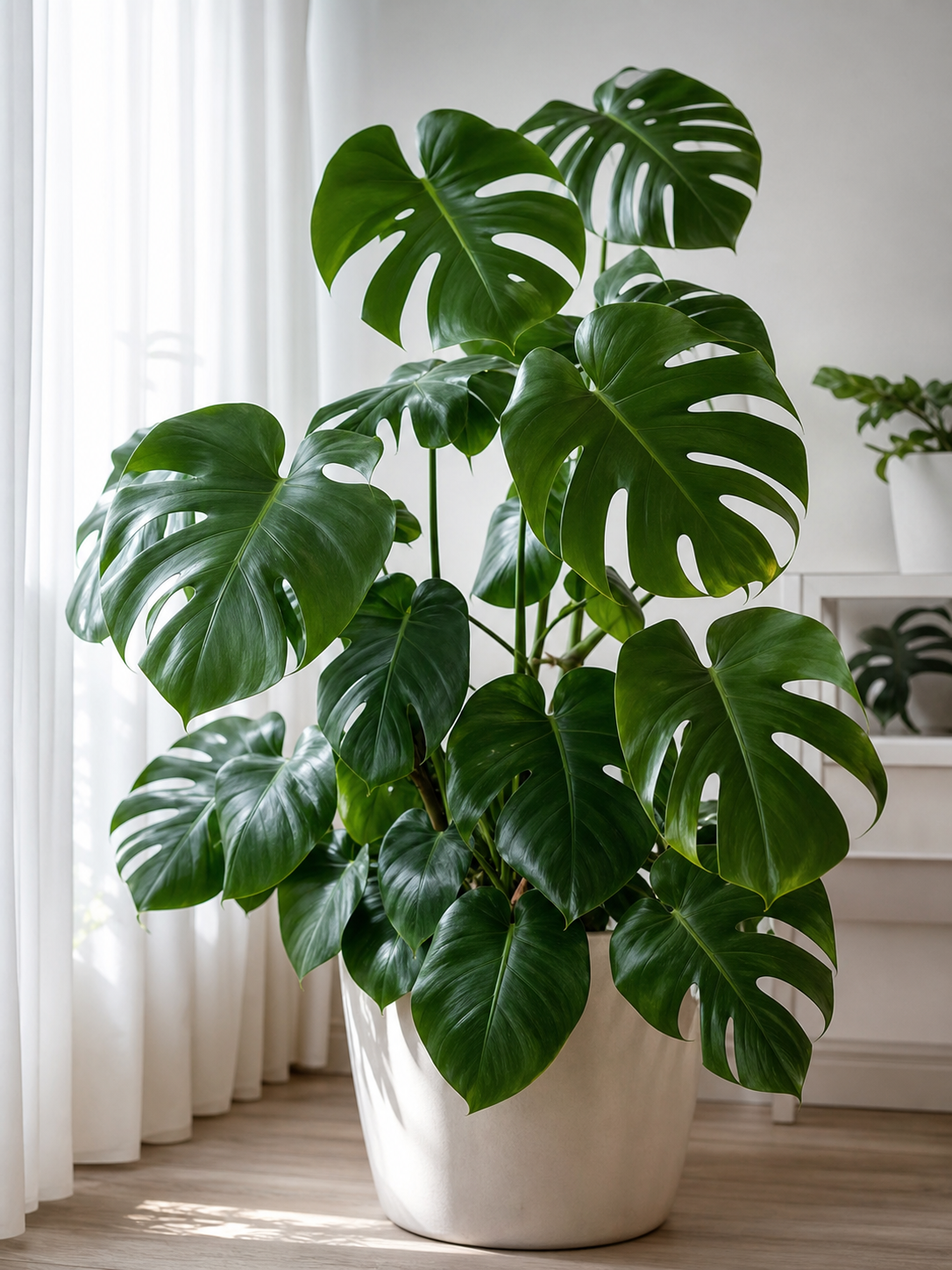
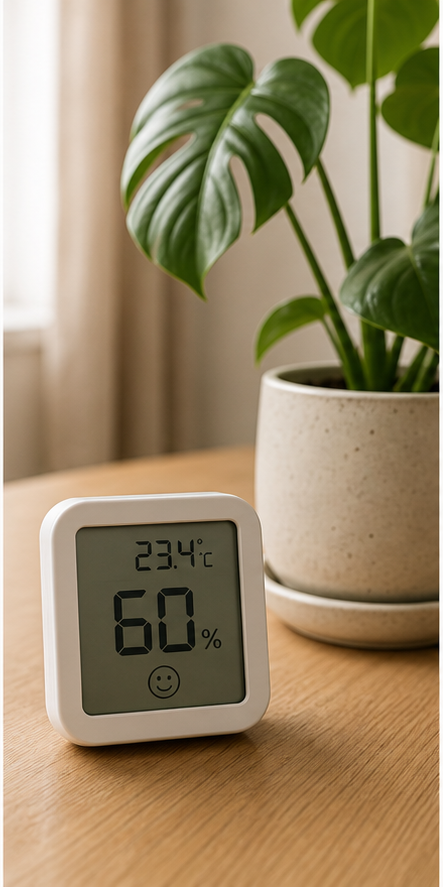
Japan's climate is marked by pronounced seasonal shifts, which create special demands for indoor Monstera (Monstera deliciosa) care. Every year from mid-June through July, the tsuyu (plum rain) season brings humidity often exceeding 80%, while winter heating season (sentan) from around October can reduce indoor humidity to below 30–40%. These dramatic humidity fluctuations directly affect Monstera's water transpiration and nutrient absorption, requiring us to adjust care strategies accordingly.
Tsuyu Season Care Priorities
During the tsuyu season, while ambient humidity is high, Monstera still needs good air circulation. Extended periods in stuffy, humid conditions with poor airflow can easily trigger fungal diseases. Place your Monstera near a window where it can receive indirect light while benefiting from air movement. If indoor humidity consistently stays above 85%, consider using a dehumidifier to control the environment and prevent the soil mix from staying overly wet, which could cause root hypoxia.
The watering principle during tsuyu should follow the "soak and dry" method—wait until the top 2–3 centimeters of soil are dry before watering. Monstera's roots are fleshy and aerating; they are highly sensitive to waterlogging, and overwatering is the primary cause of root rot during the rainy season. To determine watering timing, insert your finger into the soil surface; water only when it feels dry. Never allow water to accumulate in the drainage saucer, as prolonged root immersion leads to decay.
Humidity Management During Heating Season
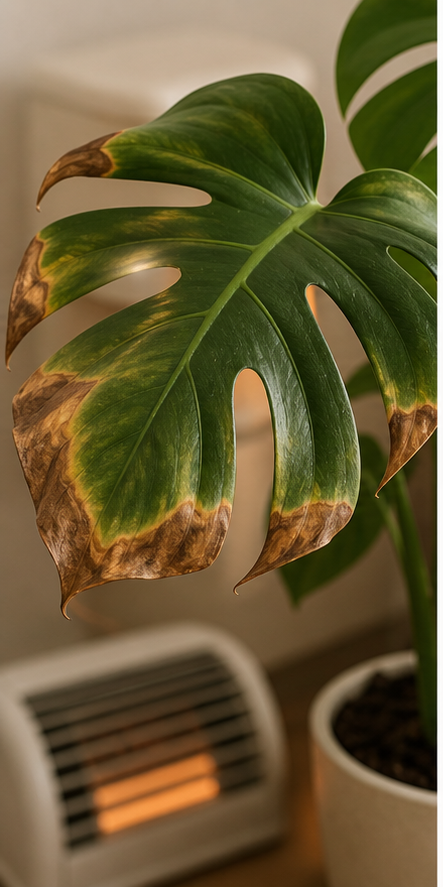
When temperatures drop in late October to November and Japanese households begin heating, indoor humidity plummets even though temperature feels comfortable. Monstera, native to tropical rainforest environments, will develop brown leaf edges and slow new growth if kept long-term below 50% humidity. The focus during heating season shifts to artificially creating a humid microclimate around the plant.
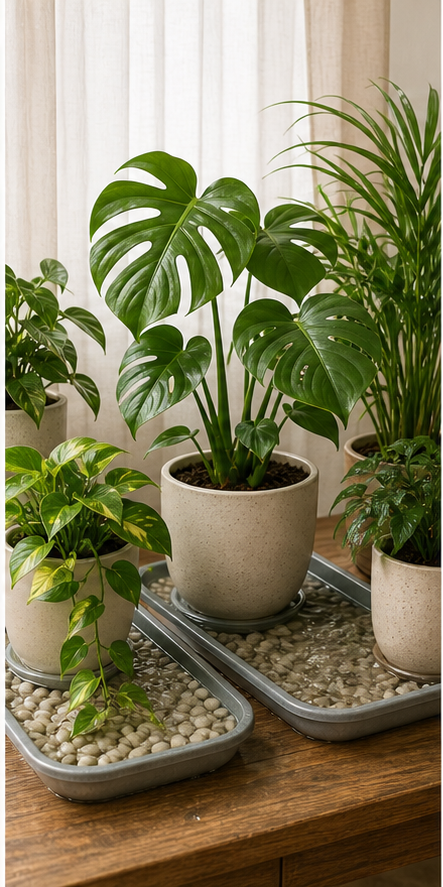
The simplest and most effective method is using a pebble tray. Place your Monstera pot on a tray filled with gravel and shallow water, ensuring the pot base never sits directly in water. Evaporating moisture rises to locally increase humidity around the plant. Additionally, grouping Monstera with other houseplants creates a more natural humidity boost through combined transpiration.
Regarding placement, keep Monstera at least 1.5 meters away from heating vents, warm air conditioner outlets, and electric heaters. Continuous hot airflow accelerates leaf transpiration, leading to dehydration and dry leaf tips. Use a heat-resistant mat to isolate conductive heat if placement near heating equipment is unavoidable.
Leaf Care and Lighting Adjustments
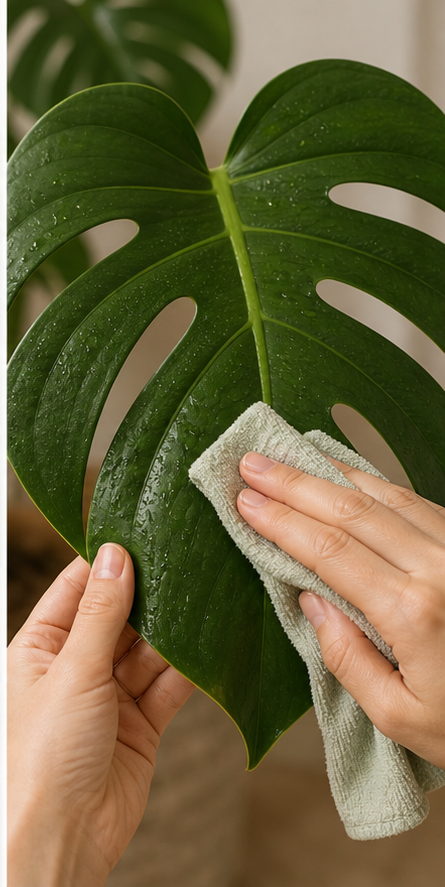
During heating season, indoor dust accumulates easily on Monstera's broad leaf surfaces, clogging stomata and impairing photosynthesis and respiration. Every two weeks, gently wipe leaf surfaces with a damp soft cloth to maintain cleanliness and allow early detection of pest issues. When wiping, support the leaf underside to reduce risk of damage.
Winter brings shorter daylight hours. While Monstera tolerates low light, it still needs adequate indirect light for healthy growth. Move pots closer to south or east-facing windows, avoiding direct sunlight that could scorch leaves. If natural light is insufficient, supplement with full-spectrum grow lights for 4–6 hours daily, keeping the lamp at least 30 centimeters from the foliage.
Observation and Adjustments During Seasonal Transitions
October and April are the months when Japan's indoor environment experiences the most dramatic humidity shifts. During these transition periods, observe your Monstera's growth status more frequently. If older leaves turn yellow, you may be overwatering; if new leaves appear pale and fenestrations fail to develop, the plant likely needs more light or nutrients; if leaf margins show brown drying, humidity is too low or fertilizer concentration is too high. Adjust promptly upon noticing symptoms—recovery usually becomes visible within two weeks.
Pest Prevention Essentials
Dry conditions during heating season favor spider mite (红蜘蛛) reproduction. Spider mites are tiny and hard to spot, but they leave small yellowish-white specks on leaf undersides; severe infestations show fine webbing. Prevention key points include maintaining appropriate humidity, regularly inspecting leaf undersides, and ensuring good ventilation. Upon detecting mites, wipe leaf surfaces with a damp cloth to remove most pests, or spray with neem oil diluted according to product instructions weekly for three consecutive weeks.
Mealybugs (介壳虫/粉蚧) are also common Monstera pests, potentially occurring year-round. They appear as white cottony masses, often clustering at leaf joint bases and new growth points. Upon finding mealybugs, wipe directly with an alcohol-dipped cotton swab, or spray the entire plant with diluted mild soap solution, repeating every five days until infestation clears. For routine care, isolate newly purchased plants for a two-week observation period to confirm pest-free status before placing them near other houseplants.
By understanding Japan's seasonal patterns and making targeted adjustments to watering frequency, humidity management, and lighting, Monstera can maintain healthy vigorous growth even between these two extreme seasons. The key is establishing a habit of regular observation and responding promptly to plant feedback.