Overview
Set up light, watering, and observation habits from day one
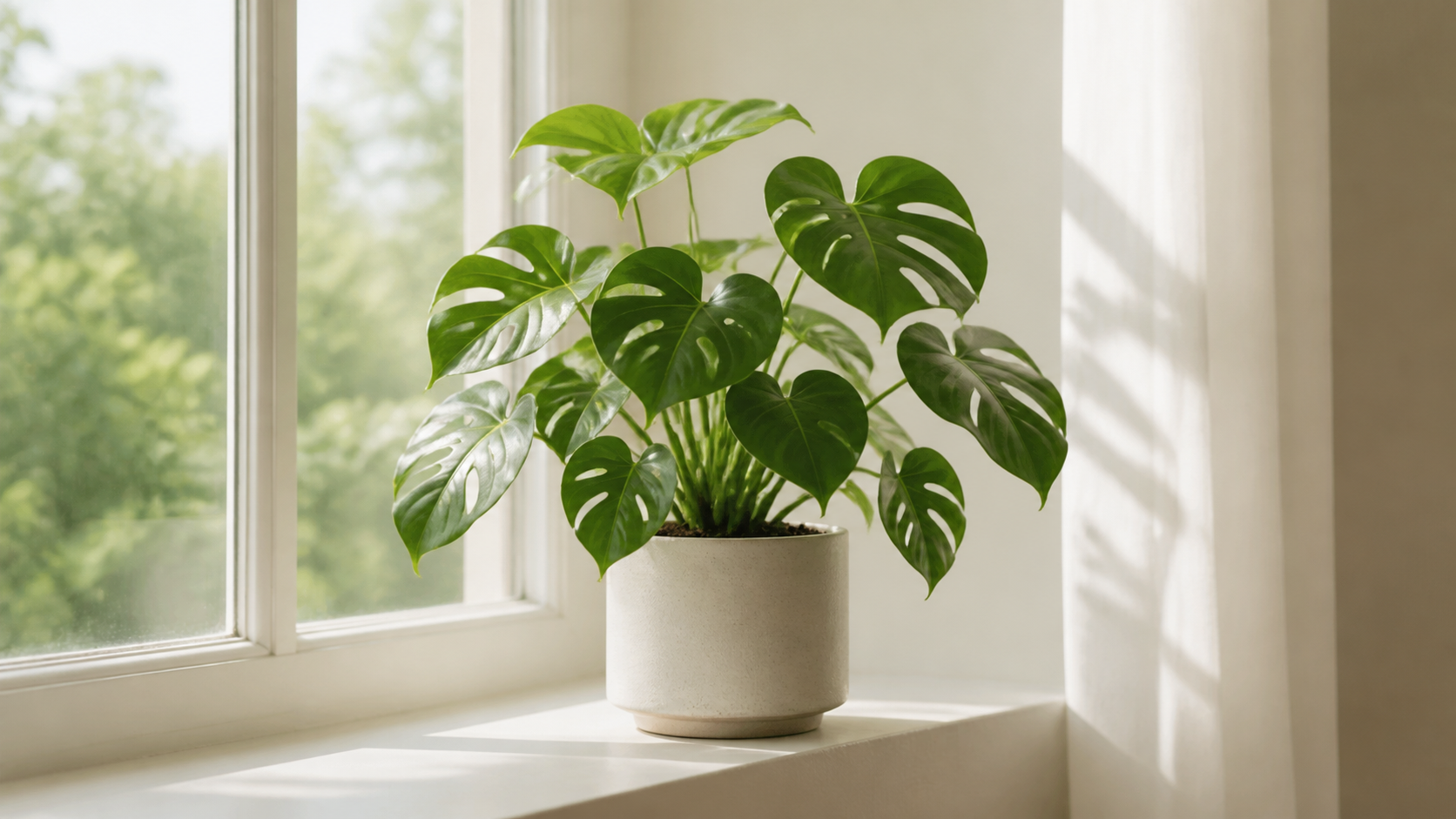
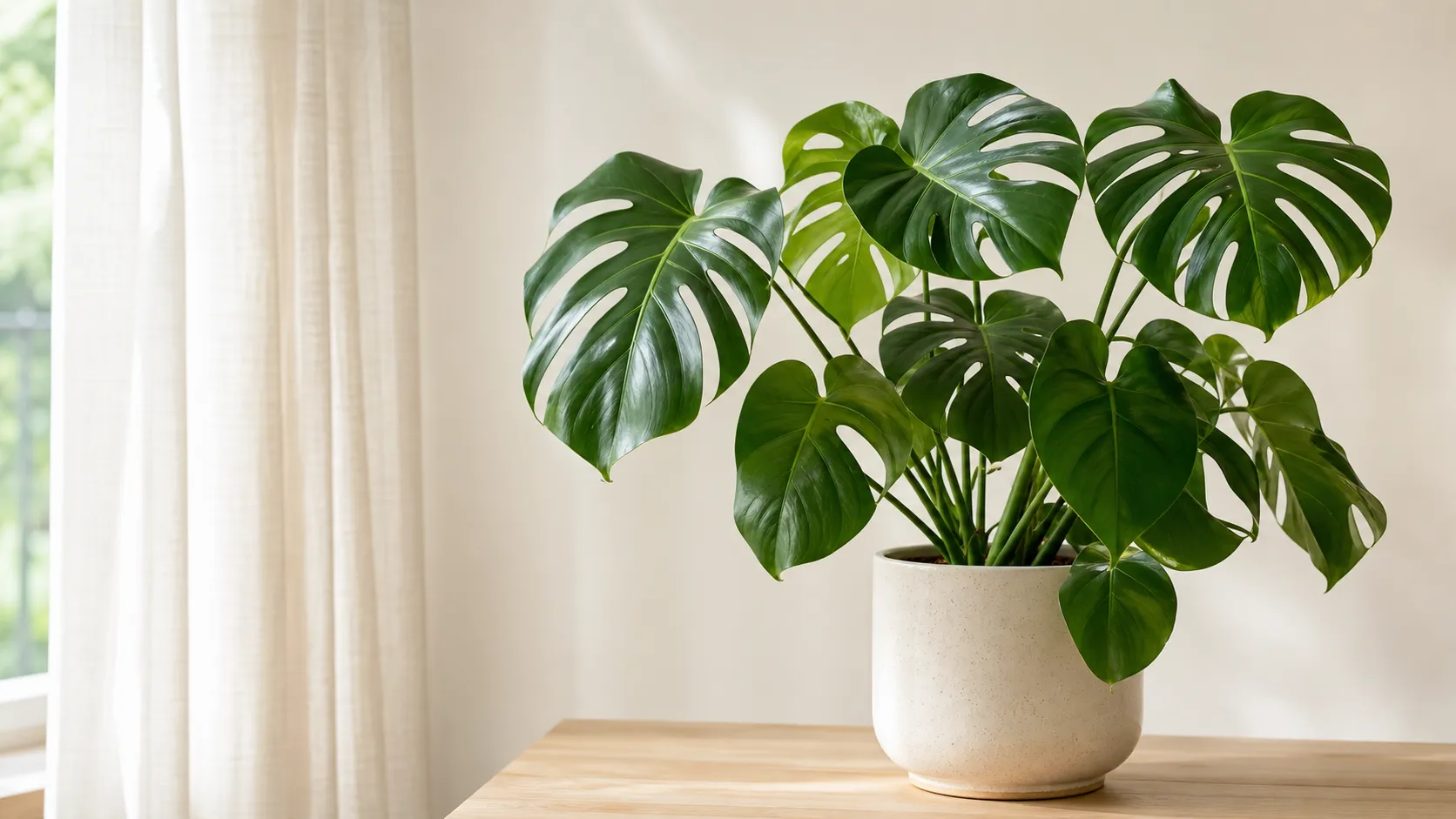
Monstera deliciosa is approachable when given bright indirect light, airy potting mix, and patient watering. Set the environment first, then larger fenestrated leaves can follow naturally.
Understand its rhythm first
Monstera deliciosa is a climbing tropical foliage plant. It enjoys bright but gentle light and a root zone that receives moisture without staying airless. Juvenile leaves may be solid; larger fenestrated leaves usually arrive as the plant matures with suitable light and support.
Choose its first position
Place it near a bright window where it sees sky light without prolonged harsh afternoon sun. Normal stable indoor warmth is usually suitable; avoid direct heating, air-conditioning drafts, and cold doorways. Turn the pot a quarter turn weekly for balanced growth.
Three foundational habits
The most common beginner mistake is watering again while the root zone is still wet.
- Water: When the upper 1 to 2 inches of mix feel dry, water thoroughly and empty any saucer drainage.
- Mix: Use an airy blend containing bark, perlite, or chunky coir, in a pot with drainage holes.
- Clean: Wipe dusty leaves gently and use the moment to inspect undersides for mites, thrips, or scale.
Read the plant's feedback
Regular new leaves and upright stems indicate that conditions are broadly right. A yellowing leaf paired with mix that remains wet calls for a root-zone check; crisp edges with genuinely dry mix point more toward drought or dry air. Healthy new growth matters more than old damaged leaves.