
Overview
From Observation to Action: A Complete Guide to Inspecting, Cleaning, and Monitoring Without Spreading
Mealybugs are among the most persistent pests affecting indoor plants, preferring to hide in leaf axils and stem junctions where they are hard to detect. The warm, stable indoor environment provides ideal conditions for their reproduction. This article explains why mealybugs favor leaf axils, details their survival strategies indoors, provides systematic inspection steps, demonstrates cleaning methods that prevent spreading, and establishes monitoring criteria for recovery. The goal is to build a complete indoor pest management mindset.
Why Mealybugs Prefer Leaf Axils: Secrets of Indoor Survival
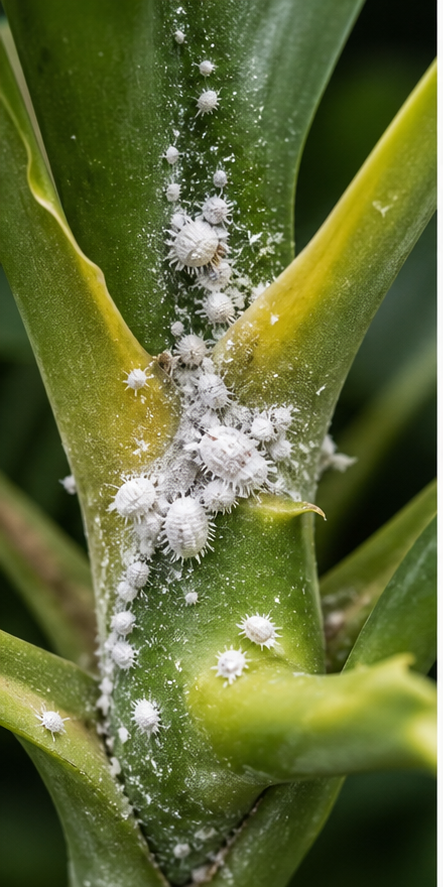
Mealybugs belong to the family Pseudococcidae and their nymphs and adults prefer to congregate in the crevices of plant tissues. The leaf axil—the junction where the leaf petiole meets the stem—offers multiple advantages: relatively higher humidity, weaker light, and reduced spray penetration during watering or treatment. For indoor plant caregivers, this location is often a blind spot during visual inspection.
The reason indoor environments become hotspots for mealybugs comes down to three conditions. First, indoor temperatures remain relatively stable year-round without the winter cold that would suppress population growth. Second, potted plants are often densely arranged, allowing pests to spread between plants during watering or repotting through physical contact. Third, many indoor plants are foliage plants with dense, layered leaves that provide endless hiding places for mealybugs.
Systematic Inspection: Observe Before Confirming
When inspecting for mealybugs in leaf axils, prepare a handheld magnifying glass (10x magnification is sufficient) and conduct inspections during morning or evening when light is soft. The inspection order should proceed from new leaves to old ones, from top to bottom, because mealybug nymphs have a tendency to crawl upward.
Key observation points include: whether there is white cottony material in the leaf axils, whether there are moving pale yellow or pink dots, and whether there is glossy honeydew residue on the stem surface. Honeydew is the sweet secretion excreted by mealybugs after feeding; when it falls on leaves, it attracts sooty mold fungi, creating black spots.
Important reminder: Do not only inspect the front of leaves. Many caregivers discover mealybugs only when the pests have already established populations deep within leaf axils and on leaf undersides. If one plant shows mealybugs, all plants in the same space must be inspected—do not take chances.
Cleaning Treatment: The Principle of Not Spreading Eggs
When mealybugs are discovered, the first step is not spraying pesticides but physical isolation and local cleaning. Move the infected pot to an area away from other plants, ideally a separate room or balcony.
Cleaning tools should include a soft-bristled brush (an old toothbrush works well) and cotton swabs. During operation, dip the cotton swab in 75% isopropyl alcohol and gently wipe the insects and egg masses deep in the leaf axils. Be careful not to squeeze forcefully, because when insects are crushed, eggs may splatter. The soft brush is used to clean visible pests on the stem surface; prepare a water tray to catch insects so they fall into the tray rather than onto the floor.
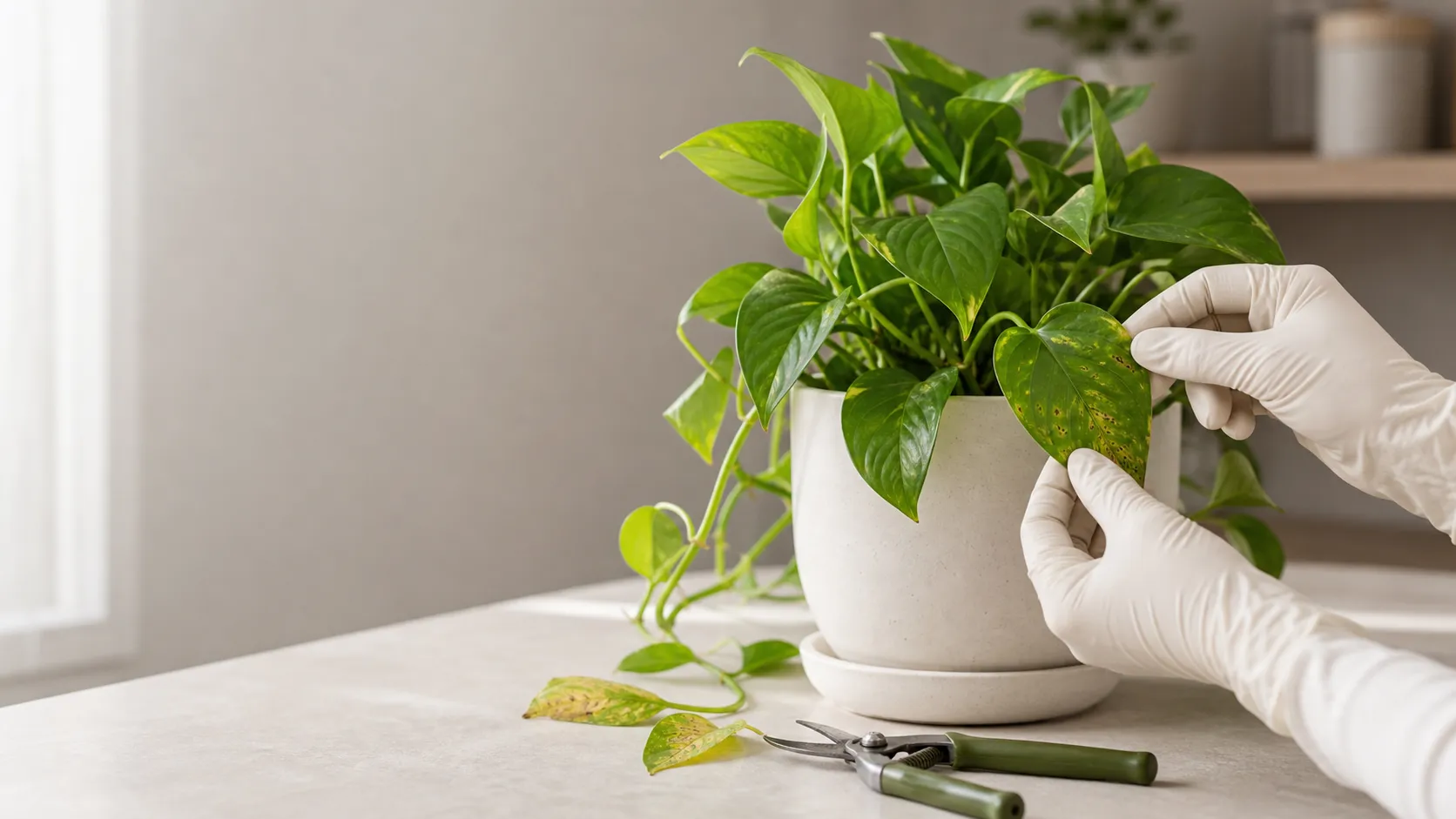
For plants with dense foliage, gently separate the leaf axils by hand to expose the inner spaces for cleaning. After completion, wipe the surrounding area with alcohol again to ensure nothing was missed. After cleaning, soak tools in alcohol for at least ten minutes before continuing use.
Chemical Assistance: Choices and Methods
After physical cleaning, consider using systemic pesticides for辅助控制. Imidacloprid and acetamiprid are commonly used systemic insecticides that can be absorbed by plants to kill feeding mealybugs. When using these, dilute strictly according to instructions and avoid overdosing to prevent phytotoxicity.
Contact insecticides such as mineral oil or botanical oil products can be used as foliar treatments, but avoid application during high-temperature periods to prevent leaf burn. Regardless of which pesticide is used, a second application should follow seven to ten days after the first to kill newly hatched nymphs.
Monitoring Recovery: Criteria for Judging Success
Whether treatment is effective needs to be determined through observation over time. After the first treatment, inspect every three days, three consecutive times with no live insects indicates initial success. Then switch to weekly inspections for one month.
Indicators of recovery include: new leaf growth is normal with no deformities or poor development; no white cotton or insects in leaf axils; no honeydew or sooty mold black spots on leaf surfaces. If new leaves still show mealybugs, egg masses were not completely cleared or there is an infection source in surrounding plants, requiring retreatment.
Finally, establishing preventive awareness is more important than remedial action. Newly purchased plants should be isolated and observed for at least two weeks; regularly inspect leaf axils and stem junctions with a magnifying glass; avoid overwatering and over-fertilizing because vigorous new growth更容易 attracts mealybugs. Indoor pest management is a持久战, and only by making inspection and cleaning a daily habit can mealybugs truly have nowhere to hide.