
Overview
A two-minute action for everyday Kangaroo Paw care
Build an immediately actionable, observable inspection habit for Kangaroo Paw.
Cleaning is also inspection
In cool damp, poorly ventilated conditions, watch for dark leaf blotches associated with ink disease; seedlings and tender foliage are also vulnerable to slugs and snails.
Respond in order
If you see suspicious damage, residue, soft decay, or odor, isolate first, record changes, and correct conditions. If diagnosis or treatment is needed, follow a locally registered product label.
Record and recheck
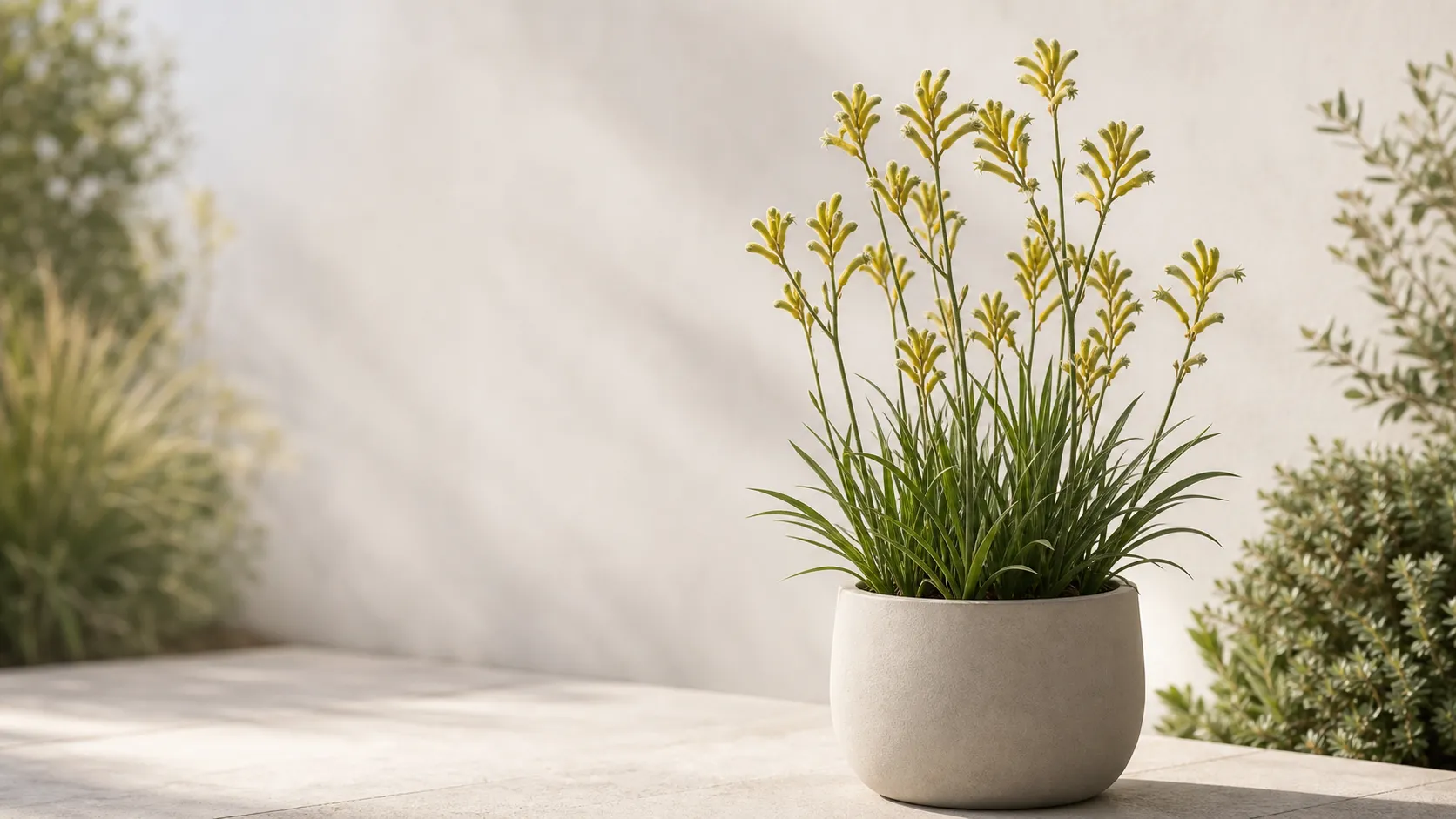
Kangaroo paw is a rhizomatous flowering perennial native to southwestern Western Australia, with velvety tubular flowers on stalks rising above its leaf fans. After this action, note the date, media condition, new growth, and position. Review after one or two weeks; if decline continues, soft rot or odor appears, or pests spread, isolate and investigate instead of substituting extra watering or repeated feeding for diagnosis.