
Overview
Recognizing Salt Buildup Signs, Mastering Safe Flushing Timing, and Preventing Root Problems from Becoming Chronic Issues
Fertilizer salt buildup is a common invisible threat in indoor plant care, leading to reduced root absorption capacity, leaf tip burn, and stunted growth. This article helps readers recognize early signs of salt accumulation, determine when flushing becomes necessary, master proper flushing techniques, and observe post-flushing results. By understanding the basic principles of salt cycling, you can proactively prevent issues in daily care rather than reactively rescuing plants when problems become severe.
What is Fertilizer Salt Buildup
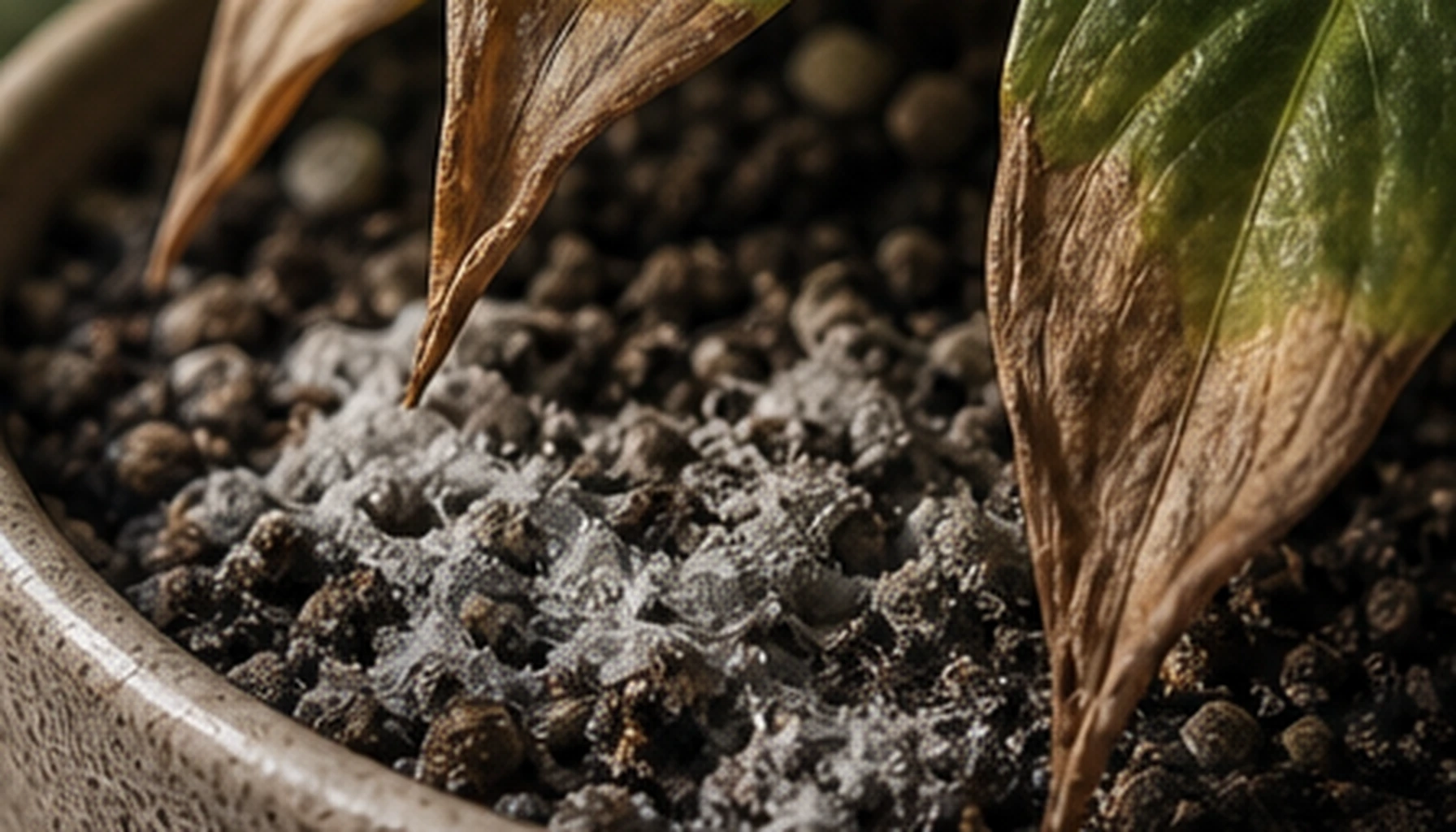
When we regularly apply liquid fertilizers or slow-release fertilizers to plants, minerals in the potting medium gradually concentrate. These unabsorbed ions leave behind white, gray, or pale yellow residues that form a fine powdery layer on the soil surface or crystallize along the inner walls of the pot. Salt buildup not only affects the root system's normal water absorption but also changes the medium's pH, locking out certain micronutrients and causing plants to exhibit symptoms of nutrient deficiency even while appearing to receive proper watering and fertilization.
How to Recognize Signs of Salt Buildup
Observation is the most important first step. Leaves are the most direct indicator: brown or scorched spots on leaf tips and margins are classic symptoms of salt toxicity, while smaller and paler new leaves are also worth noting. If your watering frequency is normal but plants suddenly wilt without recovering after watering, this often means the roots have already been damaged. Inspect the soil surface: shine a flashlight at an angle; white or grayish powdery deposits indicate that salt has begun accumulating. Another detail to check is whether there's a grayish-white crystalline ring where the pot wall meets the soil. Gently touch the soil surface—if it feels gritty and slightly abrasive, this is also a sign of excessive salt.
Determining When Flushing Becomes Necessary
Not all salt buildup requires immediate flushing. Minor surface crystals can be handled during repotting, but the following situations call for proactive flushing: leaf tip burn that is gradually spreading, noticeably slowed water penetration, previous over-fertilization in concentration or frequency, or plants that have stopped growing or are declining. If you've recently applied fertilizer exceeding recommended concentration, flushing promptly is essential. Flushing is also appropriate before repotting to cleanse the root system, or when the medium has been used too long and drainage has declined.
Safe Flushing Procedure Steps
Before flushing, prepare room-temperature or slightly warm water to avoid shocking roots with cold water. Move the plant with its pot to the bathroom or outdoors where drainage is convenient. For hanging baskets or immovable containers, use a long-spout watering can to pour slowly. First, slowly water the entire pot until saturated, allowing water to flow from the bottom—this step ensures the medium is fully saturated. Next, wait approximately ten minutes for salts to fully dissolve. Then perform a second round of flushing, slightly increasing water flow while keeping it steady to avoid dispersing the soil surface layer. Recommended flushing water volume is three to five times the pot volume; for example, a one-gallon pot needs three to five gallons of flushing water. After flushing, place the pot in a well-ventilated location and allow excess water to drain naturally over one to two days. Avoid direct sunlight and overly humid conditions.
Do Not Fertilize Immediately After Flushing
This is the most commonly overlooked point. Flushing removes large amounts of minerals, including beneficial nutrients the plant needs. If you immediately add fertilizer afterward, you're subjecting already-stressed roots to high concentrations again. The correct approach is to let the plant rest for at least two to three weeks, watering only as needed during this period. Observe whether new growth appears, leaves regain vibrant green color, and wilting subsides. If the plant shows significant improvement after three weeks, you can gradually resume fertilization starting at one-quarter recommended concentration.
Preventing Salt Buildup from Becoming a Chronic Problem
Prevention is always better than treatment. Establish a regular inspection habit: check every two weeks for crystalline deposits on the soil surface and any leaf tip burn trends. Strictly follow recommended fertilizer dosages when applying—better to apply small amounts more frequently than one large dose. Using organic or slow-release fertilizers reduces the risk of rapid salt buildup because they release more gently. When selecting growing media, prioritize well-draining formulas; adding perlite and coarse sand improves the medium's salt dilution capacity. If your tap water is particularly hard, consider collecting rainwater or using filtered water for irrigation, as long-term use of hard water inadvertently accelerates salt accumulation.
Observing Flushing Results and Subsequent Reactions
The one to two weeks following flushing are the observation period. If the plant begins improving within two weeks, flushing was effective and you can continue normal care. If symptoms show no improvement or worsen, other issues may exist: root rot has occurred, medium drainage is blocked, or salts have penetrated deep layers requiring a second flush. Record your observations, including dates, water volumes used, and plant responses—this data will help you create more precise watering and fertilization plans in the future. Healthy root systems are the foundation of overall plant health, and controlling salts is the first step to protecting those roots.