
Overview
Identifying subtle clues of mite infestations before webbing becomes visible
This article helps indoor plant enthusiasts detect spider mites before they spin obvious webs by recognizing tiny stippling, leaf dullness, and dry‑air‑related surface changes, offering practical observation tips, first‑step actions, and follow‑up monitoring advice.
1. Early Signs of Spider Mites
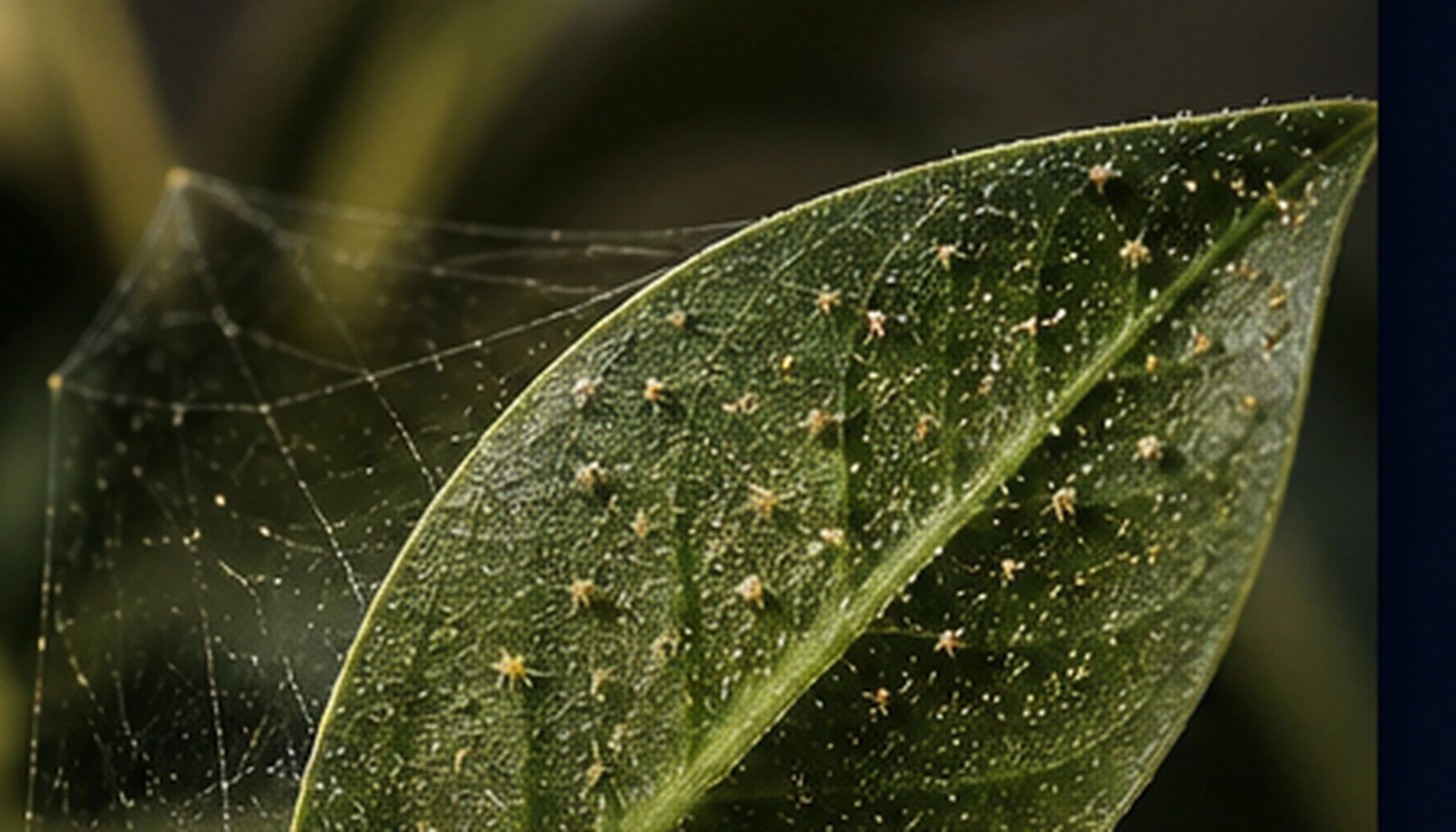
Spider mites ( Tetranychus urticae ) do not produce visible webbing until the population is already high. Their first impact is microscopic feeding damage that shows up as:
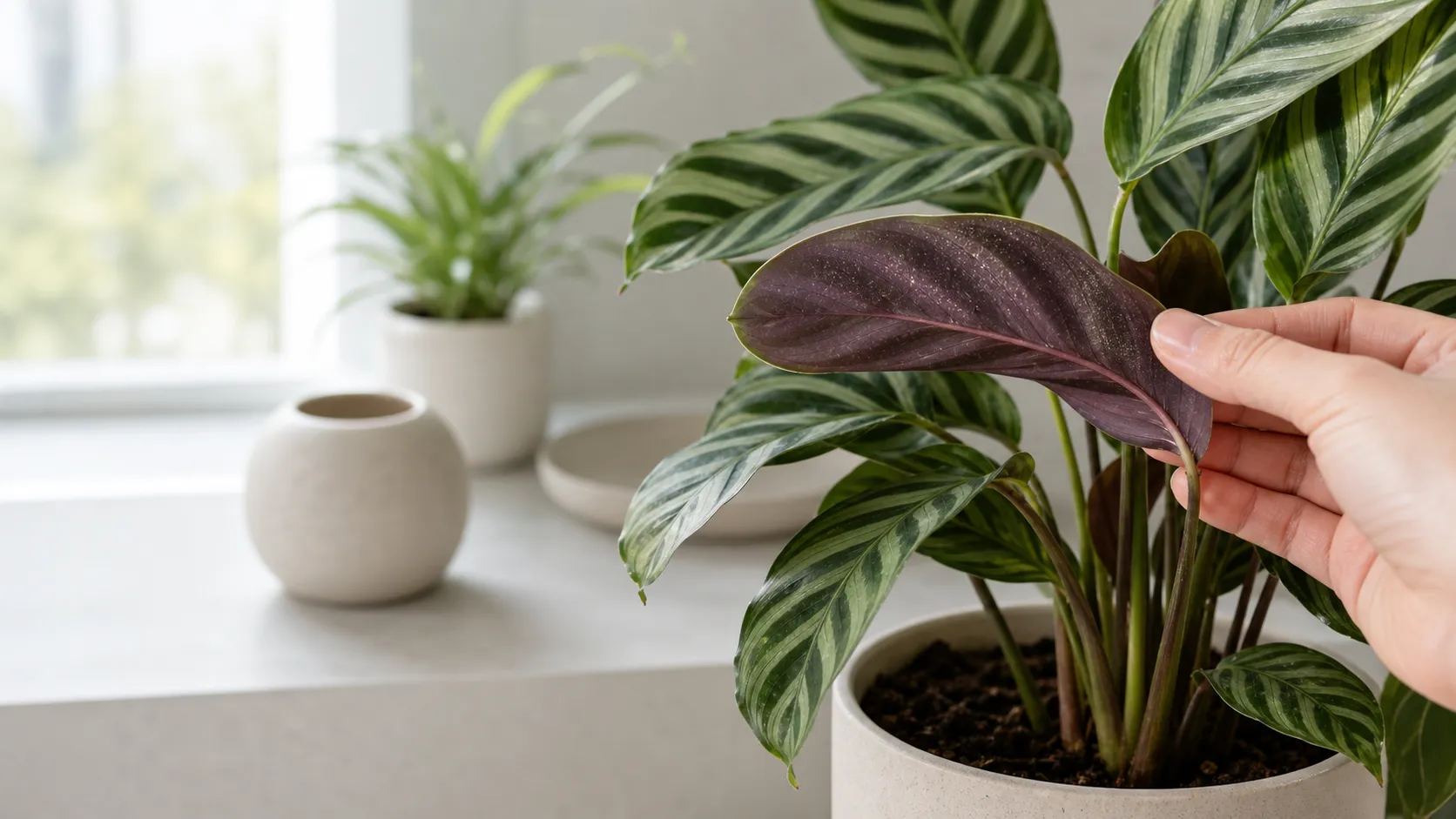
- Stippling : Tiny, pale‑yellow or white speckles on the upper leaf surface, often arranged in irregular clusters or lines.
- Dull, lack‑luster foliage : Healthy leaves have a natural sheen; early mite damage makes them look matte and faded.
- Dry‑air patterns : When indoor humidity drops below 40 %, leaf edges may curl slightly and tiny brown spots can appear, indicating micro‑environments mites love.
2. Observation Techniques & Inspection Methods
Detecting mites before webbing requires systematic checks:
① **Timing**: Early morning or late afternoon, when light is soft and leaf surface moisture is low, makes mites more active on the leaf underside.
② **Magnification**: Use a 10× hand lens or a smartphone macro lens to inspect leaf undersides, vein junctions, and petiole bases.
③ **Touch test**: Gently run a finger over the leaf surface; a fine, gritty feel can be mite frass or eggs.
④ **Comparison**: Compare different leaves on the same plant. Leaves showing abnormal stippling or dullness are the first to be infested.
3. Immediate Actions When Early Damage Is Spotted
Once you confirm early mite activity, act quickly:
- Isolate the plant : Move the suspect plant to a well‑ventilated, separate area to prevent spread.
- Manual removal : Use a soft brush or damp cloth to gently wipe the leaf undersides, removing visible mites and eggs.
- Boost humidity : Mites prefer dry conditions. Increase relative humidity to 50‑60 % with a humidifier or light misting (avoiding water droplets under direct sunlight).
- Apply low‑toxicity treatments : Neem oil or insecticidal soap diluted per label instructions, sprayed on leaf undersides, repeated every 5‑7 days.
4. Things You Should NOT Do
During early‑stage infestations, avoid:
- Using high‑concentration chemical pesticides or harsh sprays, which can burn foliage and increase mite resistance.
- Misting or watering in strong light or high heat, as water droplets can act like lenses and cause leaf burn.
- Neglecting to prune heavily infested leaves, allowing the population to explode.
5. Follow‑up Monitoring & Prevention
After treatment, watch for these changes:
① **Stippling spread**: If the speckles stop expanding and start to fade within 1‑2 weeks, the mites are under control.
② **New leaf health**: Fresh growth should be spot‑free and glossy. Persistent dullness or new stippling signals continued activity.
③ **Inspection frequency**: Conduct a quick visual check every 2‑3 weeks, especially during dry seasons.
④ **Preventive habits**: Keep humidity in the optimal range, rinse leaves with plain water regularly, and avoid over‑fertilizing (high nitrogen fuels mite reproduction). These habits greatly reduce future outbreaks.