
Overview
A Practical Guide to Identifying Stagnant Air-Induced Disease vs. Physical Damage
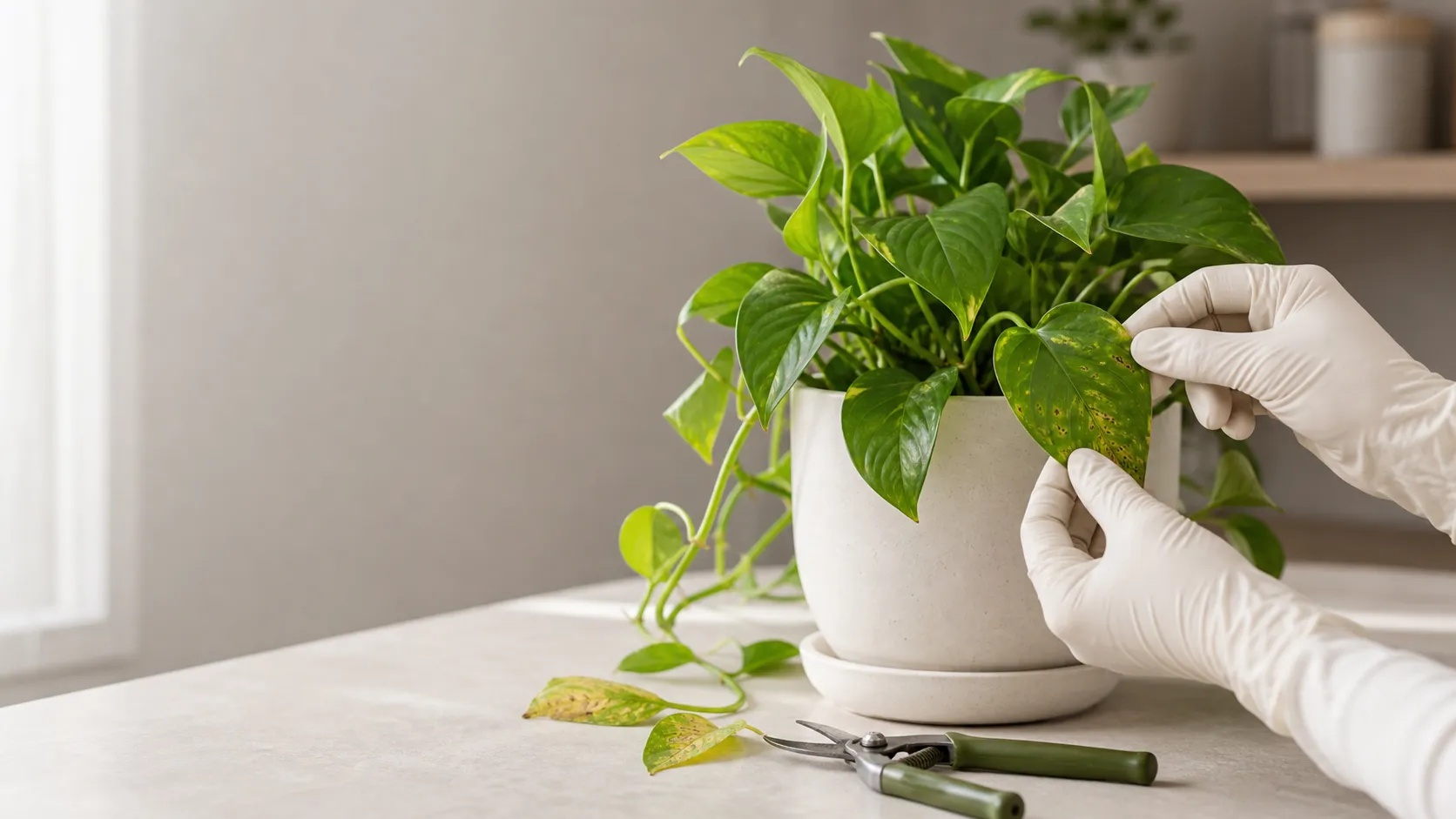
Stagnant air in indoor environments is often overlooked but closely linked to leaf spot development. Understanding the difference between infectious leaf spots and non-infectious splash damage helps cultivators take appropriate action, pruning infected tissue when necessary while avoiding unnecessary interventions.
The Connection Between Stagnant Air and Leaf Spots
Indoor home environments often suffer from poor ventilation, especially during winter when windows remain closed and heating systems run continuously, causing a significant reduction in air movement. Stagnant air not only affects gas exchange in plants but also creates conditions for pathogen accumulation. When leaf surfaces remain wet for extended periods, fungal spores or bacteria can more easily germinate and invade tissues, forming infectious leaf spots. On the other hand, physical impact from water droplets falling from height onto leaves can also leave visible marks, which is non-infectious splash damage.
How to Distinguish Between the Two Types
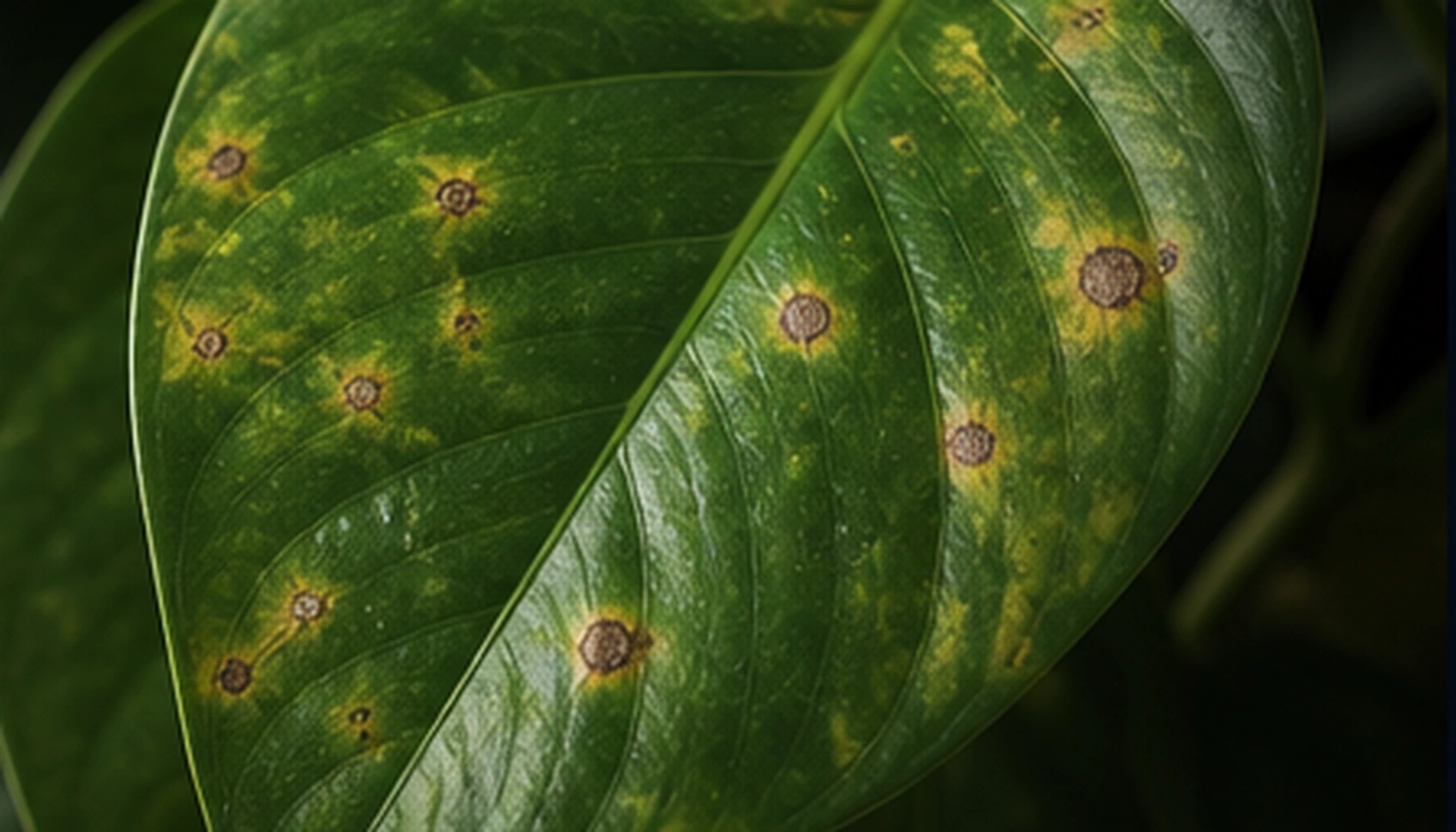
Observing the morphology and distribution of leaf spots is the first step. Infectious spots typically show clear expansion trends, with edges possibly presenting halo or concentric ring structures. Color gradually darkens from light brown, and the spot center may develop powdery or fuzzy spore layers. These spots often appear asymmetrically on any part of the leaf, and the number increases over time. Splash damage presents as relatively clear-edged circular or elliptical dots with uniform color, typically distributed on the upper leaf surface or positions easily reached by direct water impact. Splash damage does not spread, nor will new spots appear.
What to Do First
After confirming the nature of the problem, the primary measure is to improve ventilation. Opening windows for fresh air circulation or using small fans to promote indoor air movement is key to fundamentally solving the problem. Simultaneously, adjust watering methods—use a narrow-mouth watering can and pour slowly along the pot rim, avoiding water streams directly impacting leaves. For infectious spots that have already appeared, pruning may be necessary depending on the pathogen type. For splash damage, no special treatment is needed; simply keep leaves clean.
When and How to Prune Infected Tissue
Not all infectious leaf spots require pruning. When spots are small and limited to leaf edges, improving the environment and applying appropriate fungicides may be sufficient to control the situation. However, if spots cover more than one-third of the leaf surface, or appear on new leaves, pruning should be considered. When pruning, use disinfected sharp tools and cut obliquely about one centimeter above healthy tissue, avoiding tearing. After pruning, properly dispose of diseased leaves—do not leave them on the pot surface or in compost. For splash damage, absolutely do not prune—removing physically damaged leaves is not beneficial and will reduce the plant's photosynthetic area.
Monitoring and Follow-up Adjustments
Continue observing for two to three weeks after treatment. For infectious spots, with improved ventilation and necessary treatment, new leaves should not develop spots, and the expansion of existing spots should slow noticeably. If spots continue to spread, reassess the pathogen type or consider other care factors. Splash damage should remain stable—existing marks will not disappear but will not affect overall plant health. Pay attention to changes in indoor relative humidity—ideally maintained between fifty and sixty percent. Increase ventilation when humidity is too high, and lightly mist when too low.