
Overview
Moving Beyond Surface Fixes to Address the Root Causes of Breeding Conditions and Root Damage
Fungus gnats are common pests in indoor potted plants. While adult gnats cause minimal direct harm, their larvae feed on roots and tender tissues, weakening plant health. This article addresses moisture control, root protection, and avoiding ineffective cosmetic fixes to help readers eliminate breeding sources at the source and maintain long-term pest-free conditions.
Identifying the Problem: Life Cycle and Damage of Fungus Gnats
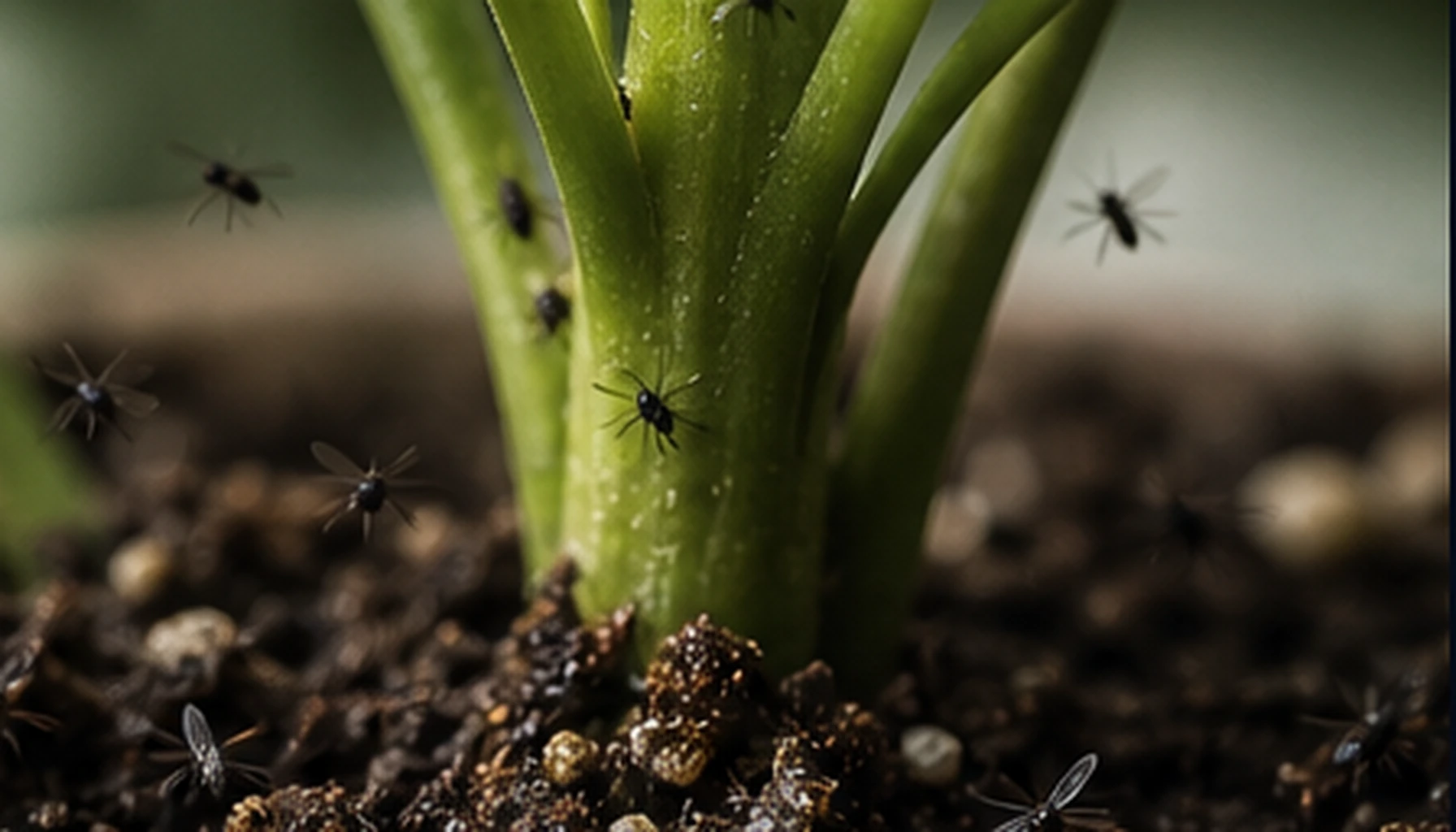
Fungus gnats are small insects, about 2 to 4 millimeters in length, with weak flying ability. They are commonly seen hovering near the soil surface or base of plants. Adult gnats primarily feed on nectar and decaying organic matter, causing minimal direct harm to plants. However, female gnats lay eggs in moist potting soil surface, and these eggs hatch within three to five days. The larval stage is when fungus gnats cause actual damage to plants. Larvae feed on fungi, algae, and decaying matter in the soil, but also gnaw on root epidermis and tender stems. Damaged roots lose their ability to absorb water and nutrients, resulting in yellowing leaves, stunted growth, and wilting. In severe cases, the entire plant may wither.
Common Misconception: Why Surface Spraying Cannot Solve the Problem
Many growers first reach for insect spray or sticky traps when they spot adult gnats. This approach only temporarily reduces adult populations and fails to address the root cause. Sprays can only kill adult gnats that contact the insecticide; they have no effect on eggs and larvae deep in the soil. More importantly, frequent spraying creates a moist environment on the soil surface, which actually provides favorable conditions for egg hatching and larval development. Sticky traps can serve as useful monitoring tools to track changes in adult gnat numbers, but they should not be relied upon as the primary control method.
Step One: Observation and Assessment—Determining Severity
Before taking any control measures, accurately assess the current situation. Observe whether the soil surface remains consistently moist and whether the drainage tray beneath the pot has water accumulation. Check the frequency of adult gnat sightings: occasional one or two gnats may indicate an incidental problem requiring no excessive intervention. However, if adult gnats appear continuously in larger numbers, especially after watering, the soil moisture has created ideal breeding conditions, and immediate moisture control measures are necessary.
Step Two: Moisture Control—Eliminating Breeding Conditions at the Source
Fungus gnat reproduction depends on moist soil environments, making moisture control the key to lasting solutions. Effective moisture control includes several approaches. First, adopt a "water thoroughly only when dry" approach: water only when the soil surface is dry about 2 to 3 centimeters deep, and always water thoroughly until water flows from the drainage holes, then promptly empty any water in the tray to prevent roots from sitting in water. Second, apply a layer of dry top dressing on the soil surface, such as vermiculite, coarse sand, or akadama, about 1 to 2 centimeters thick. This dry layer prevents adult gnats from directly accessing moist soil for egg-laying, significantly reducing breeding opportunities. Third, choose well-draining pots with adequate drainage holes, and avoid using decorative cache pots without drainage or with insufficient drainage.
Step Three: Root Protection—Inspecting and Repairing Damaged Roots
If plants are already showing clear symptoms of poor growth, moisture control alone is insufficient to restore plant health; root inspection is necessary. Gently remove the plant from its pot and observe root color and texture: healthy roots appear white or light brown, with firm, elastic texture; damaged roots typically turn brown or black, feel soft and mushy, and may have an unpleasant odor. When damaged roots are found, use sterilized scissors to remove all necrotic portions, apply fungicide such as carbendazim to disinfected cuts, then replant using fresh, well-draining potting mix. Keep soil moderately dry during the one to two weeks after replanting to help the plant recover.
Step Four: Environmental Adjustment—Preventing Reinfestation
Fungus gnat control should not stop at problem resolution; establishing long-term prevention is essential. Improving ventilation is fundamental: indoor plants should have adequate spacing, avoid stacking multiple pots together as this affects air circulation, and small fans can be used when necessary to promote airflow. Reasonably controlling watering frequency is key, especially during winter heating season or periods of low light when plant transpiration decreases, requiring corresponding reduction in watering. Choosing appropriate soil media is also important; adding perlite, coir, or pine bark to general potting soil improves drainage and aeration.
Observing Results: Judging Control Success
After implementing moisture control measures, adult gnat numbers typically decrease noticeably within one to two weeks. After applying dry top dressing, adult gnat activity should decline significantly. Signs of plant recovery include: new leaves or shoots emerging, leaf color returning to vibrant green, and previously wilting stems gradually becoming upright. If adult gnat numbers show no significant reduction after some time, reassess whether watering habits have changed, whether top dressing is effectively applied, and whether the drainage tray still has water accumulation. Continuous observation is crucial for ensuring control effectiveness, and moisture control or soil replacement measures can be repeated if necessary.