
Overview
Essential Protection Strategies: Window Condensation, Floor Insulation, and Temperature Management
Japan's cold winters present unique challenges for snake plant care, with window condensation and floor chill posing significant risks to these tropical succulents. This guide provides comprehensive strategies for protecting your Sansevieria through the Japanese winter, covering placement optimization, insulation techniques, watering adjustments, and cold damage identification and recovery.
Environmental Challenges for Snake Plants in Japanese Winter
Japanese winters, spanning from December through February, bring significant indoor-outdoor temperature differentials. During daytime, window glass remains cold even when interior air warms up, and at night, window surfaces often approach or drop below indoor dew point temperatures, creating condensation. This condensation indicates that areas near windows are several degrees cooler than the stated room temperature. Additionally, traditional Japanese wooden floors and modern apartment ceramic tiles dissipate heat rapidly, making air near the floor typically 2 to 4 degrees Celsius cooler than air at 1.5 meters height. These factors combined create the primary threats to snake plant winter survival.
While snake plants tolerate low light and drought conditions, they originated from African tropical regions and are sensitive to cold temperatures. When ambient temperatures remain below 10°C consistently, plants begin showing physiological stress; below 5°C, leaf tissue cells become damaged, resulting in irreversible cold injury. Understanding these temperature thresholds is fundamental to developing effective protection strategies.
Window Placement Protection Measures
During winter, avoid placing snake plants directly beside north or east-facing windows. Morning cold winds and nighttime radiative cooling cause windowsill temperatures to drop sharply. If you must position a snake plant near a window, implement these measures: place an insulation pad at least 10 centimeters thick between the pot and cold glass; use thick curtains to block cold air at night; ensure leaves do not contact icy glass surfaces, as direct cold contact will rapidly freeze leaf tips.
South-facing windows provide beneficial sunlight during clear winter days, which supports snake plant growth. However, be aware that temperatures drop quickly after afternoon sun disappears. Recommended practices include placing wooden boards, foam pads, or cork trivets beneath pots to reduce cold conducted from windows. For modern apartments with double-glazed windows, insulation performance is better, but still expect areas near windows to be 2 to 3 degrees Celsius cooler than the room center.
Floor Chill Response Strategies
Placing pots directly on cold floors represents one of the most common winter care mistakes for snake plants in Japan. Ceramic and tile flooring have low thermal resistance, rapidly absorbing heat from the pot base and causing root zone temperatures to drop. Even when room temperature is maintained at 15°C, soil temperature can drop to 8 to 10°C when pots contact floors directly.
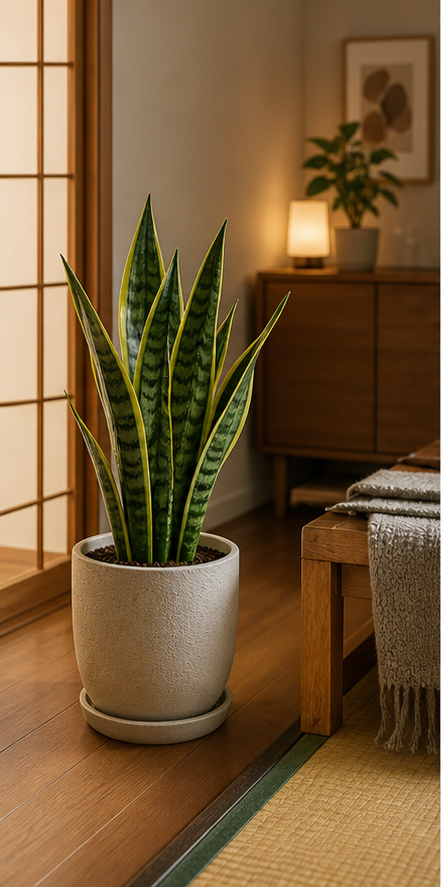
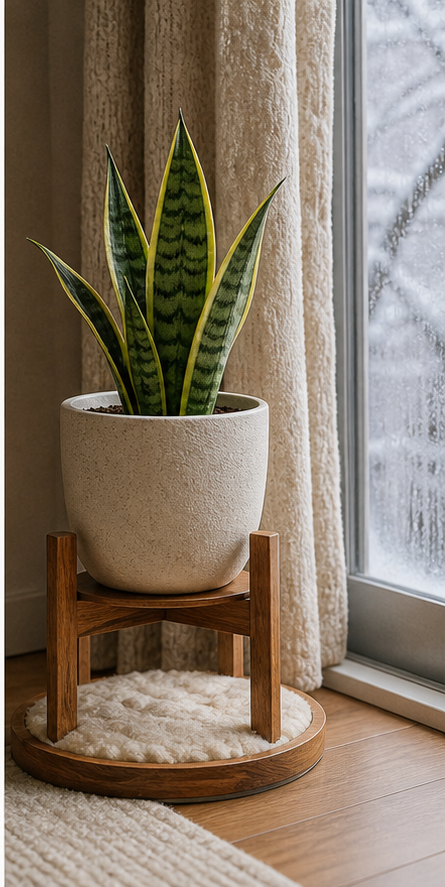
Recommended practice is to place pots on raised plant stands or wooden platforms, maintaining at least 5 centimeters of clearance between the pot bottom and floor. The air layer provides excellent insulation, effectively preventing floor chill from penetrating into soil. For homes with radiant floor heating, surface temperatures rise during winter operation, but avoid placing pots directly on heated floors, as sustained high temperatures cause rapid moisture evaporation from roots, increasing cold injury risk.
Additionally, placing cork pads, wool felt, or bubble wrap under pots serves dual purposes: blocking floor chill and reducing heat loss from the pot base. These materials are readily available at Japanese 100-yen shops and home centers, offering cost-effective solutions.
Temperature Management and Watering Adjustments
Japanese residential heating systems vary widely, from gas wall-mounted boilers to air conditioners to electric carpets, each creating different indoor temperature distributions. Winter interior temperatures should ideally maintain between 15 and 25°C for safe snake plant overwintering. Using thermometers to monitor temperatures around pots—rather than relying on room temperature—provides more accurate environmental assessment.
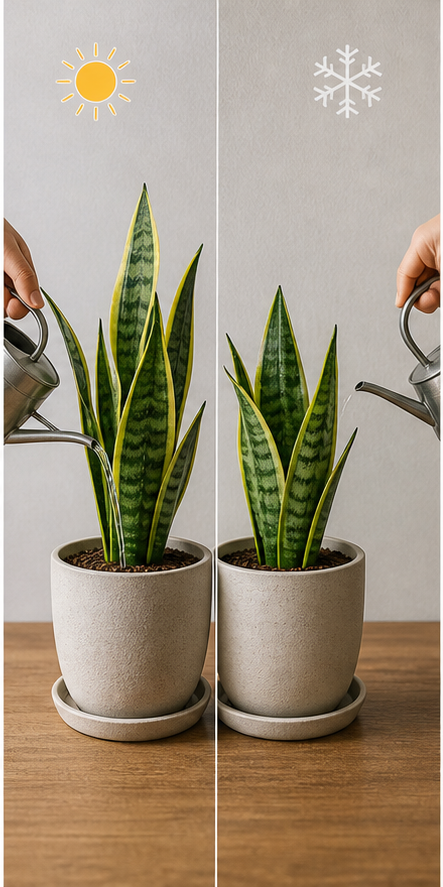
Winter watering frequency requires significant reduction. Snake plants enter semi-dormancy under cool conditions, with reduced transpiration and dramatically lower water requirements. Overwatering leads to prolonged soil moisture, impeding root respiration and promoting root rot. Typically, winter watering intervals should be three to four times longer than summer frequencies, or you may even completely cease watering for a month, depending on indoor temperature and soil dryness. To determine watering timing: insert your finger into soil 2 centimeters below the surface, and water only when completely dry, preferably on sunny mornings.
Cold Damage Symptom Identification and Recovery
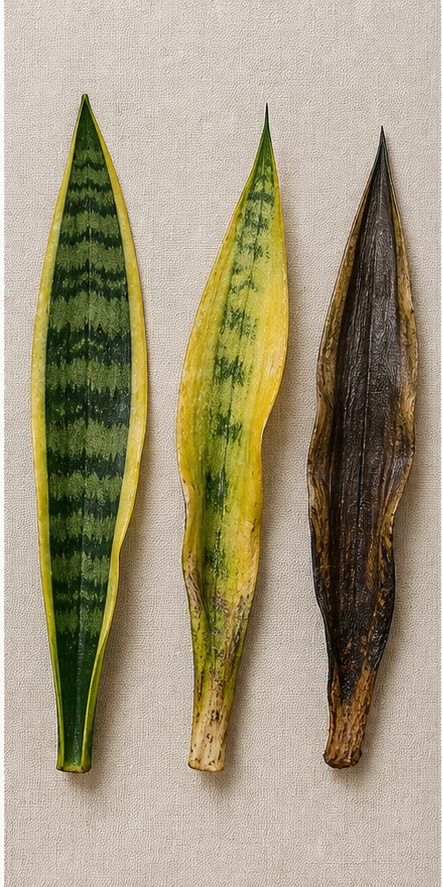
Snake plant cold injury manifests as: water-soaked dark spots on leaves, brown soft leaf tips, entire leaves turning yellow and drooping, or severe cases where leaves break from the base. Upon early detection, immediately move plants to warm locations and avoid further cold exposure, but avoid sudden relocation to areas with direct heating drafts, as rapid temperature changes worsen damage.
For already-damaged leaves, wait until plants resume active growth in spring, then remove discolored portions. Healthy snake plants possess strong regenerative capacity; as long as roots remain unaffected by freezing, plants typically recover during spring growth. When removing damaged tissue, use sterilized tools and make diagonal cuts at the junction between healthy and affected tissue.
Summary: Winter Protection Checklist
By following these measures, your snake plant will safely navigate Japan's cold winter, continuing to display its resilient vitality and elegant form into spring and beyond.
- Verify pot placement is away from windows with condensation risk
- Ensure insulation pads or stands separate pots from cold floors
- Monitor temperatures around pots with thermometers, maintaining above 15°C
- Reduce watering frequency, only when soil is completely dry
- Maximize sunlight exposure on clear days to supplement winter light deficiency
- Observe leaves for water-soaked spots or yellowing
- Upon discovering cold damage, immediately relocate to warm area, avoiding dramatic temperature shifts