
Overview
Practical Tips for Keeping Your Pothos Healthy in Small Urban Spaces
This article provides EU apartment dwellers with essential watering guidance for Pothos (Epipremnum aureum), covering soil moisture assessment, seasonal adjustments, pot drainage, and common watering mistakes to help you maintain a thriving plant in limited space.
Guide
Introduction to Pothos and Its Growth Needs
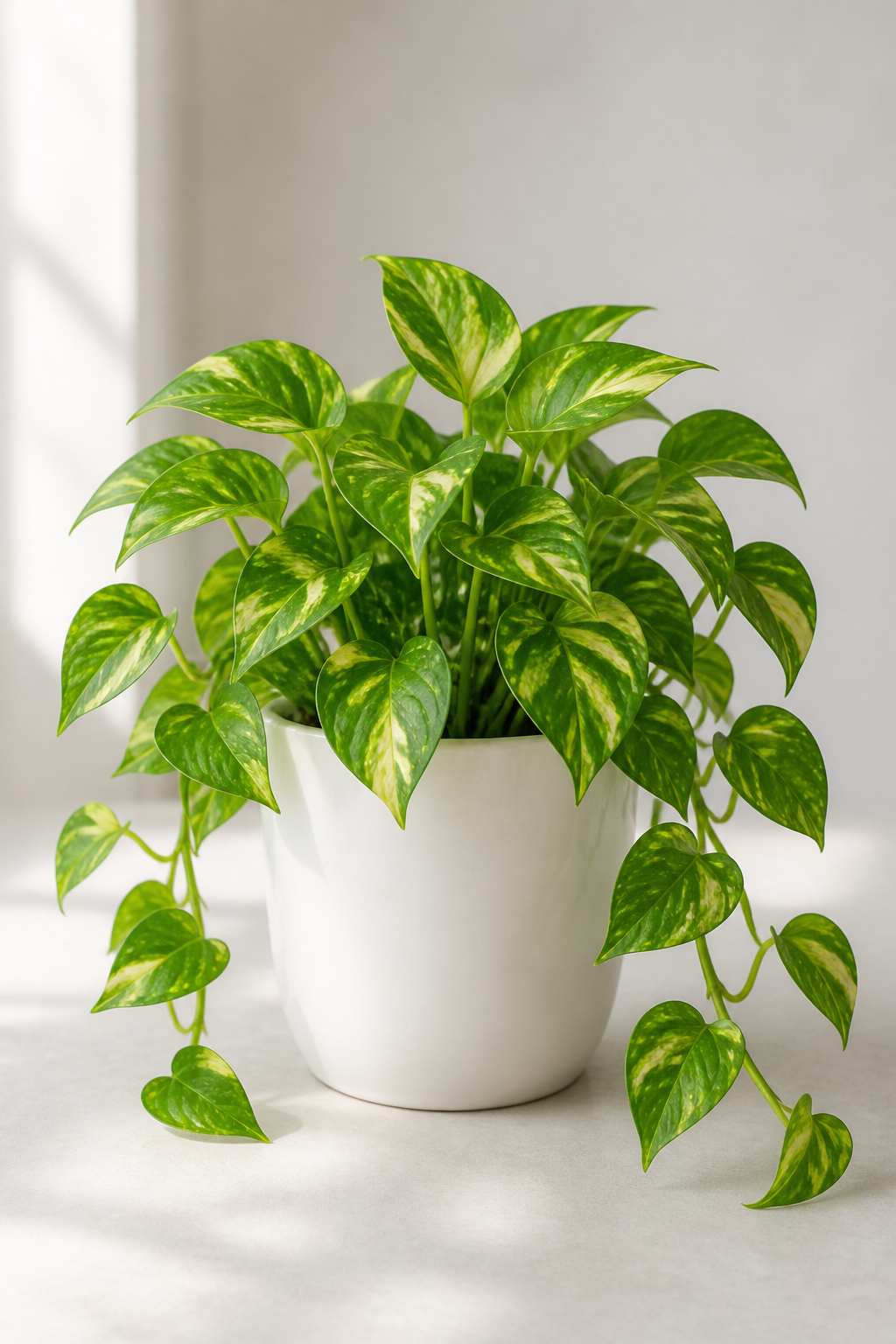
Pothos (Epipremnum aureum) is a highly adaptable, shade‑tolerant houseplant prized for its heart‑shaped, glossy green leaves and trailing vines. While it tolerates low light, brighter indirect light promotes richer leaf color and faster growth. In most EU homes, light comes from north‑ or east‑facing windows or interior lighting, making Pothos an ideal choice for compact apartments. Its root system is relatively shallow, preferring well‑aerated, fast‑draining soil that never stays waterlogged.
Characteristics of Compact EU Apartments
Basic Watering Frequency Guidelines
1. Spring‑Summer (May‑September): Warmer temperatures and longer daylight increase evapotranspiration. Water every 5–7 days, allowing the top 2–3 cm (≈1 inch) of soil to dry before the next watering. 2. Autumn‑Winter (October‑April): With reduced growth and indoor heating, watering interval can stretch to every 10–14 days. Monitor soil moisture closely. 3. Adapt to Real Conditions: If leaves start to wilt or soil remains moist for more than a week, delay watering; if the pot feels noticeably lighter and the soil looks pale, water earlier.
Practical Methods to Determine When to Water
Recommended Tools for Apartment Watering
Water Quality and Temperature
Pothos tolerates most tap water, but if your region has hard water (high calcium or lime), consider using filtered or rainwater once a month to prevent salt buildup. Always avoid icy water; tepid water (15–22 °C) is safest.
Common Watering Mistakes and How to Avoid Them
Seasonal Adjustment Details
| Season | Daylight Hours | Indoor Temp | Watering Frequency | Notes | |--------|----------------|-------------|--------------------|-------| | Spring (Mar‑May) | 12‑14 h | 18‑22 °C | Every 5‑7 days | Active growth; keep soil evenly moist | | Summer (Jun‑Aug) | 14‑16 h | 22‑26 °C | Every 5‑7 days | Can water as often as every 4‑5 days in very hot spells | | Autumn (Sep‑Nov) | 10‑12 h | 16‑20 °C | Every 10‑14 days | Cooler temps slow metabolism; reduce water | | Winter (Dec‑Feb) | 8‑10 h | 16‑22 °C | Every 14‑21 days | Heating dries air; monitor for dry‑air stress |
Pot and Soil Selection
Drainage and Tray Management
1. Drainage Layer: Place a thin layer of clay pebbles or broken pot shards at the bottom of the pot to facilitate water flow. 2. Check the Tray: After watering, wait ~30 minutes, then empty any collected water. This prevents the roots from sitting in moisture. 3. Keep Away from Heat Sources: In winter, avoid placing the drip tray directly on radiators, as rapid evaporation can cause the soil to dry out too quickly.
Preventing Pests and Diseases Through Watering Practices
Emergency Response Tips
Quick Tips Summary
By mastering these watering fundamentals, EU apartment residents can enjoy a thriving Pothos even in the most compact living spaces. Remember the core rule—let the topsoil dry before re‑watering—and adjust frequency according to season, indoor humidity, and light levels. With consistent care, your Pothos will remain a lush, vibrant centerpiece in your home.
- Limited Space: Plants are often placed on windowsills, side tables, or hanging baskets, which constrains pot size and soil volume.
- Stable Indoor Climate: Central heating keeps indoor temperatures between 18–24 °C (64–75 °F) in winter, but humidity can drop to 30–40%, especially in heated rooms.
- Variable Light: Many apartments receive soft, diffuse daylight rather than direct sun, perfectly suited to Pothos’ low‑light tolerance.
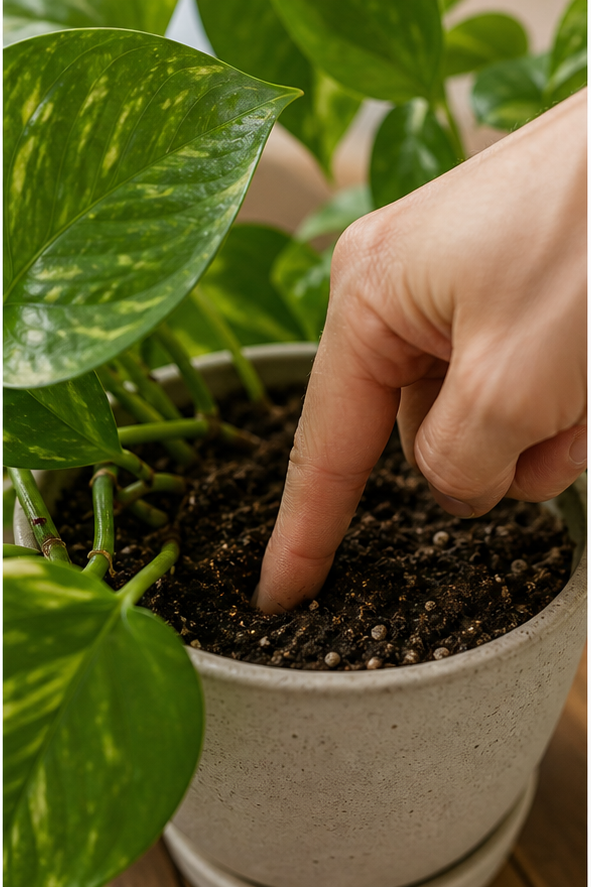
- Finger Test: Insert your index finger up to the first knuckle into the soil. If it feels dry, water; if it feels cool or damp, wait.
- Weight Test: Lift the pot gently. A dry pot feels considerably lighter than a moist one.
- Color Cue: Dry soil appears light gray or beige; moist soil looks dark brown or black.
- Moisture Meter: In small apartments, a compact soil moisture meter provides an exact reading, taking the guesswork out of watering.
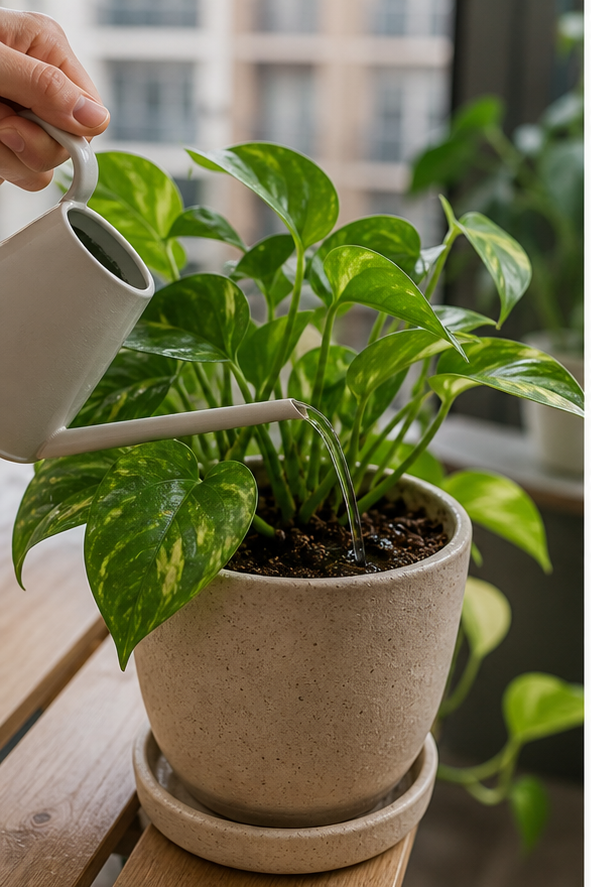
- Narrow‑Spout Watering Can: Allows controlled, gentle pouring that moistens soil without splashing leaves.
- Drip Tray: A shallow saucer captures excess water; empty it within 30 minutes to avoid root saturation.
- Room‑Temperature Water: Let tap water sit for 1–2 hours so it reaches ambient temperature, preventing shock to the roots.
- Fine Mist Spray Bottle: Useful for occasional leaf misting in dry seasons to boost humidity around the plant.
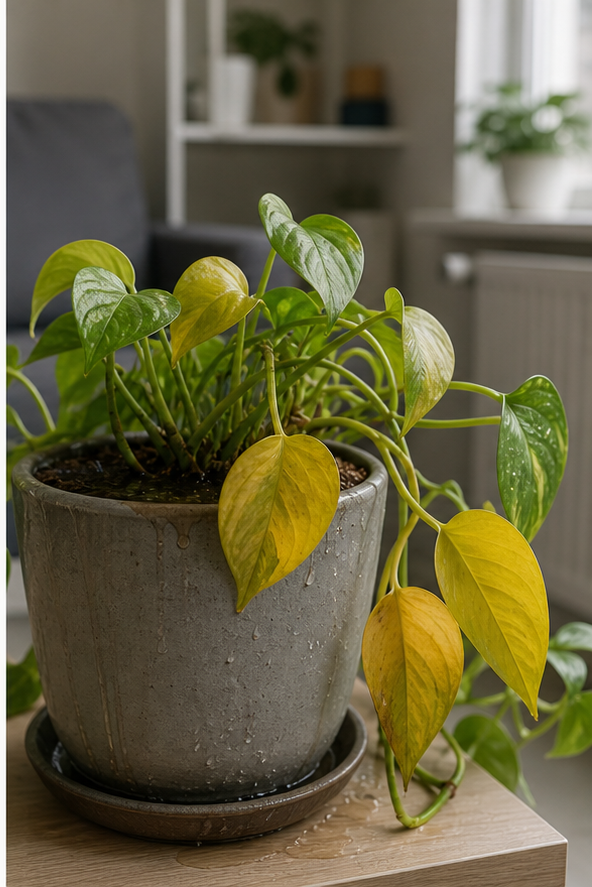
- Overwatering: The leading cause of Pothos death. Always check soil moisture before adding water.
- Standing Water: After watering, never let the pot sit in a pool of water for more than 30 minutes; root rot develops quickly.
- Uneven Moisture: Only moistening the top layer while the root zone stays dry leads to shallow root systems. Water until it flows out the drainage hole, then discard excess.
- Ignoring Seasonal Shifts: Failing to adjust frequency with the seasons forces the plant to endure either drought or waterlogging.
- Pot Material: Terra cotta or breathable plastic with drainage holes is ideal. Avoid non‑porous glazed pots unless you manage watering meticulously.
- Soil Mix: Use a well‑draining indoor mix, e.g., one part peat moss or coco coir, one part perlite, and one part coarse sand. This ensures aeration while retaining modest moisture.
- Repotting Schedule: Refresh the substrate every 1‑2 years in early spring, moving to a slightly larger container to give roots room to expand.
- Root Rot (Root rot): Caused by prolonged waterlogging. Follow the “see dry, then water” principle to keep roots oxygenated.
- Mealybugs (Mealybugs): Prefer dry leaf surfaces. Occasional misting and cleaning leaves with a damp cloth help deter infestations.
- Spider Mites (Spider mites): Thrive in dry, warm conditions. Maintaining indoor humidity around 40‑60% and occasional leaf showers discourage spider‑mite activity.
- Yellowing or Wilting Leaves: First, assess soil moisture. If over‑wet, stop watering, place the plant in a breezy spot, and allow the topsoil to dry. If too dry, water lightly with room‑temperature water.
- Foul Smell from the Pot: Early sign of root rot. Remove the plant, trim away mushy roots, replace with fresh, well‑draining mix, and resume careful watering.
- Small Dark Spots or Powdery Residue: Could be pest excrement. Wipe leaves with a soft cloth, spray the undersides with a 1% solution of mild soap in water, then rinse with clean water.
- Room‑Temperature Water: Always pre‑warm water to avoid chilling the roots.
- Layered Watering: Pour a small amount first, wait 1‑2 minutes for it to absorb, then continue until the soil is evenly moist and excess drains.
- Rainwater Use: Collect rainwater during wet spells; it’s low in chlorine and fluorides, beneficial for Pothos.
- Rotate the Plant: Give the pot a quarter turn each month to ensure even light exposure and balanced growth.
- Watch the Leaf Tips: Browning leaf tips often signal inconsistent watering—adjust your schedule accordingly.