
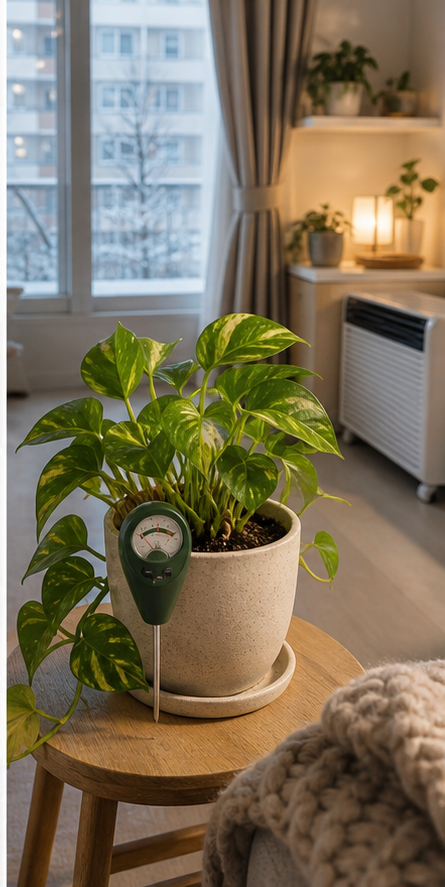
Overview
From Symptom Identification to Root System Revival, Designed for Korean Cold Dry Winters in Small Spaces
This article provides a comprehensive solution for pothos root rot caused by overwatering and slow soil drying in Korean compact apartments during winter. It covers symptom identification, emergency treatment, repotting with root pruning, and long-term aftercare, helping you successfully revive infected plants in limited living spaces.
Introduction
In Korean apartment living, pothos (Epipremnum aureum) has become one of the most popular indoor plants due to its shade tolerance and easy-care nature. However, the dry indoor air from winter heating and slow moisture evaporation often trap novice gardeners in overwatering habits, leading to root rot. This article provides a complete guide to rescuing root-rotten pothos in small apartment environments.
Part 1: Identification and Diagnosis of Root Rot
1.1 Early Symptom Observation
Early root rot is often subtle, but watch for these signals:
1.2 Mid-stage Symptom Assessment
When root rot reaches mid-stage, plants show more obvious distress signals:
1.3 Compact Apartment Environmental Factors
Korean apartment environments accelerate root rot development:
- Yellowing leaves: Initially appearing as uniform yellowing of lower mature leaves, then spreading to the entire plant
- Stunted new growth: New leaves grow slowly or stop entirely; leaf tips may turn brown
- Abnormal soil conditions: Surface soil remains moist for extended periods; even when the surface appears dry, the deeper layers remain waterlogged
- Root discoloration: From the bottom of the pot, white roots decrease, replaced by brown or black slimy material
- Wilting with yellow leaves: Leaves remain droopy and lifeless even after watering
- Softening stems: The stem near the soil feels spongy or releases sticky liquid when pressed
- Complete growth cessation: No signs of growth even during the growing season
- Odor development: A sour rotting smell becomes noticeable when repotting
- Floor heating effects: Korean common floor heating systems warm the bottom of pots, reducing root vitality
- Window condensation: Large temperature differences in winter cause plants on windowsills to experience cold-heat stress
- Insufficient ventilation: Poor air circulation in small spaces keeps soil surface dry while deeper layers remain wet
- Inadequate lighting: Low winter sun angle and short daylight hours reduce plant transpiration
Part 2: Emergency Treatment and Root System Revival
2.1 Preparation of Tools
Before starting, prepare the following items:
2.2 Repotting Inspection Steps
Step 1: Careful Removal Remove the plant from its pot, gently shake off old soil from roots, avoid pulling forcefully to prevent damaging remaining healthy roots.
Step 2: Root Washing Rinse roots clean with water to fully assess root condition. Soak in a basin of lukewarm water (~25°C) for 5 minutes to loosen remaining soil.
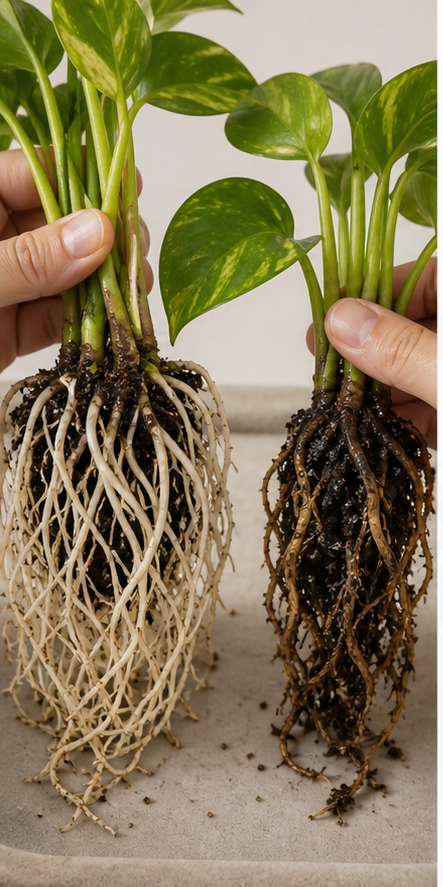
Step 3: Distinguishing Healthy from Rotted Roots Healthy roots appear white or light brown with firm, elastic texture; rotted roots appear dark brown or black with soft, mushy texture, releasing liquid when pressed, sometimes with rotting odor.
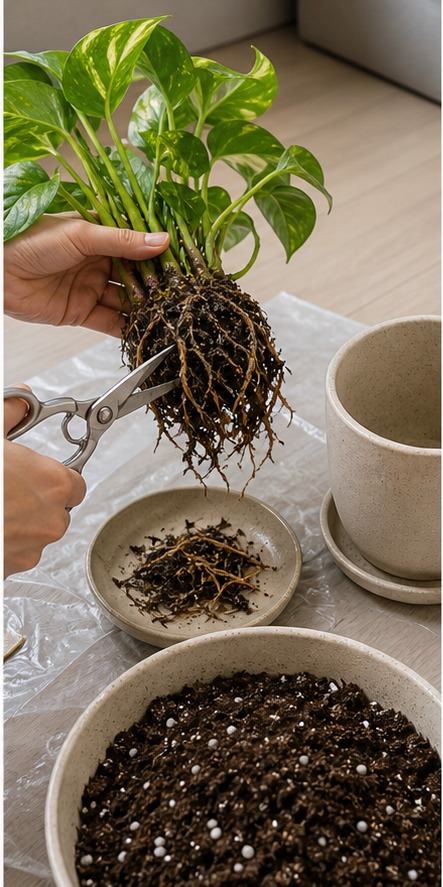
Step 4: Pruning Rotted Parts Using scissors sterilized (wiped with alcohol or passed through flame), trim from the junction between rotted and healthy roots. Thoroughly remove all brown, black, mushy portions until white healthy tissue is exposed. After pruning, apply Ceylon cinnamon powder on wounds as a natural fungicide.
2.3 Root Disinfection and Rooting Promotion
After pruning, consider these rooting treatments:
- Sterilized gardening scissors or刮刀
- Fresh drainage materials (perlite, vermiculite, coarse sand)
- Suitable potting soil (peat moss, coco coir, perlite mix)
- New breathable pot (slightly smaller or same size as original)
- Disposable gloves and newspaper
- Hydrogen peroxide soaking: Soak roots in 3% hydrogen peroxide solution for 10 minutes to effectively kill remaining harmful fungi
- Rooting hormone assistance: Dip wound areas in small amount of rooting powder (containing IBA) to promote new root emergence
- Charcoal powder coverage: Sprinkle charcoal powder on pruned wounds to absorb excess moisture and prevent infection
Part 3: Repotting and Soil Configuration
3.1 Small Apartment Special Soil Formula
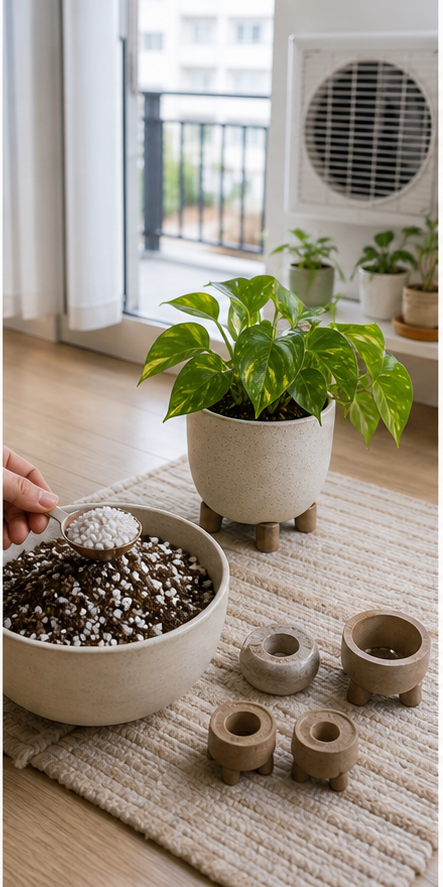
For Korean apartment winter slow-drying environments, recommend this mixing ratio (by volume):
This formula balances water retention and drainage, preventing waterlogging from poor ventilation in winter.
3.2 Pot Selection Recommendations
With limited space in small apartments, consider:
3.3 Repotting Procedure
1. Lay a layer of clay pebbles or broken pottery as drainage layer (~2-3 cm) 2. Add a layer of new soil mix, forming a planting mound higher in center and lower at edges 3. Place treated plant, adjust position so root crown (original soil surface) is about 2 cm below pot rim 4. Add soil layer by layer, gently pressing to ensure good root-to-soil contact without over-compacting 5. Water thoroughly, then place in location with bright indirect light and good ventilation
- Base medium: Peat moss or coco coir 40%
- Drainage medium: Coarse perlite 30%
- Aeration medium: Vermiculite 20%
- Conditioning medium: Well-rotted pine bark 10%
- Material choice: Prioritize clay pots or fabric pots, which have excellent breathability to accelerate soil drying
- Size control: New pot should be slightly smaller or same size as original; avoid large pot with small plant
- Bottom structure: Ensure pot has sufficient drainage holes; add ventilated tray pads if necessary
Part 4: Aftercare and Recovery Period Management
4.1 Watering Strategy Adjustment
During root rot recovery, watering principles must change completely:
4.2 Light and Environment Control
Light management during recovery is crucial:
4.3 Fertilization Pause and Recovery Plan
Fertilization should stop completely during initial recovery (at least one month), resuming only after new roots grow and plant recovers:
- Determine watering timing: Use soil moisture meter or finger test to confirm top 3 cm of soil is dry before watering
- Control water volume: Use small amounts multiple times, allowing moisture to penetrate slowly
- Water temperature requirement: Winter water should be room temperature to avoid shocking roots with cold water
- Saucer management: Empty saucer 30 minutes after watering to avoid prolonged soaking at pot bottom
- Position selection: Place near south or east windows, ensuring 3-4 hours of bright indirect light daily
- Height from floor: Avoid placing pots directly on floor heating; use plant stands or cork pads for insulation
- Temperature maintenance: Keep room temperature between 18-25°C; avoid near heating vents
- Humidity adjustment: Korean winters are dry indoors; maintain 50-60% humidity through occasional misting or using humidifiers
- Recovery timing: When new leaves begin sprouting and growth returns to normal
- Fertilizer choice: Initial use diluted half-strength liquid organic fertilizer, such as diluted worm casting tea
- Application frequency: Apply every two weeks, gradually adjusting based on plant response
Part 5: Prevention Measures and Long-term Care
5.1 Establishing Correct Watering Habits
The core of preventing root rot lies in understanding actual plant needs rather than fixed schedules:
5.2 Environment Optimization Suggestions
For small apartment characteristics, take these optimization measures:
5.3 Regular Inspection Mechanism
Develop the habit of monthly regular inspections:
- Learn to observe leaf conditions rather than relying solely on calendars
- Understand how seasonal changes affect watering frequency
- Record each watering date and amount to gradually discover patterns
- Ventilation improvement: Open windows 10-15 minutes daily, even in winter
- Elevated pots: Use indoor plant stands to elevate plants, benefiting both ventilation and viewing
- Group cultivation: Grouping plants together naturally increases surrounding micro-environment humidity
- Seasonal adjustments: Keep plants away from heat sources in winter with heating; strengthen ventilation in hot humid summers
- Check leaf undersides for pest signs
- Gently lift plant to check if roots are emerging from drainage holes
- Observe if salt buildup appears on soil surface
- Check for abnormal conditions like yellowing or leaf drop
Conclusion
Root rot is a common plant problem but is not irreversible. Through timely identification, correct treatment, and patient care, even pothos suffering from root rot can be successfully rescued in space-limited compact apartments. Hopefully this guide helps you build a healthier, longer-lasting relationship with your pothos during Korea's long winter. Remember, plant care is a journey requiring careful observation and continuous learning; every setback is an opportunity to gain experience.
May your pothos recover vitality soon!