
Overview
Navigating Seasonal Growth Changes and Indoor Light Challenges
As autumn arrives, pothos naturally slows its growth in preparation for winter. In Japan's unique indoor environment with humid summers and cool winters, helping your pothos survive low-light winter conditions is a common concern for home gardeners. This comprehensive guide provides detailed strategies for winter care, covering watering adjustments, light management, temperature control, and fertilization practices.
The Autumn Slowdown: Care Transition Starting in September
When September temperatures begin to drop noticeably, pothos care enters a critical transition period across Japan. Native to the South Pacific region of French Polynesia, pothos plants have a natural ability to sense seasonal changes. As daylight shortens and temperatures decline, the plant naturally reduces its metabolic rate—this is a completely normal physiological response and should not cause concern.
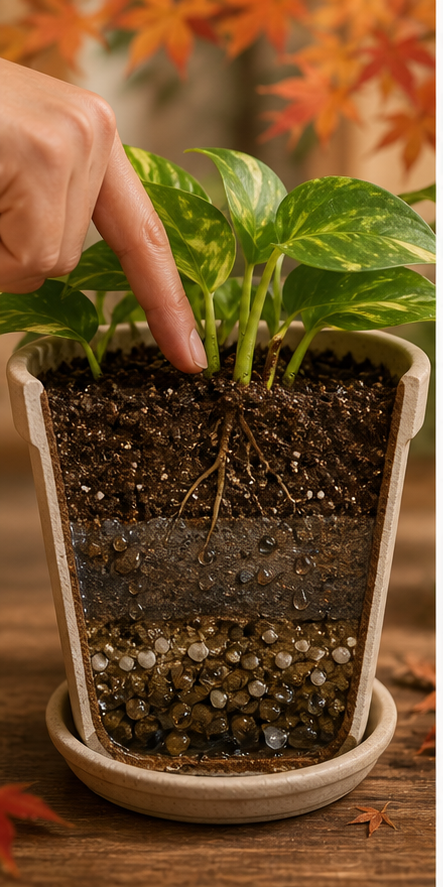
The core principle of autumn care is observe rather than intervene. Compared to summer, you need to gradually reduce watering frequency, but never stop entirely. The best method to determine if watering is needed: insert your finger about two centimeters into the soil. If it feels completely dry, water; if there's still any moisture, wait another two to three days.
Indoor humidity during Japanese autumn typically ranges from fifty to sixty-five percent, which is ideal for pothos. However, once central heating begins in late October, indoor air becomes dry. At this time, move pothos away from heating vents, and consider using a humidifier or placing a shallow water tray near the plant to increase local humidity.
Light Management: Preparing for Winter
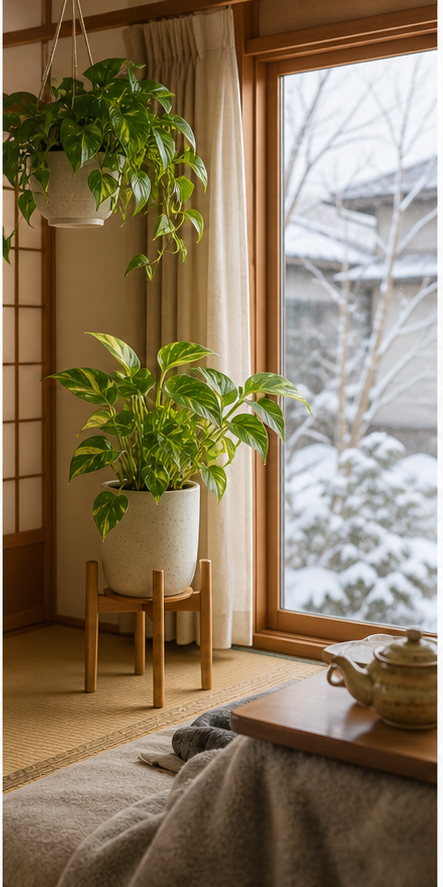
Autumn is also the optimal time to adjust your pothos placement. In Japan, many homes don't have ideal window orientations, and winter natural light intensity may be only one-third or even less of summer levels. If you currently have your pothos in a darker corner, now is the time to gradually move it closer to a window.
East or west-facing windows are ideal, offering several hours of indirect light daily. Even with poor orientation, place your pothos as near the window as possible. Notably, pothos have excellent shade tolerance and can survive short periods in almost no-light conditions, but prolonged light deficiency causes leaf color to fade and new leaf growth to slow.
If your home truly lacks adequate light, consider using full-spectrum grow lights. Supplementing four to six hours of artificial light daily is sufficient to maintain basic pothos growth. Position grow lights approximately thirty centimeters above the plant, avoiding excessive intensity that could burn leaves.
Temperature Control: Avoiding Sudden Changes
Japanese winter heating falls into two main categories: whole-house heating and localized heating. Regardless of the method, maintain room temperature between fifteen and twenty-five degrees Celsius. Pothos are highly sensitive to temperature fluctuations—moving from a warm living room to a cold balcony corridor, or directly from a heated room to an unheated bedroom, can cause yellowing and leaf drop.
Particular attention should be paid to temperature variations near windows. At night, glass surface temperatures can approach outdoor levels, and if pothos leaves touch cold glass, cold damage may occur. Consider using insulated curtains at night to separate plants from glass, or slightly move pots away from windows.
Fertilization Strategy: Reduce, Don't Stop
Starting in October, reduce fertilization frequency from bi-weekly during the growing season to once monthly. During winter (December through February), stop fertilizing entirely. Over-fertilizing in low temperatures causes salt buildup that damages roots. Use balanced liquid fertilizer with equal nitrogen, phosphorus, and potassium, diluted to half normal concentration.
Pest Prevention: Still Important in Winter
Although winter pest occurrence is lower, vigilance remains necessary. Mealybugs are the most common pest for pothos, preferring to cluster on leaf undersides and stem nodes. Regular inspection allows early detection; use a cotton swab dipped in alcohol to gently wipe affected areas.
Special Strategies for Low-Light Winter Environments
Understanding Japan's Winter Light Characteristics
Japan's north-south span means significant light condition variations across regions. Generally, winter daylight hours shorten considerably, with higher proportions of cloudy days in snowy areas. Even in major cities like Tokyo and Osaka, winter natural light intensity is far lower than other seasons.
Using Tokyo as an example, average daylight in December through January is approximately five to six hours daily, far below summer's fourteen-plus hours. This means even placing pothos by a window may provide insufficient light for vigorous growth.
Practical Low-Light Coping Techniques
In low-light environments, implement these measures to maintain pothos health:
First, regularly rotate the pot. Turn the pot a quarter rotation weekly to ensure even light exposure on all sides, preventing lopsided growth.
Second, keep leaves clean. Winter dust easily accumulates on leaves, further reducing photosynthesis efficiency. Monthly, gently wipe both leaf surfaces with a slightly damp soft cloth.
Third, prune dead leaves appropriately. Promptly remove yellowing leaves, reducing nutrient waste and improving air circulation while lowering disease risk.
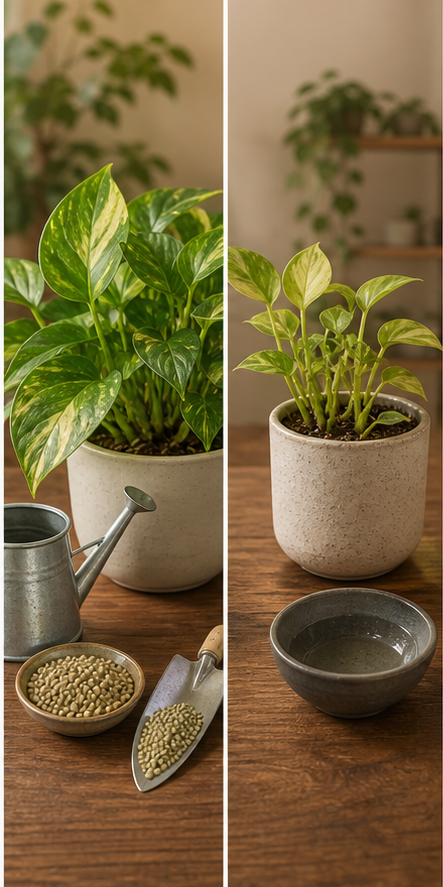
Fourth, control watering volume. Winter pothos transpiration drops significantly, and soil dries much slower. Follow the "better dry than wet" principle, with watering intervals possibly two to three times longer than summer.
Indoor Plant Layout Suggestions
In Japan's compact homes, space utilization is key. Consider placing pothos on bookshelf tops, refrigerator tops, or bathroom windowsills—provided these locations receive several hours of indirect light daily, pothos will survive winter well.
Kitchens and bathrooms often have higher humidity than other rooms, suiting pothos growth. However, kitchen cooking oils may affect leaf respiration, so keep plants away from stovetops. Bathrooms lacking natural light are unsuitable for prolonged placement.
Indicators of Successful Overwintering
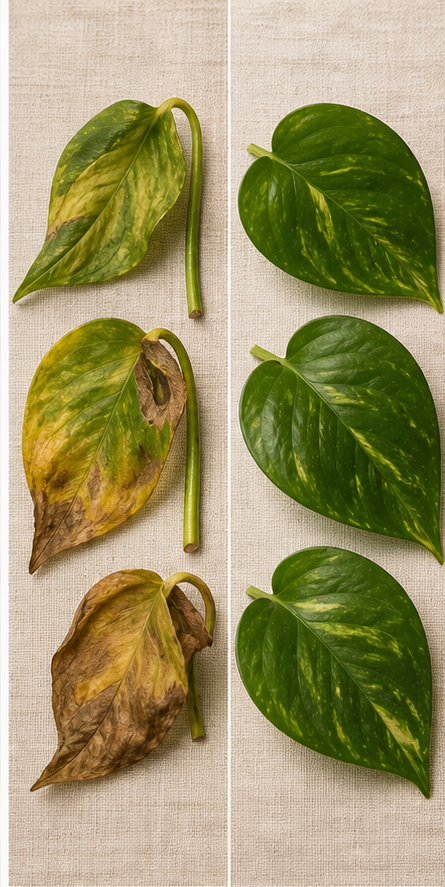
Your pothos is successfully overwintering if it shows: leaf color maintaining green or golden (depending on variety); new leaves continuing to emerge albeit slowly; no large-scale yellowing or leaf drop; roots remaining healthy and white.
Conversely, symptoms like stretched stems (etiolation), smaller and thinner leaves, or whole-plant wilting indicate issues with light, watering, or temperature management requiring correction.
Early Spring Transition: March Through April
When March temperatures begin rising, pothos gradually regains vitality. Gradually increase watering and resume fertilization. If you stopped fertilizing all winter, resume with diluted liquid fertilizer from mid-March, applied every three weeks.
This period is also ideal for root inspection. If roots have filled the pot, consider repotting in early April to prepare for the upcoming growing season.
Summary: Pothos Care Through Nature's Cycles
Caring for pothos is fundamentally about working with natural rhythms. Autumn slowdown, winter rest, spring recovery, summer vigor—understanding this cycle enables confident handling of each season's unique demands. In Japan's distinctive indoor environment, the keys are: observe plant conditions rather than rigidly following rules, maintain environmental stability avoiding sudden changes, and adjust care intensity to match seasonal progress.
Remember, pothos are extraordinarily resilient plants. Even with occasional care mistakes, they typically recover with timely adjustments. Stay patient and enjoy each day with your green companion.