

Overview
Practical Leaf Protection and Air Circulation Techniques for the Hot Rainy Season
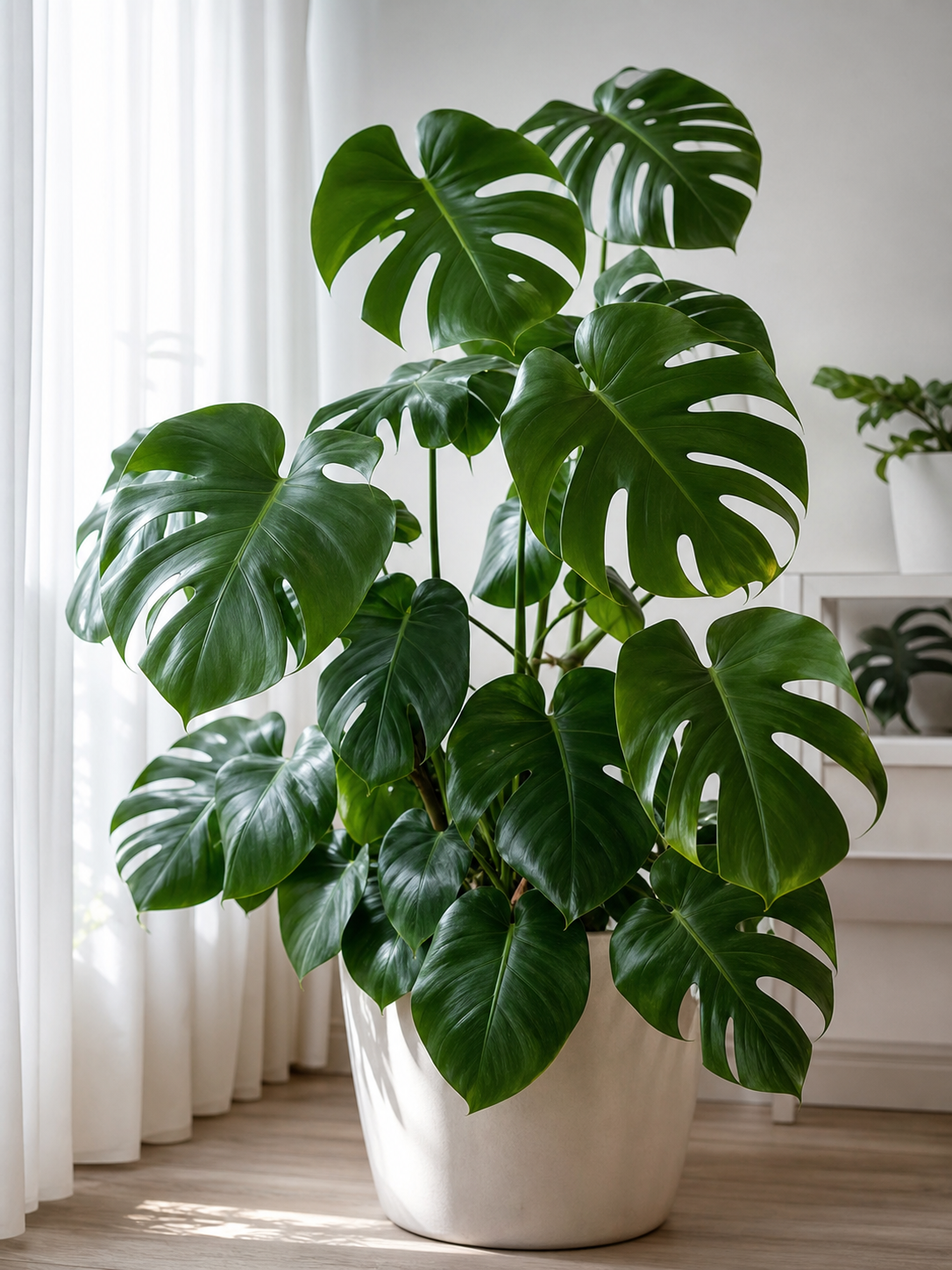
Southeast Asia's warm and humid climate perfectly suits Monstera deliciosa, but the rainy season's heat and moisture create ideal conditions for mealybug infestations. This guide covers early detection methods, spot treatment techniques, safe pesticide options, and essential airflow improvements to help you protect your Monstera from mealybug damage during the hot and humid months.
Understanding the Climate Challenge for Monstera in Southeast Asia
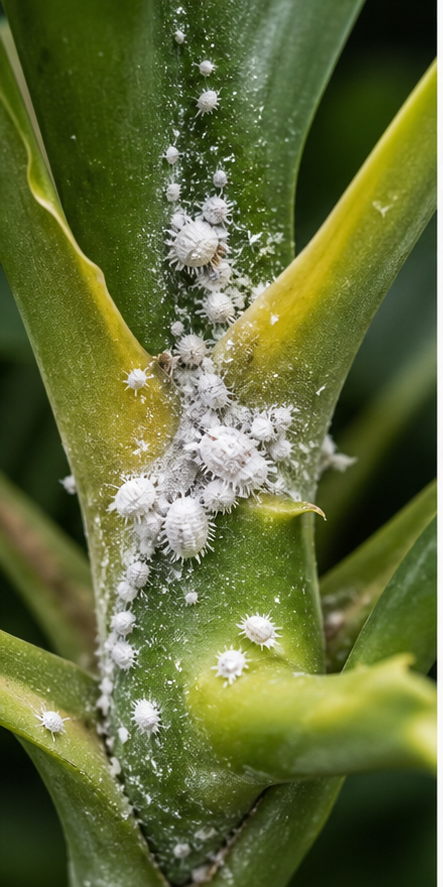
Monstera deliciosa naturally thrives in tropical rainforest conditions, which makes Southeast Asia's climate genuinely hospitable for this species. However, the rainy season from May through October brings humidity levels that frequently exceed 85%, with temperatures consistently ranging between 28 and 35 degrees Celsius. While these conditions accelerate Monstera growth, they simultaneously create the perfect breeding environment for mealybugs. Mealybugs are soft-bodied insects covered in a white, waxy coating that resembles cotton or flour. They cluster in protected areas like leaf axils, along leaf stems, and at stem nodes, feeding on plant sap by piercing tissue with their mouthparts. Early-stage infestations are subtle; by the time you notice extensive yellowing and stunted growth, the problem has usually spread throughout the entire plant.
Early Detection: Where and How to Find Mealybugs
During the rainy season, inspecting your Monstera at least once weekly is essential for prevention. Focus your examination on three critical locations.
Leaf Axils and Stem Junctions: Mealybugs preferentially gather where tissue is soft and sap flow is abundant. When you lift leaf bases, look for white, cottony masses or tiny, crawling insects. These are mealybug nymphs, and catching them early prevents rapid population growth.
The Midrib Underside of Mature Leaves: The leaf underside, particularly along the central vein, provides shelter from rain and direct sunlight. Run your fingers gently across this surface; a sticky residue or powdery texture indicates an active infestation. The undersides of mature leaves are the most common hiding spots for established colonies.
Emerging Leaf Sheaths: New Monstera leaves unfurl from the leaf axis, creating gaps between the developing leaf and mature foliage. Mealybug nymphs frequently colonize these spaces. If you notice distorted new leaves or brown edges on recently unfurled foliage, examine the surrounding axils immediately for pest activity.
Physical Removal and Organic Treatment Options
When you discover limited mealybug populations, start with physical removal methods before considering pesticides. This approach is both safer for indoor environments and more targeted in its effectiveness.
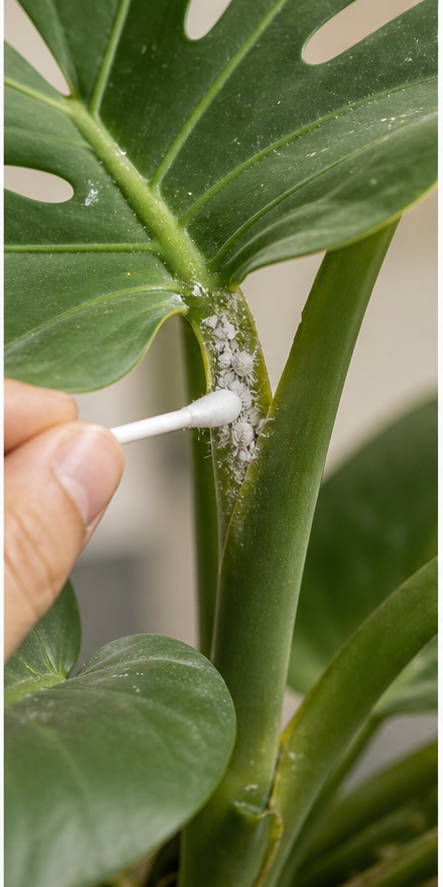
Alcohol swab spot treatment: Dip cotton swabs in 75% isopropyl alcohol or medical-grade rubbing alcohol, then directly apply to areas with visible mealybug colonies. The alcohol dissolves the protective waxy coating, causing dehydration. This method works on both adults and nymphs, but you must repeat the treatment for three consecutive days to eliminate newly hatched individuals that the first application may have missed.
Insecticidal soap spray: Mix liquid hand soap without added moisturizers or fragrances with water at a 1:50 ratio. Transfer to a spray bottle and apply thoroughly to all leaf surfaces, stems, and leaf axils. Pay special attention to areas with visible insect clusters. After spraying, use a soft brush to gently scrub affected areas, helping the solution penetrate the waxy coating. Rinse leaves with clean water two hours after application to prevent residue from clogging stomata.
Garlic and chili extract spray: Blend five grams of fresh garlic cloves and five grams of small hot peppers with 200 milliliters of warm water. Let the mixture steep for 24 hours, then strain into a spray bottle. The natural capsaicin and allicin compounds act as mealybug deterrents. This solution works better as a preventive spray applied weekly rather than as a curative treatment against established infestations.
Selecting Appropriate Pesticides Safely
When mealybug populations exceed what physical methods can manage, indoor-safe pesticide options become necessary.
Neem oil formulations: Extracted from neem tree seeds, neem oil provides effective mealybug control with low toxicity to humans and pets. Dilute according to product instructions and spray thoroughly, paying special attention to leaf undersides and stems. Maintain good ventilation during and after application. Never apply in completely enclosed spaces without airflow.
Horticultural mineral oil emulsions: Paraffin-based horticultural oils smother mealybugs by coating their breathing pores, effective against both adults and eggs. Apply during cooler periods—early morning or late evening when temperatures stay below 30 degrees Celsius—to prevent leaf burn. Mineral oil applications may temporarily reduce leaf shine, particularly in high-humidity conditions, but the protection benefits outweigh cosmetic concerns.
Pesticide application principles: Always test any pesticide on a small section of leaves before full application to check for phytotoxicity. Rotate between different pesticide classes to prevent resistance development; never use the same product more than twice consecutively. During the rainy season, reapply if heavy rainfall occurs within 24 hours of treatment, as rainfall can wash away active ingredients.
Critical Airflow Management Strategies
Mealybug reproduction rates double in stagnant, humid air. Improving air circulation addresses the root cause of infestations.
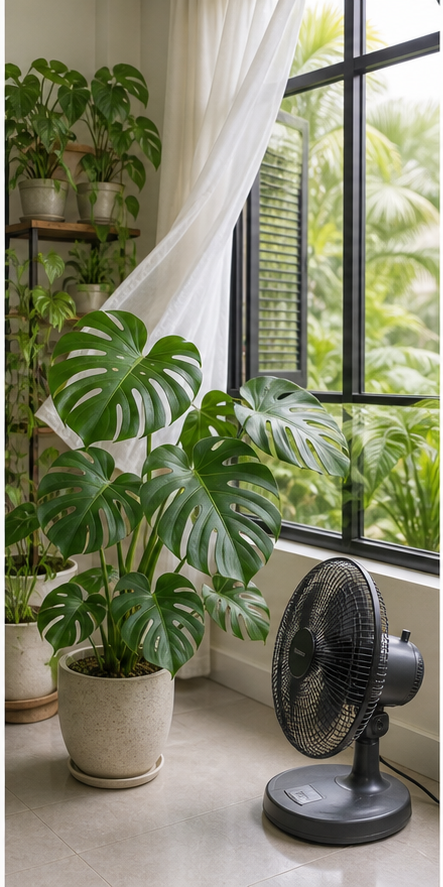
Natural ventilation optimization: Position your Monstera near windows that can be opened for at least four hours of daily airflow. Avoid placing plants where cold drafts hit leaves directly, as this causes tip burn. If natural ventilation is limited, position a small fan at least two meters away on its lowest setting to promote gentle air movement without stressing the plant.
Appropriate plant spacing: Maintain minimum 30-centimeter gaps between Monstera specimens to prevent canopy overlap. Dense arrangements not only impede airflow but also create highways for pests to travel between plants. During the humid season, spacing is particularly important for preventing rapid pest spread.
Promoting leaf surface drying: High humidity slows evaporation from leaf surfaces, creating conditions where moisture accumulates at leaf bases and stem junctions. After watering, gently wipe the leaf base and stem connections with a dry cloth to remove standing water. This simple step significantly reduces conditions favorable to both pests and fungal issues.
Seasonal Adjustments for Rainy Season Care
Successful Monstera maintenance during Southeast Asia's humid months requires modifications to watering, fertilizing, and repotting practices.
Watering adjustments: While Monstera transpires heavily in heat, always confirm the top two centimeters of soil are dry before watering. Prolonged saturated soil leads to root rot as roots cannot access oxygen in waterlogged conditions. Water in the morning during rainy season so excess moisture can evaporate during daylight hours rather than sitting overnight.
Fertilizer modifications: Active growth in warm conditions increases nutrient demand. You can raise fertilization frequency from every two weeks to every ten days while reducing concentration by one-third. Use balanced water-soluble fertilizers with equal nitrogen, phosphorus, and potassium such as 20-20-20 to avoid excessive nitrogen that produces tender growth more susceptible to pest damage.
Repotting timing considerations: The rainy season is not ideal for repotting because high humidity extends recovery time and stresses root systems. If repotting is unavoidable, choose overcast days or late afternoon. Place repotted specimens in bright, indirect light with good airflow and reduce watering frequency to support recovery.
Establishing an Observation Routine
Maintaining a simple care journal documenting watering dates, fertilizer applications, and inspection results helps identify patterns specific to your growing environment. After two to three months of consistent recording, you will recognize your Monstera's seasonal rhythms and detect early warning signs before problems escalate. Prompt action at the first sign of mealybug activity prevents minor issues from becoming widespread infestations that require extensive intervention.