
Overview
Mastering Moisture Management Through Korea's Dry Winter Heating Season
Korea's intense winter heating creates challenging conditions for Monstera care. This comprehensive guide explains exactly how to adjust your watering routine, identify plant stress signals, and maintain healthy Monsteras throughout the heating season without risking root rot or dehydration.
Why Winter Monstera Care is Especially Tricky in Korean Heated Homes
Korea's centralized heating systems keep indoor temperatures between 20-24°C throughout winter while humidity often drops below 30%. For a tropical rainforest native like Monstera deliciosa, this represents a significant environmental stress. The combination of high temperatures accelerating soil moisture evaporation and low ambient humidity increasing plant transpiration creates conditions where water consumption far exceeds what intuition might suggest.
Radiators also create uneven temperature distribution within pots—warmer soil surfaces and edges versus cooler root zones at the bottom. This temperature gradient affects root water uptake efficiency, meaning traditional "once per week" watering schedules simply don't work reliably in Korean heated apartments during winter months.
How to Determine When Your Monstera Needs Water
Soil Moisture Testing
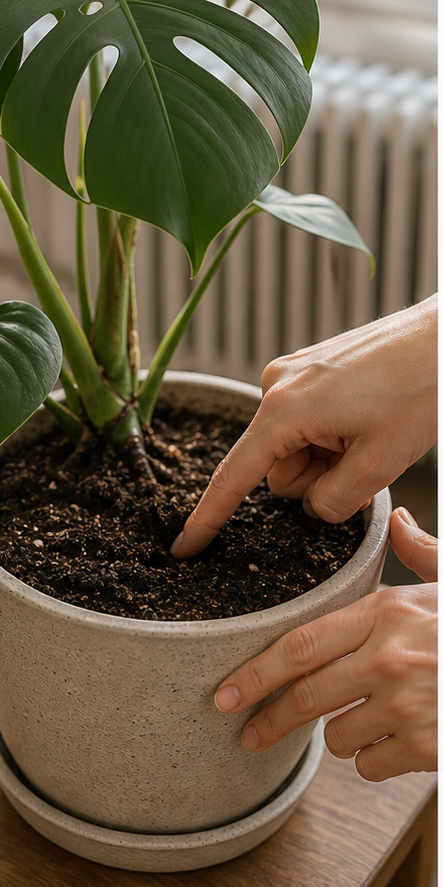
The most reliable method involves physical soil inspection. Insert your finger 3-4 centimeters into the potting mix—if it feels completely dry throughout this depth, watering is needed. If moisture and coolness persist, delay watering. This technique is far more accurate than any calendar-based schedule because every home varies in ventilation, light exposure, and pot materials.
Reading Plant Signals
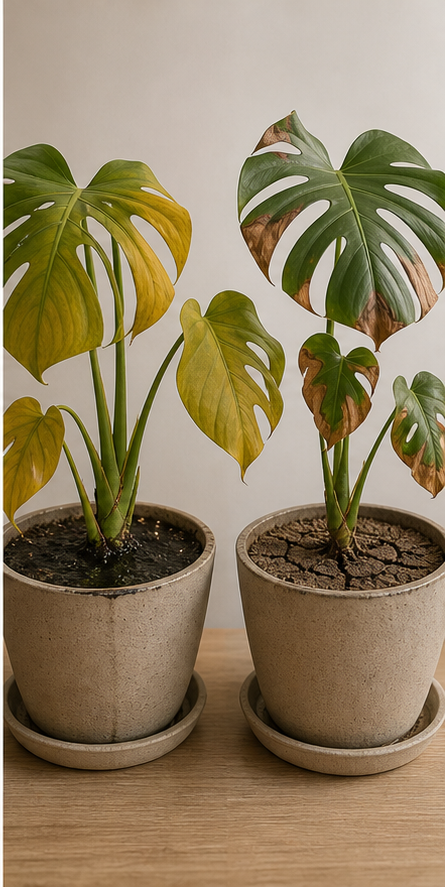
Monsteras communicate their water needs through leaf behavior. Slight wilting or noticeably slower new leaf production often indicates thirst. Yellowing leaf tips, softening stems, or persistently wet soil surfaces suggest overwatering. Regular observation builds familiarity with your plant's normal appearance, making early problem detection much easier.
Pot Weight Assessment
Experienced plant parents can gauge soil moisture by lifting pots. Well-watered containers feel noticeably heavier, while dry soil creates a distinctly lighter sensation. This method requires practice but becomes quick and reliable over time.
Proper Watering Technique and Frequency
Water Quantity Guidelines
During the heating season, follow the "thorough soaking with adequate drying time" principle. Water slowly and evenly across the soil surface until water flows from drainage holes, then immediately empty any collected water from saucers. This ensures the entire root zone receives moisture without creating standing water conditions that promote root rot.
Recommended Frequency
In typical Korean heated apartment conditions, Monsteras may need watering every 7-12 days during winter. However, this serves only as a starting point—individual homes require individual adjustment. After your first watering, observe how quickly the soil dries and gradually establish a pattern that works for your specific environment. Keeping a simple log of watering dates and plant responses during your first year creates a valuable reference database.
Water Temperature Considerations
Winter tap water is typically much colder than room temperature, and cold water shocks tropical roots. Allow tap water to sit in containers at room temperature for several hours to a full day before watering. This lets the water reach ambient temperature while allowing chlorine to dissipate. Using room-temperature or slightly warm water is especially beneficial for tropical species.
Humidity Management Strategies
The low humidity created by heating systems represents the primary winter challenge for Monsteras. While Monsteras are more drought-tolerant than many tropical species, prolonged exposure to humidity below 40% causes leaf edge browning, stunted growth, and increased pest vulnerability.
Practical Humidity Enhancement
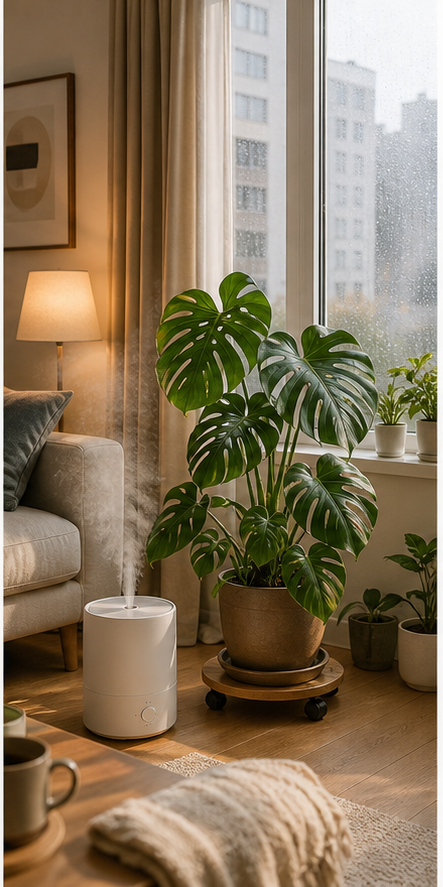
The simplest approaches include running a humidifier near your plants or placing pots on pebble trays filled with water (ensuring the pot base sits above the water line, not submerged). Morning and evening misting with room-temperature water increases local humidity effectively, though avoid evening misting to minimize fungal disease risks. When opening windows for ventilation, cold exterior air will lower indoor humidity—be prepared to adjust your watering schedule accordingly.
Group Planting Benefits
Clustering multiple plants together creates beneficial microclimate effects. Through collective transpiration, plants raise local humidity naturally—cost-free humidity management that also creates visually pleasing arrangements.
Troubleshooting Common Problems
Yellow Leaves
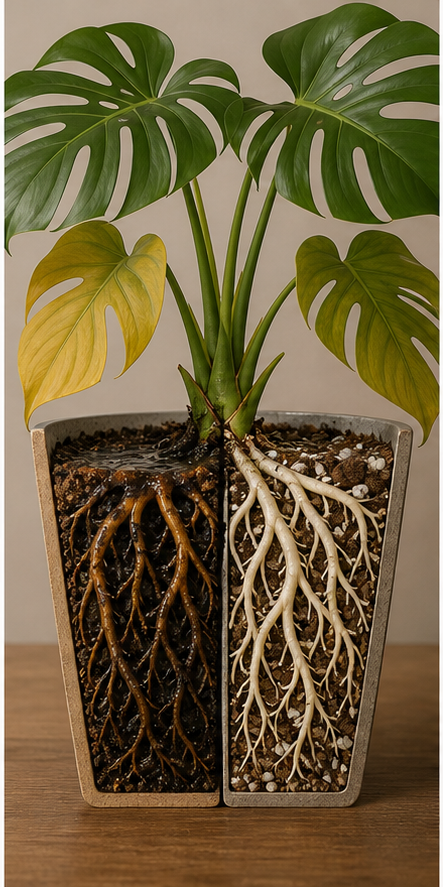
Leaf yellowing, particularly at tips or between veins, during winter typically indicates overwatering. Despite the apparent rapid soil drying in heated spaces, Monstera roots actually absorb water less efficiently in cooler substrate conditions. Excess moisture creates oxygen-depleted root environments leading to rot. When yellowing appears, immediately reduce watering frequency, improve air circulation around the pot, and consider更换 to better-draining soil if the problem persists.
Leaf Edge Browning
Crispy brown leaf margins usually signal excessively dry air, especially for plants positioned near heating vents or radiators. Solutions include relocating plants away from heat sources, increasing ambient humidity, or employing humidification devices. Minor edge damage remains cosmetic rather than fatal, and prompt environmental correction prevents worsening.
Stunted New Growth
Winter naturally slows Monstera's growth rate compared to summer months—this represents normal seasonal dormancy rather than a problem. However, complete cessation of new leaf production may indicate insufficient light, improper watering, or nutrient deficiency. Winter positioning should maximize available indirect light, and biweekly diluted liquid fertilizer applications support continued healthy development.
Identifying and Treating Root Rot
Persistent wilting, softening stems, or soil odor signals possible root rot. Remove the plant from its pot and inspect root systems. Healthy roots appear white or light tan; affected roots turn brown to black with mushy texture. When rot occurs, trim all damaged tissue, apply cinnamon powder or sulfur as natural fungicidal treatment to cut surfaces, allow wounds to callous, then repot in fresh well-draining soil.
Environmental Monitoring Recommendations
Place a hygrometer in your heated rooms to track humidity levels continuously. Ideal Monstera winter conditions maintain 18-24°C temperatures with 50-60% relative humidity. When humidity drops too low, implement enhancement measures; when temperatures climb excessively, relocate plants away from heat sources or introduce controlled ventilation.
Regularly rotating pots ensures even light exposure and prevents lopsided growth patterns. Additionally, check that drainage holes remain clear and unobstructed to prevent water backup.
Conclusion
Korean heated apartment conditions demand specialized approaches to Monstera winter care. By establishing reliable moisture assessment habits, maintaining appropriate air humidity, and avoiding temperature extremes, successful Monstera cultivation through the dry heating season remains entirely achievable. The key lies in observation-based care rather than rigid schedules—adapt techniques to your plant's actual responses and environmental changes for optimal results year-round.