
Overview
Diagnosis and Treatment for Snake Plant Root Rot in European Home Environments
This comprehensive guide addresses the specific challenges of treating and preventing snake plant root rot in European homes with cool, low-light interiors, providing practical diagnosis methods, emergency rescue steps, and long-term prevention strategies.
What Is Snake Plant Root Rot?
The snake plant (scientifically known as Dracaena trifasciata) is prized throughout Europe for its exceptional tolerance of low-light conditions, making it a popular choice for dimly lit apartments and homes. However, root rot remains one of the most common and devastating problems affecting this resilient species, particularly in cool, low-light indoor environments typical of European residential spaces.
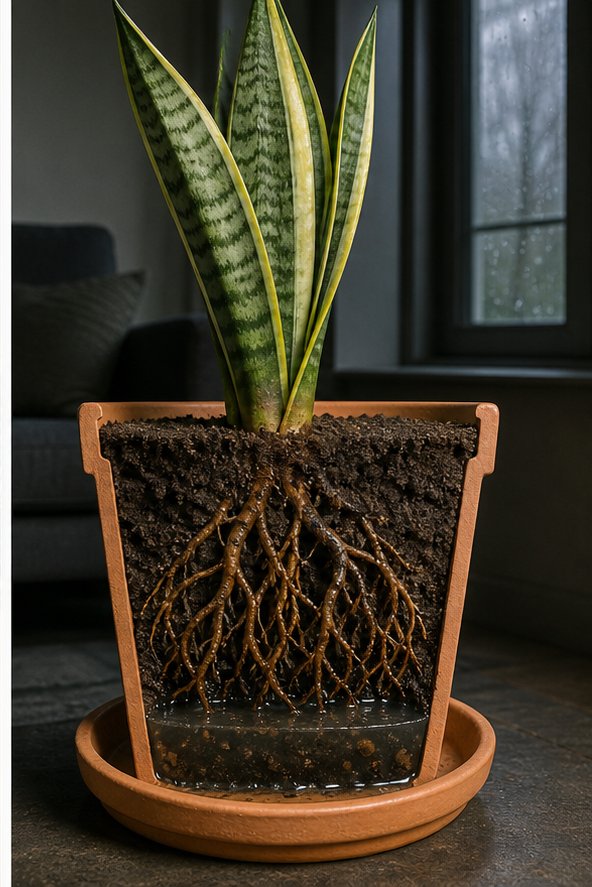
Root rot is a fungal and bacterial disease that attacks the plant's root system. When roots remain waterlogged for extended periods, oxygen levels in the soil drop significantly, creating anaerobic conditions where pathogens thrive. The roots eventually begin to decay, losing their ability to absorb water and nutrients, which then affects the entire plant's health. In European homes, where winter temperatures can vary considerably between rooms and natural light is limited, this problem is especially prevalent during the colder months.
Recognizing Early Symptoms of Root Rot
Early detection is crucial for successful treatment. Snake plant root rot manifests through several distinct symptoms:
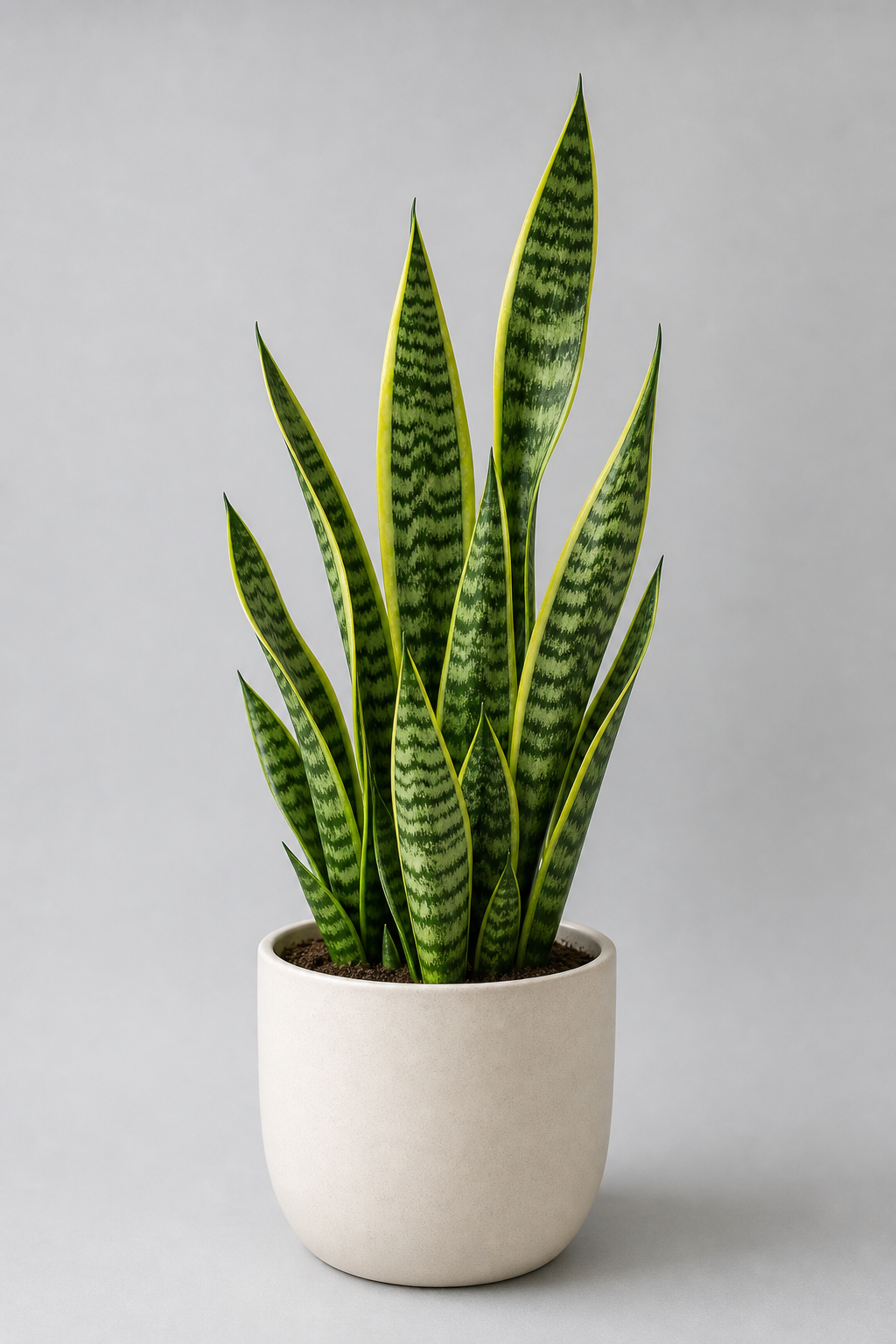
Leaf Symptoms: Healthy snake plant leaves are firm, upright, and display vibrant green and yellow variegation. When root problems develop, leaves become progressively softer and may droop downward, losing their characteristic rigidity. In advanced cases, the leaf base turns yellow or brown, and water-soaked lesions may appear on the leaf surface. A key indicator is soft leaves starting from the base rather than the tips—this pattern strongly suggests root rot rather than other issues.
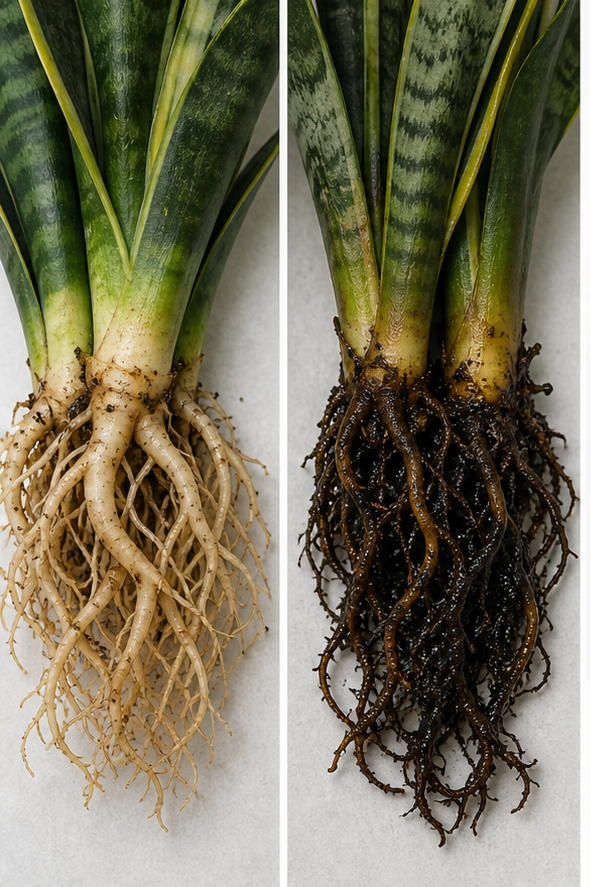
Soil and Root Symptoms: Gently remove the plant from its pot to inspect the root system. Healthy roots should be white or light yellow, with a firm texture that snaps when pulled. Affected roots appear brown or black, feel mushy when pressed, and may emit a foul odor. The soil surface might appear dry, but deeper layers remain consistently moist—a telltale sign of drainage problems.
Overall Plant Behavior: During early stages, the plant may show minimal obvious distress, but careful observation reveals reduced growth rate, smaller new leaves, or duller coloration. Without intervention, the entire plant gradually wilts and cannot be revived by simply adding more water.
Why Cool Low-Light Environments Trigger Root Rot
In European indoor settings, several environmental factors specifically contribute to root rot development:
Temperature Factors: While snake plants tolerate low light, they are not cold-hardy. When ambient temperatures consistently fall below 15°C (59°F), root activity decreases significantly, reducing water uptake capacity. If watering frequency matches that of warmer periods, soil moisture accumulates around the roots, creating oxygen-depleted conditions. European buildings with variable insulation often have cold spots near windows or external walls where temperatures drop considerably at night.
Light Factors: In low-light conditions, the plant's photosynthesis rate drops, which naturally reduces transpiration—the process by which plants draw water through their roots. Despite this reduced water requirement, many plant owners maintain watering schedules developed during brighter months. Dim environments also slow surface soil drying, creating a false impression that the soil has adequately dried when deeper layers remain saturated.
Ventilation Factors: During European winters, closed windows to retain heating create stagnant air conditions. This poor air circulation significantly slows soil moisture evaporation while raising ambient humidity levels—both factors favor fungal growth. Bathrooms and kitchens, often chosen for aesthetic placement, may have higher humidity that compounds the problem.
Emergency Rescue Procedure
Once root rot is confirmed, implement these steps immediately:
Step 1: Remove and Inspect Carefully extract the snake plant from its container, gently shaking off loose soil. Handle the root ball delicately, as compromised roots are fragile. Fully expose the root system and assess the extent of damage. If only a small portion of roots shows discoloration, the plant has a good chance of recovery. However, if most roots have turned black and soft, success becomes less likely but still worth attempting.
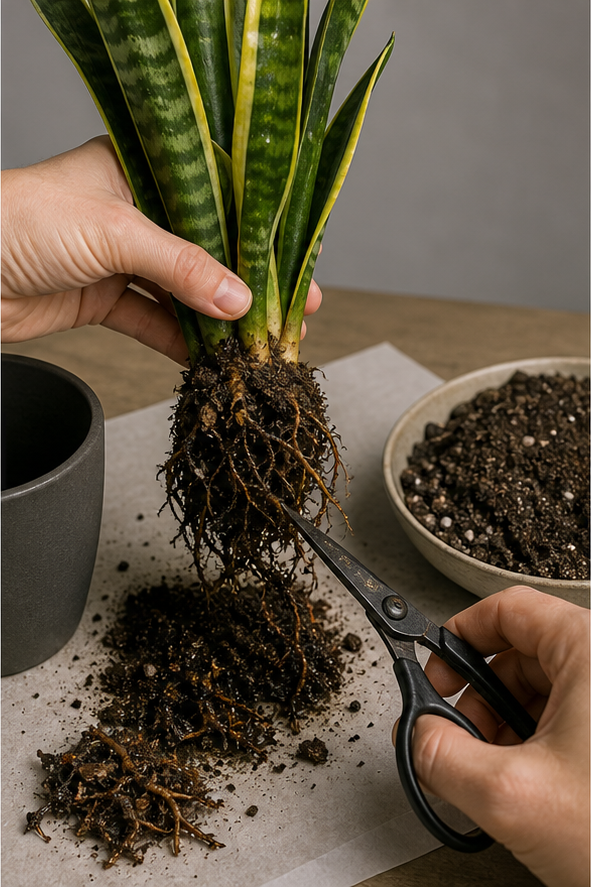
Step 2: Prune and Disinfect Prepare sharp, sterilized scissors or pruning shears. Remove all brown, black, or mushy root tissue, cutting back to white, healthy root material. Make cuts well above the affected area to ensure no diseased tissue remains. After pruning, soak the root system in a 3% hydrogen peroxide solution for 15-20 minutes to disinfect. Allow the plant to dry in a cool, shaded, well-ventilated area until cut surfaces callus over.
Step 3: Replace Pot and Soil Never reuse the original pot or soil, as pathogens likely remain. Select a new container with adequate drainage holes—terracotta is preferable for its breathability. Add a 2-3 centimeter drainage layer using pottery fragments, perlite, or coarse gravel at the bottom. Use fresh, fast-draining soil mix specifically formulated for succulents or Dracaena species; a blend of two parts peat moss, one part perlite, and one part coarse sand works excellently.
Step 4: Repot Carefully Replant the treated snake plant at the same depth as before—avoid planting too deeply. Gently firm the soil around the root ball to stabilize the plant. For the first watering, apply only enough water to lightly moisten the soil; do not saturate. Place the repotted plant in a bright location with indirect light, maintaining temperatures between 18-25°C (64-77°F).
Recovery Period Care
Post-treatment care critically determines whether the plant survives:
Watering Control: Recovery-phase snake plants require minimal water. Wait at least 7-10 days after repotting before the first watering. Subsequently, follow strict "soak and dry" protocols—insert your finger 3 centimeters into the soil; only water when completely dry throughout. In heated European interiors, biweekly or even monthly watering often suffices during winter recovery.
Temperature Management: Keep recovering plants in the warmest practical location, avoiding temperature fluctuations. The ideal range is 18-22°C (64-72°F), with nighttime temperatures no lower than 12°C (54°F). If the plant must remain on a cold windowsill, use insulating mats or wrap the pot with bubble wrap for protection.
Gradual Light Increase: Although snake plants tolerate shade, recovery benefits from appropriate light levels. Move the plant closer to windows for filtered light exposure. Avoid direct sunlight, as recovering plants are vulnerable to leaf scorch from intense radiation.
Monitoring Recovery Signs: Positive indicators include visible new growth within 2-3 weeks, gradually returning leaf firmness, and improved coloration. If no improvement appears after one month, re-examine the root system or investigate alternative issues.
Long-Term Prevention Strategies
For sustainable prevention of root rot in cool, low-light European interiors:
Container Selection: Terracotta pots outperform plastic containers for snake plants due to superior breathability and drainage. Select a pot only 1-2 sizes larger than the root ball—excessive soil volume extends drying time unnecessarily.
Soil Amendment: Incorporate perlite, vermiculite, or coarse sand into potting mix to enhance drainage and aeration. An optimal blend consists of two parts peat-based potting mix, one part perlite, and one part coarse sand. This structure retains sufficient moisture for nutrient uptake while rapidly draining excess water.
Watering Schedule Adjustment: Adapt frequency to seasonal and environmental conditions. During European winter (November through February), even in centrally heated homes, snake plants typically require watering only once or twice monthly. Gauge need by pot weight—significantly lighter containers indicate dry soil requiring water.
Regular Root Inspection: Conduct root health checks every 6-12 months, ideally during spring or autumn. Remove the plant to examine root color and condition, refresh surface soil, or perform modest upsizing if roots have expanded. This routine catches developing problems before severe damage occurs.
Improved Air Circulation: On mild, sunny days, open windows to promote indoor air movement. Good ventilation supports plant health generally and accelerates soil drying, reducing root rot risk. When ventilating, avoid placing plants in direct cold drafts.
Special Circumstances
Minor Root Rot Treatment: When caught early with only minimal root damage, full extraction may be unnecessary. Remove the plant, shake off loose soil, trim affected roots, then repot directly into fresh medium while retaining approximately two-thirds of the original soil volume. This minimally disruptive approach supports faster recovery.
Severe Root Rot Cases: When over two-thirds of the root system has decayed, more aggressive intervention is required. After thorough removal of all damaged tissue, consider temporary water propagation to regenerate roots. Suspend the plant with the base hovering above water, changing water every 3-4 days, positioned in warmth with bright indirect light. Once roots reach 3-5 centimeters length, transition back to soil culture.
Winter-Specific Considerations: During Christmas and winter holiday periods, decorative arrangements often relocate plants to darker positions or near heating sources causing temperature fluctuations. Continue regular monitoring throughout festive seasons, protecting against environmental shifts that might trigger root rot in susceptible plants.
By implementing this comprehensive guidance, European plant owners can effectively prevent, detect, and treat snake plant root rot even in challenging cool, low-light interior conditions, ensuring healthy, thriving specimens throughout the year.