
Overview
Techniques for Reshaping After Winter Leaf Drop and Essential Care Tips
Learn when and how to prune your rubber plant after winter leaf drop, plus spring recovery tips for healthy new growth.
Guide
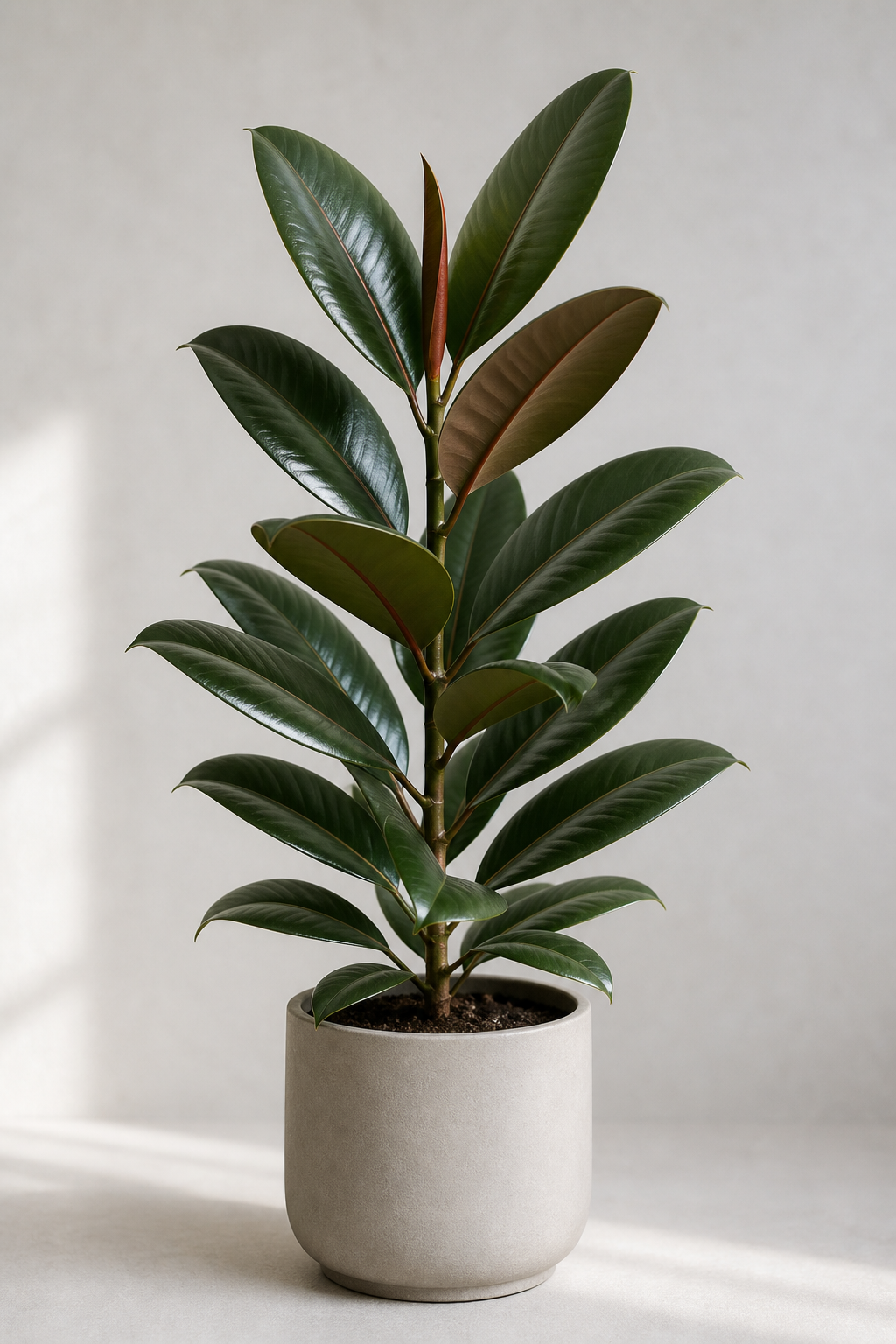
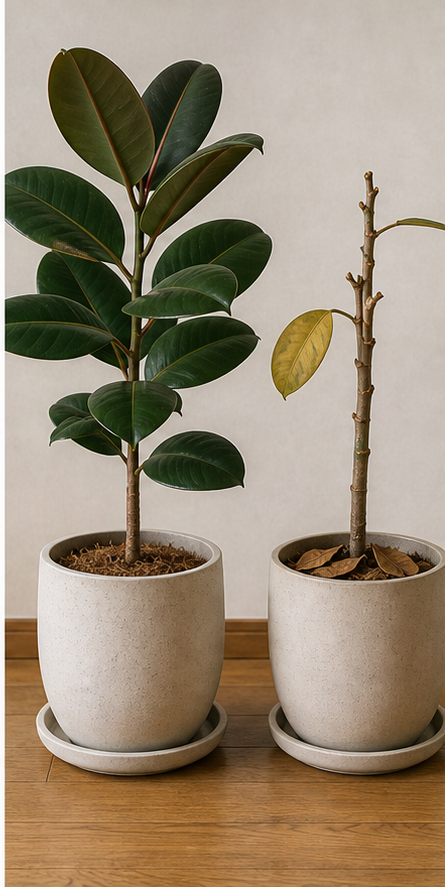
The rubber plant (Ficus elastica) has become a beloved houseplant in Japanese homes, admired for its upright growth habit and glossy, deep green leaves. However, many plant parents in Japan notice significant leaf drop during winter months. This phenomenon is particularly common in Japanese indoor environments and is primarily caused by dry indoor air from heating systems, nighttime temperature drops near windows, and reduced light levels during the winter season. As spring arrives with warmer temperatures and longer daylight hours, this becomes the ideal time for pruning, shaping, and encouraging your rubber plant's recovery.
Understanding Winter Leaf Drop Causes
In Japan's climate conditions, winter leaf drop in rubber plants is closely related to several environmental factors. First, temperature fluctuations are significant: with diverse heating methods in Japanese homes ranging from air conditioning to floor heating, rubber plants placed near windows or entryways are susceptible to cold nighttime temperatures. Second, insufficient humidity is a major factor: Japanese winters are extremely dry, and running heaters further reduces indoor humidity levels, causing leaf edges to turn yellow and drop. Third, inadequate light affects the plant: winter brings short daylight hours and low sun angles, meaning natural indoor light is often insufficient for rubber plant growth requirements. Finally, improper watering frequency plays a role: many plant parents unconsciously reduce watering during cold seasons, but both prolonged dryness and waterlogging can damage root function, manifesting as leaf drop.
Timing Your Spring Pruning
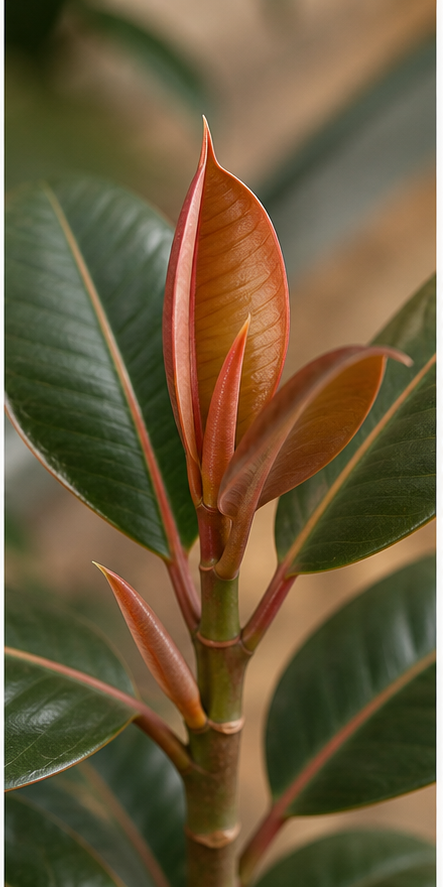
The key to determining pruning timing lies in observing your plant's condition. When you notice the apical buds beginning to swell, reddish buds emerging at nodes, or leaf drop stopping with even a few new leaves appearing, your plant has entered its active growth phase, making this the optimal time for pruning. In Japan, the best pruning window generally runs from mid-March to late April, when average daily temperatures remain consistently above 15°C and the plant's healing capacity is strong. Special care should be taken to avoid pruning during cold snaps or when temperatures suddenly drop, as slow wound healing could lead to pathogen infiltration.
Pre-Pruning Preparations
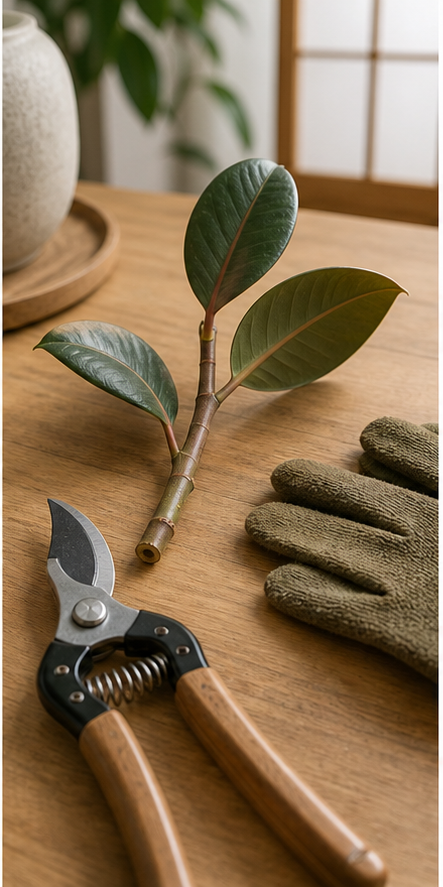
Proper tools are essential for successful pruning. Before beginning, prepare a sharp pruning shear or craft knife and disinfect the blade with an alcohol swab. If using electric tools, ensure power safety and smooth operation. Have rooting hormone powder (optional) and wound sealant (optional) ready, along with clean grafting tape or soft cloth for subsequent wrapping. It is recommended to prune on a clear morning, giving the plant sufficient time to dry during the day and reducing pathogen infection risk. Stop watering two days before pruning to allow the soil to dry slightly, facilitating operation while reducing root stress.
Fundamental Pruning Techniques
Removing Dead and Damaged Branches
First, examine the entire plant and cut any completely wilted, darkened, or severely damaged branches at the base. These branches have lost vitality; keeping them only consumes nutrients and may become a breeding ground for pests and diseases. When cutting, stay as close to the main stem as possible, ensuring a clean cut and avoiding leaving stubs.
Trimming Leggy and Weak Growth
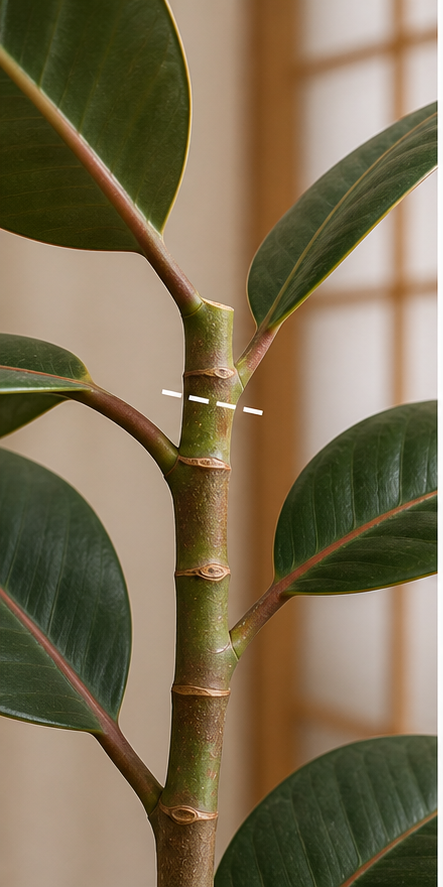
After winter's low light conditions, many rubber plants produce elongated, leggy growth. These branches have stretched nodes and widely spaced leaves, which not only affect the overall aesthetic but also lack sufficient structural support. When trimming leggy growth, cut back to the desired length, generally keeping 2-3 nodes. The cut should be made approximately 1cm above an outward-facing bud, at a 45-degree angle, to guide new growth outward.
Removing Crossing and Inward-Growing Branches
When multiple branches grow in crossing or overlapping directions, the lower foliage receives insufficient light and gradually weakens. Remove branches growing inward or blocking air circulation, ensuring the plant's interior also receives adequate light. This step is particularly important for disease prevention, especially for controlling spider mite infestations common in Japanese indoor environments.
Reshaping and Height Control
If your rubber plant has grown too tall or has a scattered shape, overall reshaping may be necessary. Determine your ideal height based on personal preference, then uniformly cut back all exceeding branches to the same level. When pruning, maintain overall balance, avoiding situations where one side is too lush while the other is sparse. Before pruning, you can wrap a thin string around the desired height as a uniform pruning reference line.
Techniques for Encouraging Lateral Branch Growth
To make your rubber plant branch more densely and develop a fuller shape, the apical pruning method can be employed. Removing the main branch tip during early growth season breaks the plant's apical dominance, stimulating lateral buds at lower leaf axils to sprout. The cut location should be approximately 1-2cm above a healthy leaf. It is important to note that not all rubber plants will branch immediately after apical pruning; sometimes waiting two to three weeks is necessary to see new buds emerge. If no response occurs after a month, gently remove leaves from two or three nodes below the tip to stimulate new branch emergence from that area.
Wound Care and Aftercare
Pruned wounds do not require special treatment to heal naturally, but if environmental humidity is high or infection is a concern, a thin layer of plant wound sealant can be applied. For branches with larger cuts, lightly wrap with plastic wrap to maintain humidity and promote healing, which can be easily removed once new leaves appear. Avoid spraying water on leaves within three days after pruning to prevent moisture from accumulating at wound sites and causing disease. Maintain environmental ventilation while avoiding cold drafts.
Comprehensive Spring Recovery Care
Light Management
After pruning, rubber plants need abundant light to synthesize nutrients and promote healing and new bud development. Move the plant to the brightest spot in your home, such as near south or east-facing windows. During Japanese spring, sunlight intensity is moderate, and natural light should be fully utilized during this period. If indoor light is insufficient, supplement with full-spectrum grow lights, maintaining daily light duration of 8-10 hours. Importantly, do not suddenly move the plant from a dark location to strong light after pruning; gradual adaptation is necessary to prevent sunburn.
Temperature Control
Rubber plants prefer growing temperatures between 18-27°C. Japanese spring brings significant temperature differences between morning and evening, with nighttime temperatures possibly dropping below 10°C, which affects plant recovery. Using a thermometer to monitor environmental temperature is recommended; when necessary, use heating mats or relocate to a warmer position. Avoid placing rubber plants near air conditioning vents or radiators, as these locations have dramatic temperature fluctuations and dry air.
Watering Guidelines
After pruning, rubber plants' water requirements increase because wound healing and new bud development require moisture support. However, root absorption capacity has not fully recovered at this time, so watering should still be done carefully. The basic principle is to water thoroughly only when the soil is dry: water deeply when the top 2-3cm of soil is dry, ensuring water flows from the pot bottom. Generally, watering once every 5-7 days is sufficient in spring, with specific frequency adjusted according to actual soil moisture conditions. Japanese water is relatively soft but contains some minerals; allowing it to stand for a day or two before use lets chlorine evaporate and brings water temperature closer to room temperature.
Fertilization Schedule
Do not fertilize for two weeks after pruning. Begin nutrient supplementation only when the plant shows clear signs of growth. Spring is the rubber plant's growing season, so apply diluted liquid balanced fertilizer every two weeks, with an NPK ratio of 10-10-10 or 20-20-20 recommended. Fertilizer concentration should be half the normal amount to avoid root burn from concentrated fertilizer. If new leaves appear yellowish, slightly increase the nitrogen ratio in the fertilizer solution to promote chlorophyll synthesis. Reduce fertilization frequency during summer's high temperatures and gradually stop fertilizing after autumn arrives.
Humidity Maintenance
Although Japanese spring humidity gradually rises, indoor spaces may still be relatively dry. Spraying around the rubber plant 2-3 times daily is recommended to increase local humidity. Place pebbles and water in a tray beneath the pot, but ensure the pot bottom does not directly contact the water. Regularly wipe leaves gently with a damp cloth, which not only removes dust for shinier leaves but also allows inspection for spider mite or other pest signs.
Pest and Disease Prevention
During pruning and seasonal transitions, rubber plants are susceptible to pest and disease attacks. A common indoor pest affecting rubber plants in Japan is the spider mite. These tiny pests feed on leaf undersides, causing fine yellowish-white spots on affected leaves, and severe infestations produce webbing. Prevention key points include maintaining higher air humidity and ensuring good ventilation. Upon discovering an infestation, spray with neem oil or mineral oil preparations weekly for three consecutive weeks. If the situation is severe, isolate the plant and consider using professional miticide.
Timing for Repotting
If your rubber plant's roots have filled the pot bottom or compacted soil prevents water absorption, repotting can be done simultaneously with pruning. Generally select a new pot with a diameter 5-8cm larger than the original, using well-draining general-purpose potting soil. When repotting, gently shake off some old soil and check root health; if any appears rotten, trim and disinfect. After repotting, water thoroughly and place in a spot with indirect light for a week of recovery before resuming normal care.
Utilizing Pruned Cuttings
Healthy branches removed during pruning should not be discarded; they can be used for propagation. Cut branches into 10-15cm lengths, keeping 2-3 nodes, remove lower leaves, and insert into moist perlite or vermiculite. Maintain moist substrate and place in warm, indirect light; rooting generally occurs in 4-6 weeks. After rooting, transplant to small pots and continue care until they develop into independent plants. Japanese spring temperatures are ideal for rubber plant cuttings.
Monitoring Recovery Progress
Pruned rubber plants typically begin showing recovery signs within 2-4 weeks. Observation points include: new buds or leaves emerging, leaf color returning to brightness, leaf drop stopping, and branches gaining firmness. If no growth signs appear after more than a month, a root problem or other improper care may exist; the plant should be removed from its pot to inspect root condition. Healthy roots appear creamy white or light brown; if they are blackened and soft, affected portions must be trimmed and the plant replanted.
Special Considerations for Japanese Homes
In Japanese apartment living, space is typically limited, so when pruning rubber plants, consider the post-pruning placement. Rubber plants need some growing space; avoid placing them in frequently trafficked pathways. If using gas heating in winter, pay special attention to ventilation and avoid carbon monoxide accumulation harming the plant. Japanese tatami and wooden flooring areas are sensitive to watering overflow; using pots with saucers and regularly checking drainage is recommended. During spring cleaning, take the opportunity to check your rubber plant's health condition and perform necessary pruning and care.
Through reasonable pruning and meticulous spring care, rubber plants can be rejuvenated even after Japanese winter's challenges, producing healthier and more lush new leaves. Mastering correct pruning techniques combined with timely care management is the key to ensuring your rubber plant's robust recovery in spring.