
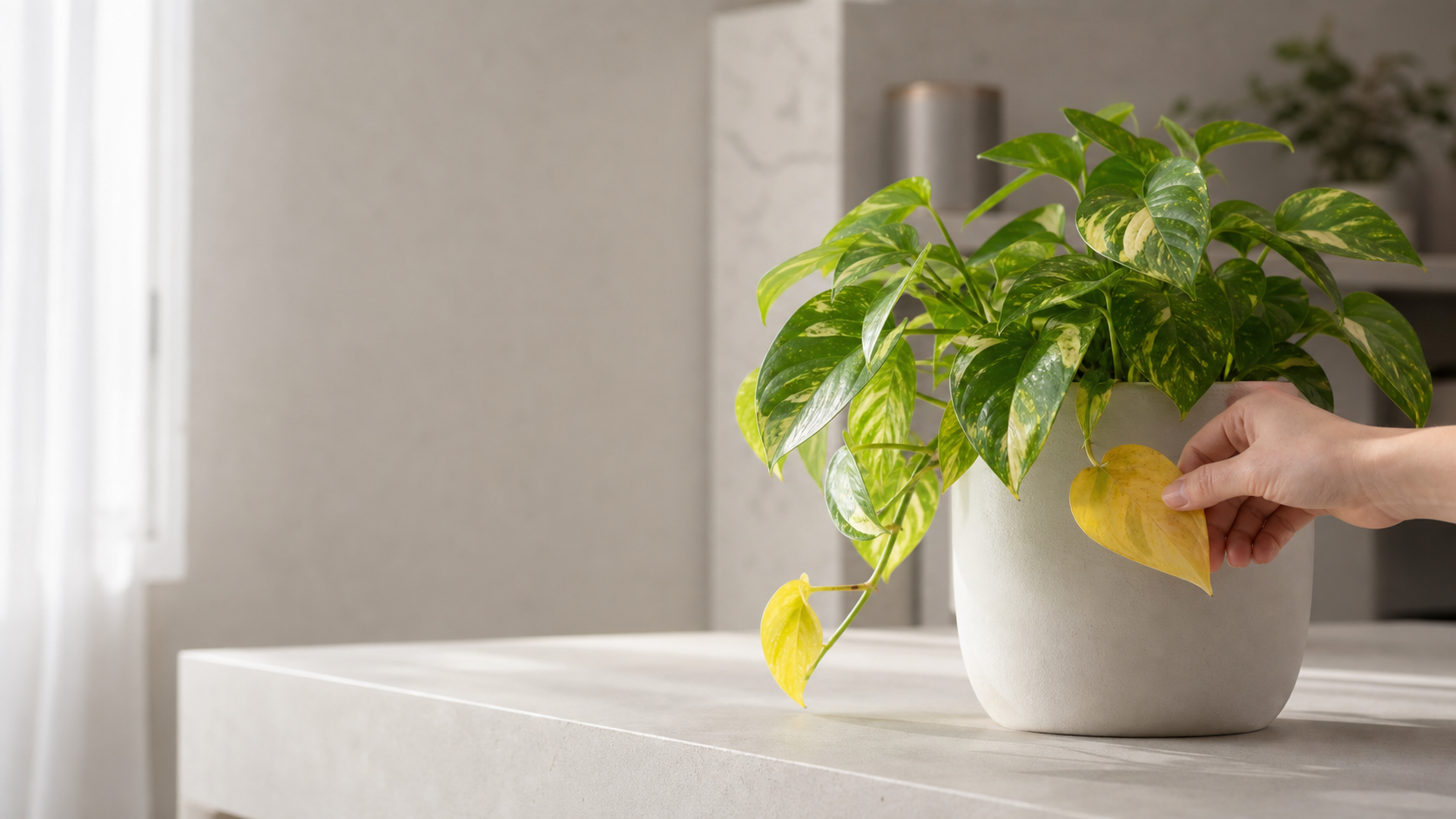
Overview
One concrete scenario with a practical beginner decision path
Brown tips may come from salts, watering swings, dry drafts, or root stress.
Brown Leaf Tips: Separate normal change from trouble
Brown tips may come from salts, watering swings, dry drafts, or root stress. Misting alone rarely solves root-zone or water-quality problems. A beginner should slow the decision down and connect the symptom with placement, moisture, airflow, and the last week of care. Avoid making a major change from one leaf alone; decide first whether the issue is a single old mark or something that is actively spreading.
Brown Leaf Tips: Check four key places
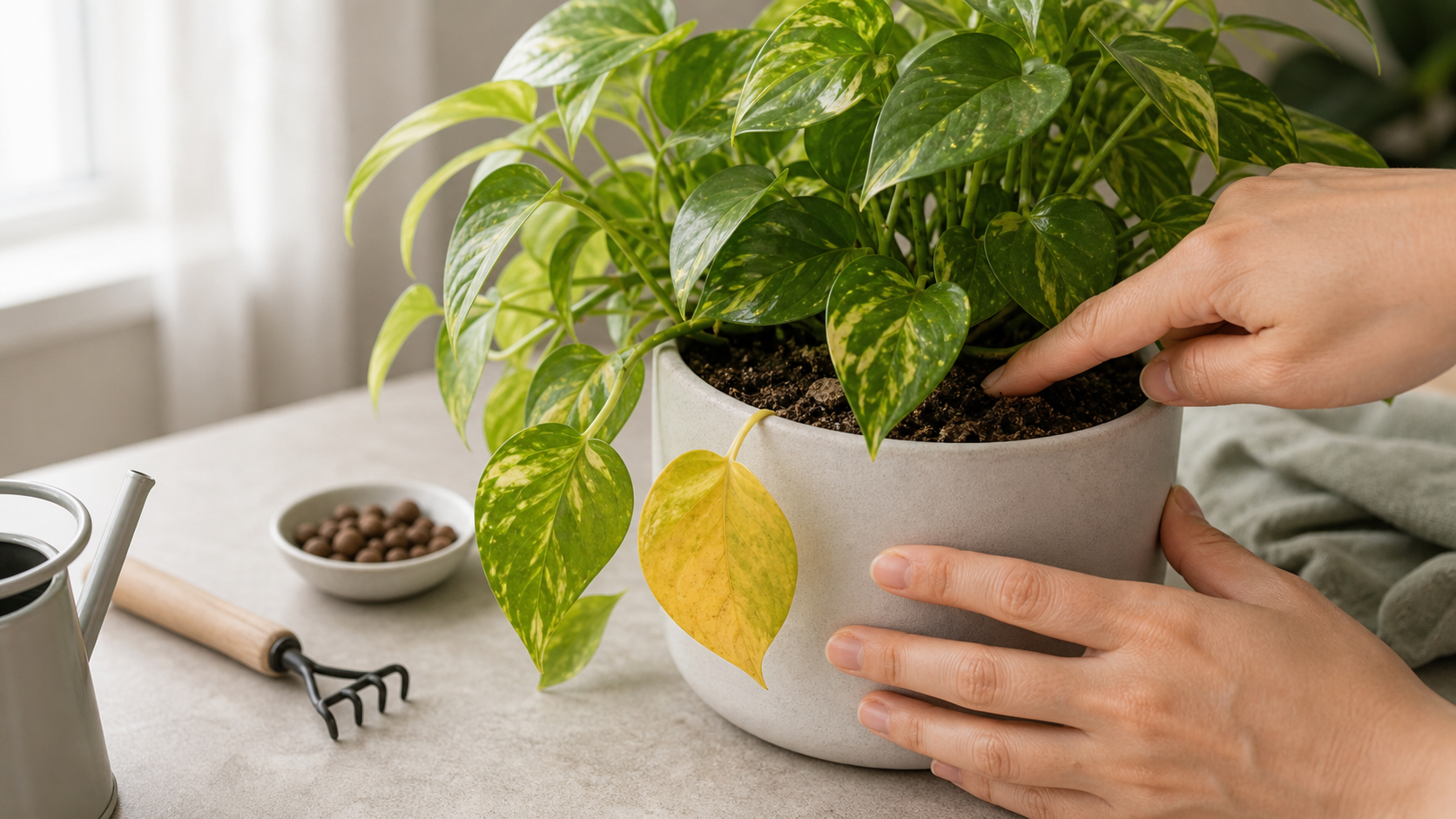
Start with light and position, then check deeper media moisture, drainage, the undersides of leaves, stem bases, and the cachepot or saucer. undefined If one factor is clearly wrong, correct that factor first and write down the date. This creates a useful comparison point instead of a blur of simultaneous changes.
Brown Leaf Tips: Lower the risk
Keep the response simple. If placement can explain the problem, stabilize placement before repotting. If moisture rhythm can explain it, adjust watering before adding fertilizer. If cleaning and isolation can contain a concern, do that before treating every plant nearby. One clear action followed by observation is usually more helpful than several dramatic fixes.
Brown Leaf Tips: Prevent the repeat
Do not judge recovery by whether old damage disappears. Watch fresh growth, new leaf shape, drying rhythm, and whether the original symptom expands. Brown edges, yellow patches, and pest scars often remain visible, but stable new growth tells you the current direction is improving. If new growth keeps worsening, then escalate to a closer root, pest, or environment check.