
Overview
A two-minute action for everyday Boston Fern care
Build an immediately actionable, observable inspection habit for Boston Fern.
Cleaning is also inspection
Crispy shedding commonly reflects drought or low humidity, while stagnant wetness favors spotting; watch for mites.
Respond in order
If you see suspicious damage, residue, soft decay, or odor, isolate first, record changes, and correct conditions. If diagnosis or treatment is needed, follow a locally registered product label.
Record and recheck
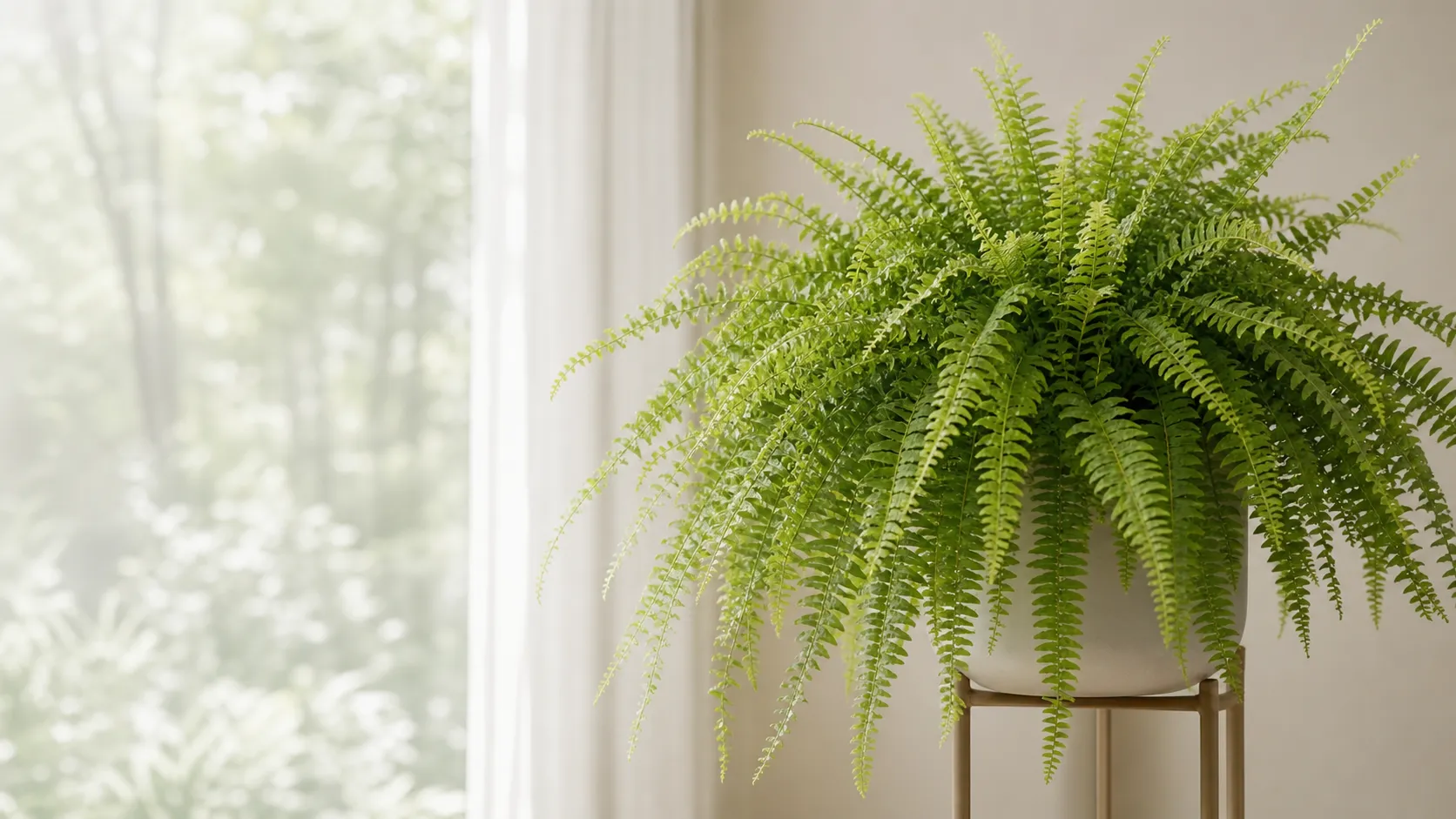
Boston fern forms soft cascading fronds and responds visibly to dry air and drought. After this action, note the date, media condition, new growth, and position. Review after one or two weeks; if decline continues, soft rot or odor appears, or pests spread, isolate and investigate instead of substituting extra watering or repeated feeding for diagnosis.